
The Toyota Supra Isn’t The Legendary Sports Car You Think It Is
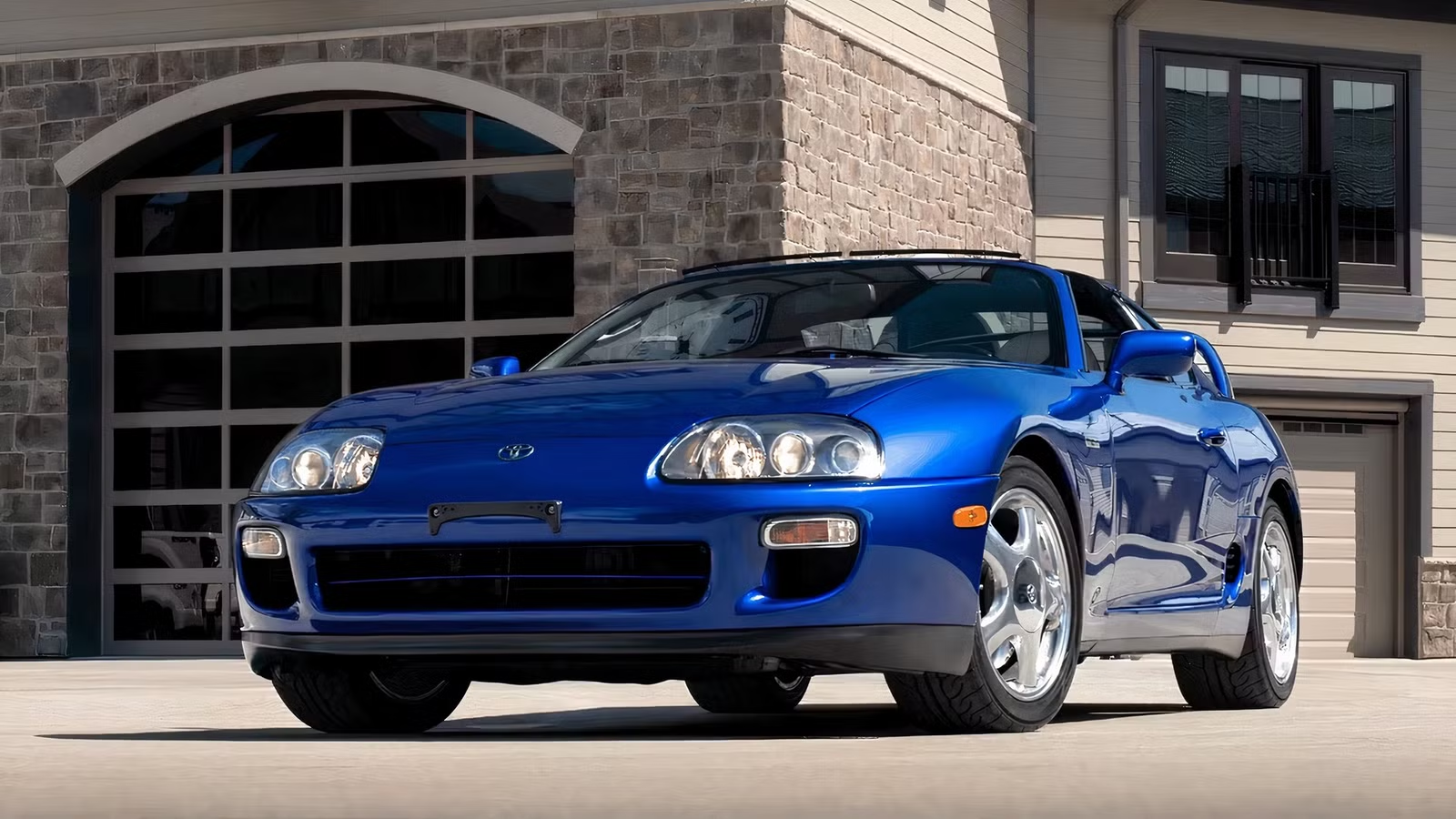
The Toyota Supra has a reputation problem, although you probably won’t hear that complaint at a car meet. Mention the Mk4, and somebody will inevitably bring up four-figure horsepower, supercar humiliation, or an engine supposedly immune to mechanical consequences. Toyota sold something rather different: a capable sports coupe whose factory performance now competes for attention with decades of cinematic exaggeration and expensive modifications.

That distinction matters because the car deserves a fair hearing. The U.S.-market Mk4, sold from 1993 through 1998, was an impressive achievement, especially in Turbo form. However, judging an original Supra by what a heavily rebuilt example can accomplish gives Toyota credit for somebody else’s parts bill.
The Supra In Your Head Didn’t Come From A Toyota Showroom
The Legend Blends Three Different Cars Together
Start with three separate identities: the stock naturally aspirated Supra, the stock Supra Turbo, and the modified tuner car. They share a recognizable shape, but their capabilities aren’t interchangeable. The trouble begins when the most spectacular version becomes the assumed baseline for every car wearing the badge.

A huge turbocharger and a dyno graph can make memorable entertainment, but neither describes the car waiting at a Toyota dealership in 1994. You wouldn’t judge a factory Mustang by a purpose-built drag car simply because both have a horse on the grille. The Supra deserves that same basic distinction.
Not Every Mk4 Had The Famous Twin-Turbo Engine

Toyota’s U.S.-market naturally aspirated 3.0-liter 2JZ-GE inline-six produced 220 horsepower and 209 lb-ft of torque. The twin-turbocharged 2JZ-GTE delivered 320 horsepower and 315 lb-ft of torque. That 100-horsepower difference is substantial before any discussion of tuning begins.
Both engines belong to the 2JZ family, which helps explain why the shorthand becomes misleading. Saying a Supra has “a 2JZ” doesn’t establish that it has the Turbo’s factory hardware or output. A naturally aspirated example can be desirable on its own terms without borrowing performance credentials from its boosted sibling.
The Factory Supra Turbo Was Fast, But Its Numbers Need Context
Judge It Against The Cars It Actually Faced

Car and Driver’s September 1993 production Supra Turbo reached 60 mph in 5.2 seconds and covered the quarter-mile in 13.8 seconds at 106 mph. Separate period tests recorded 5.2 seconds and 13.7 seconds at 104 mph for a stock 1994 Acura NSX. Those figures describe competitive performance rather than effortless domination.
The magazine’s six-speed 1995 Porsche 911 Carrera (993 generation) managed 4.7 seconds and 13.4 seconds at 104 mph. Its March 1992 Viper RT/10 test recorded 4.6 seconds and a 13.2-second quarter-mile. These weren’t simultaneous tests, so the conditions differed, but the broader point holds: the stock Supra inhabited a competitive performance landscape rather than floating above it.
The Period Results Complicate The Hot Take

Here comes the inconvenient part for anybody hoping to dismiss the Toyota: it won that 1993 six-car comparison. The opposition included the Corvette LT1, RX-7, 300ZX Turbo, 3000GT VR4, and Porsche 968. Toyota’s achievement predated the orange movie car.
The often-repeated 4.6-second sprint and 13.1-second quarter-mile came from Car and Driver’s earlier prototype test; the magazine explicitly favored its later production results. Neither result needs burying, but the distinction belongs beside the numbers. The honest argument challenges an exaggerated reputation while acknowledging the excellent car underneath it.
The 2JZ’s Potential Became Confused With Its Factory Performance
A Strong Foundation Isn’t A Finished High-Horsepower Build

The 2JZ-GTE’s cast-iron block provides a substantial foundation, and Toyota’s sequential twin-turbo arrangement delivered the original car’s performance. However, the distance between factory output and a headline-grabbing build involves more than enthusiasm. Turbocharger selection, fuel delivery, engine management, and the condition of the underlying engine all belong in that conversation.
Big Dyno Numbers Don’t Describe The Whole Driving Experience
Adding power doesn’t automatically improve response, traction, or the balance between them. A large-turbo combination can prioritize top-end output at the expense of low-speed response, depending on its design and calibration. Whether that trade suits you depends on where and how you drive.
A dyno also cannot tell you how confidently a car changes direction, communicates approaching grip limits, or settles after a rough corner. Those qualities matter on an ordinary road, where the opportunity to exploit peak horsepower may last considerably less time than the traffic light ahead. You can admire a serious build without pretending its maximum output describes every minute behind the wheel.
Fast & Furious Gave The Supra A Second Identity
The Screen Car Became More Recognizable Than The Showroom Car

The orange Supra in 2001’s The Fast and the Furious supplied a remarkably effective identity: an overlooked machine transformed into something extraordinary. Toyota’s own podcast later featured Craig Lieberman, owner of the production’s primary 1994 Supra hero car. The connection between the model and that screen appearance is now part of its documented history.
The film’s appeal also explains why factory specification became secondary in the popular imagination. The story celebrates transformation, so the car’s potential naturally attracts more attention than its original configuration. You remember the finished hero, rather than the equipment list that preceded it.
That is a powerful cultural achievement, but it isn’t a road test. A movie can make a car meaningful without establishing its braking distance or proving superiority over a contemporary rival. The Supra’s engineering and its screen presence each deserve credit on their own merits.
Nostalgia Changes What Buyers Think They’re Paying For

On July 29, 2026, a 38,000-mile 1994 Supra Turbo hardtop with a six-speed manual sold on Bring a Trailer for a $125,000 winning bid. The listing disclosed HKS coilovers, a TRD front strut bar, and a replacement wingless trunk lid. It also reported a clean Carfax history, although the car wasn’t an untouched factory example.
That result doesn’t establish the value of every Mk4 or prove that every buyer has lost perspective. It shows that a particular specification, mileage, documented history, and collector’s appeal can command a substantial price. Comparing it casually with a high-mileage automatic or a naturally aspirated car would conceal the details that influence bidding.
The Mk4 Deserves Respect Without The Mythology
Its Real Achievement Was A Complete Performance Package
Reducing the Supra to an engine code makes the rest of the car seem incidental. Yet Toyota had to integrate the drivetrain, steering, suspension, brakes, and controls into something a customer could actually use. A strong block alone cannot accomplish that job.
The tuning legend can obscure this broader achievement. If every discussion ends at the largest horsepower number somebody has extracted, the factory car’s original balance becomes almost irrelevant. That is a strange way to celebrate the engineers who made the Supra worth modifying in the first place.
Appreciate The Car Toyota Built Before The Car Tuners Created
You can admire the stock naturally aspirated car, respect the Turbo’s period performance, and enjoy an outrageous modified build. Those opinions fit together comfortably as long as the specifications stay attached to the correct vehicle. The argument only becomes confused when one car’s achievements are handed to all three.
The Mk4 earned its place in sports-car history, but the version living in your imagination may include a film script and several decades of aftermarket development. Before declaring it unbeatable, ask whether you would still want one exactly as Toyota built it. If the answer is yes, the actual Supra probably offers a more satisfying reason than somebody else’s dyno sheet.
Sources: Toyota, MVP Motorsports, Bring A Trailer, Car and Driver

Related posts

Latest Post


No Comments