
The De Tomaso Pantera’s Long Lost Successor
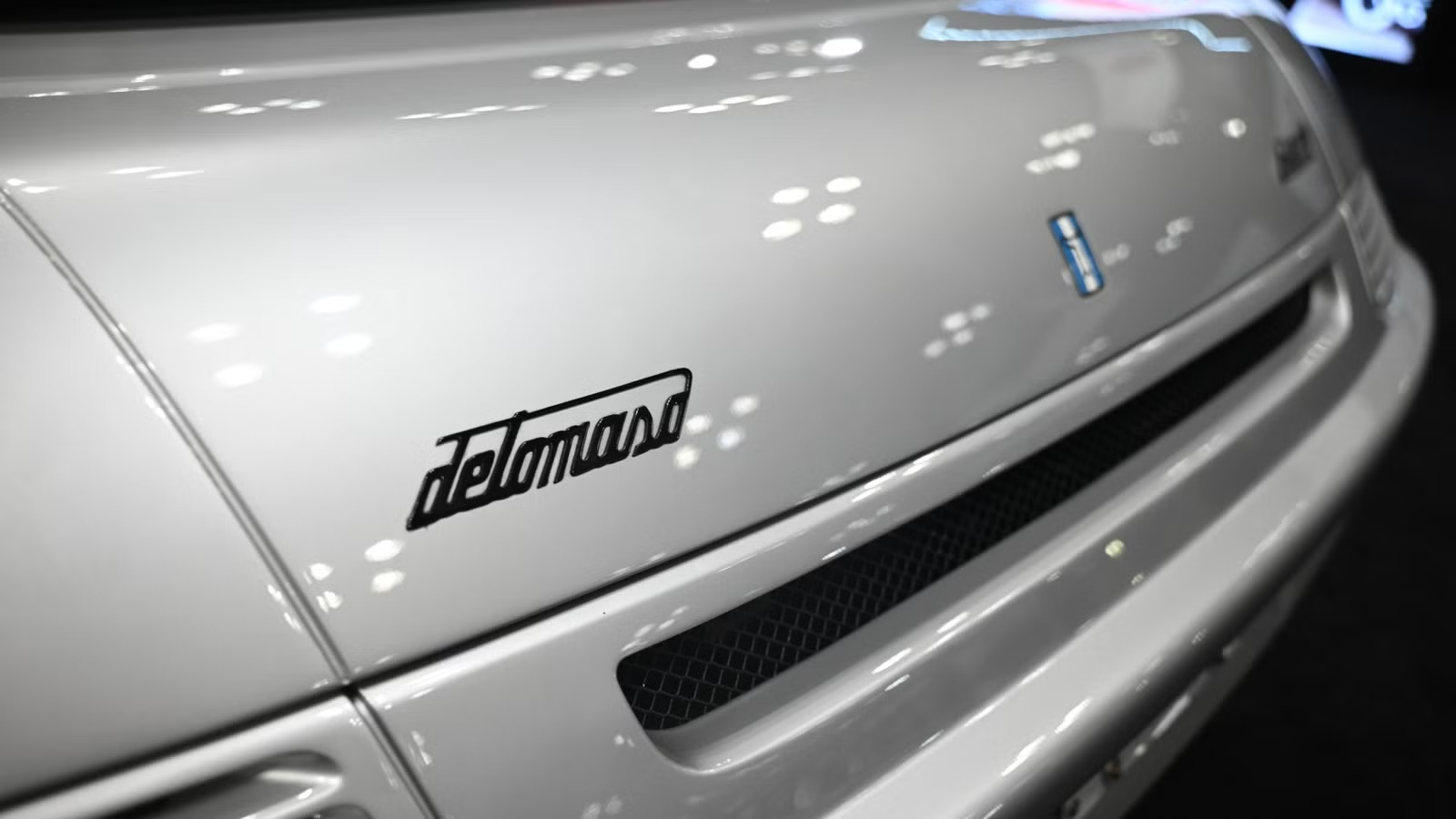
The De Tomaso Pantera is the definitive Italian-American sports car. With its all-American small-block Ford V8, its Ghia styling, and all the machismo in the world, the Pantera captivated the masses from the moment it was shown to the world, in Modena and New York, in 1970. All by itself at times, the Pantera carried the De Tomaso brand’s legacy, becoming one of the most important performance cars of the latter half of the 20th century in the process. Still, it wasn’t the be-all and end-all for De Tomaso. In the mid-to-late 1990s and onwards, it even had a successor.
The End of the Pantera: Trying Times for De Tomaso

For more than two decades, the Pantera kept De Tomaso relevant on both sides of the Atlantic. It wasn’t the only car from the brand, far from it at times. Offerings like the Longchamp GT and the Deauville luxury sedan also used Ford V8s while providing a bit more variety to a sparse lineup. Still, none of them held a candle to the Pantera’s sheer aura, but that alone wouldn’t suffice as the ‘80s gave way to the ‘90s.
Even a comprehensive body overhaul in 1990 via the Pantera SI wouldn’t be enough to save the model from being sunsetted soon afterwards. After all, the chassis underneath could still trace its roots to 1970. For some context, the Honda/Acura NSX was about to hit the streets around the same time the Pantera had its final update. That either speaks to the Pantera’s nearly unheard-of longevity, or to De Tomaso’s perpetual state of near financial insolvency.

In truth, it was probably a little bit of both. When the final Pantera rolled off the assembly line in 1992, it left a massive void in Modena’s lineup just as Alejandro de Tomaso was divesting his stake in Maserati to Fiat. Instead of closing up shop entirely, De Tomaso decided to do what he probably should have done a decade prior: give the Pantera something approximating a successor.

Forging De Tomaso’s Next Street Car, From the Heart of a Race Car

Instead of building a new sports car from scratch—as we’ve established, De Tomaso could barely keep the lights on—Alejandro de Tomaso looked to an open-cockpit racing prototype sitting right under his own roof. Before divesting his stake in Maserati to Fiat, De Tomaso had overseen the development of the lightweight Maserati Barchetta racer.
Styled by Carlo Gaino of Synthesis Design with chassis engineering led by former Ferrari technical director Enrique Scalabroni, the Barchetta was about as far from a road car as you could get. Its suspension geometry was borrowed directly from Formula 1, its twin-turbo V6 came directly from the Biturbo, and its straight-cut ZF six-speed manual was intended strictly for track use.

Still, the Barchetta was the closest thing to a shortcut through the automotive development process that De Tomaso had access to in the early 1990s. The Barchetta was about to become a road car, but not before some serious alterations that made it even remotely streetable. With Maserati’s sale to Fiat complete, the Barchetta’s IP rights stayed with De Tomaso. This allowed the firm to keep the chassis, but add a new carbon fiber body, a proper interior, and to swap the Biturbo engine for a four-liter BMW V8. In the end, the finished product looked every bit like the Pantera’s rightful successor, and it even had a compelling name of its own.
De Tomaso Guarà: A Pantera’s Long Lost Nephew

Named after an indigenous South American wolf, the De Tomaso Guarà broke cover at the 1993 Geneva Motor Show, and was touted as the future of Italian sports cars. A thoroughly ‘90s product, the Guarà boasted contemporary rounded curves and pop-up headlights to the point it nearly bore a resemblance to a C5 Corvette. Unlike a ‘Vette, the Guarà’s BMW V8 was mounted mid-rear like the Maserati it was derived from.
Crafted from a mix of Kevlar and carbon fiber over an extruded aluminum backbone chassis and tubular spaceframe, the Guarà hit the scales at under 2,700 pounds. At a time when sports cars of all stripes were starting to get chubby, the Guarà development team did the best it could to go in the opposite direction. With 282 hp on tap from its BMW M60 V8, that lightness did wonders keeping the Guarà spry. Paired with a Getrag six-speed manual, the Guarà came years before Italian sports cars all started using paddle shifters.

Zero to 60 was handled in around five seconds flat, on the way to a top speed that touched 170 mph. Yet, when BMW stopped supplying the M60 in the late 1990s, the company transitioned back to its Ford roots. Soon after, the Guarà transitioned to using Ford’s 4.6-liter Modular V8, the same you’d find in the Crown Victoria Police Interceptor and the SN95 Mustang GT. With an optional Visteon supercharger, power jumped to 320 hp, and drop-top spyder variants became available alongside the coupe and the roofless barchetta.
Why the Guarà Failed

On paper, the Guarà had every ingredient needed to take the Pantera’s throne. Still, its timing couldn’t have been worse. Right as the car debuted in 1993, founder Alejandro de Tomaso suffered a severe stroke that effectively sidelined the company’s driving force and plunged Modena into a decade of financial instability, supplier bottlenecks, and shifting ownership.
Without a dealership network or a marketing budget for US homologation, production was limited to roughly 50 examples built between 1994 and 2004. That breaks down to at least 38 coupes, ten barchettas, and four spyders. Today, the Guarà is an automotive curiosity, one that still fetches six figures when it rolls past the auction block. It also steals the show every time it appears at a major classic car event, as it did here at New York City’s first running of Retromobile.
Source: Bring a Trailer

Related posts


Latest Post


No Comments