
The 365-HP Family Sedan That Launched Ford’s EcoBoost Performance Era
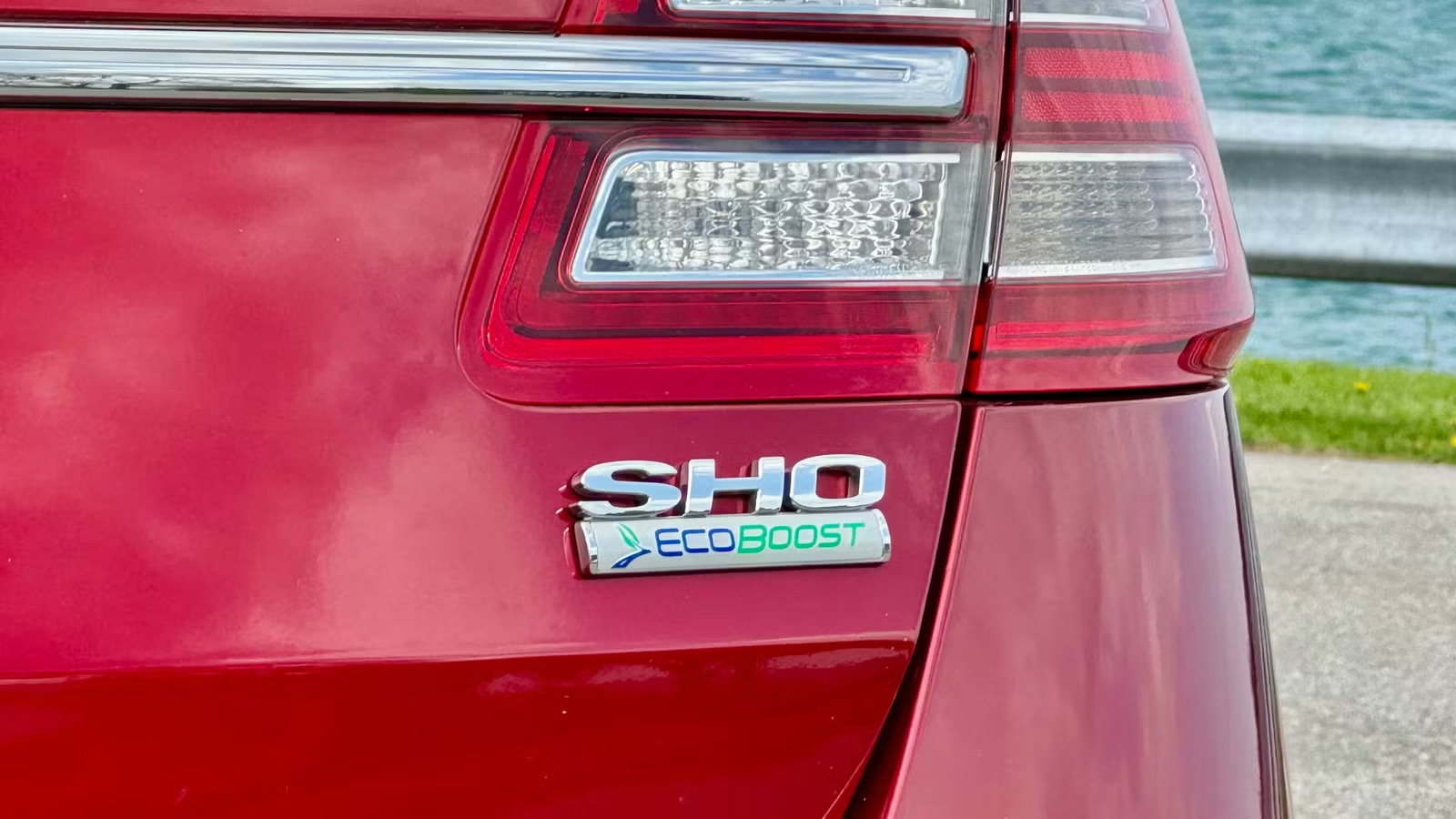
A sleeper car can really give you the best of both worlds – sports car performance, mixed with family car practicality. Those understated looks can also give a lot of people a big surprise if you shoot off at the lights! It makes sense, then, that the car that helped launch a brand new era of performance for Ford is also one of its more understated rocketships.
The Ford Motor Company’s Brands Have Gained A Reputation For Building Excellent Sleeper Cars

Ford (and its associated brands) have made great reputations for themselves for creating brilliant performance cars. That includes some amazing sleepers, as well as the high-performance models we all know about. Plenty of Ford, Mercury, and Lincoln‘s more understated sedans and SUVs over the years have been surprisingly quick. That includes the one we’re covering now. While it’s a fairly recent model, its origins are a bit more old-school.
The Original Ford Taurus SHO Is One Of The Most Celebrated American Sleeper Sedans Ever

There aren’t many sleeper sedans that are as universally loved as the original Ford Taurus SHO. This otherwise boring-looking family car was given a sports car-like heart, giving it performance that absolutely nobody would have expected at the time. That gave it a cult following in the enthusiast community, as well as celebrity fans like Conan O’Brien. The nameplate proved to have so much clout, that it actually contiuned on in subsequent generations of the Taurus. It also went through some significant evolutions. Perhaps the most significant is what it became for its final iteration…

The Fourth-Generation Taurus SHO Revived This Legendary Nameplate For A New Era

|
Engine |
Transmission |
Drivetrain |
Power |
Torque |
|
3.5-liter twin-turbocharged V6 |
6-speed automatic |
All-wheel drive |
365 hp |
350 lb-ft |
The fourth (and final) generation of the Ford Taurus SHO came along in 2010, after the nameplate had been through a 10-year long hiatus. It brought the Taurus SHO back to V6 power, after the third-generation had used a 3.4-liter V8. In the fourth-generation Taurus, that V6 was a bit different from the Yamaha-developed one the first and second generations got. It was bigger (3.5 liters), and it was also turbocharged. It also got all-wheel drive for the first time, using a Haldex-based system.
It Proved That You Could Replace Cylinders And Displacement With Turbocharging

That 3.5-liter twin-turbocharged V6 is easily the most impressive part of the fourth-generation Taurus SHO. It was the very first engine to be given the EcoBoost branding, and it certainly set things off with a bang. In the Taurus SHO, it produces 365 horsepower and 350 lb-ft of torque. That’s enough to challenge the premium V8 sedans from more ‘expensive’ manufacturers such as Audi, BMW and Mercedes-Benz. Its torque also has an incredibly flat shelf for an internal combustion engine. You can get peak torque from as low as 1,500 rpm, and that carries on right up to 5,000 rpm.
People will often say that there’s no replacement for displacement. The Taurus SHO’s EcoBoost V6, though, is one of the engines that absolutely proves that wrong. It’s comparably powerful to a 2010 BMW 550i (the BMW has 360-367 horsepower) and has almost as much torque (the BMW has 360 lb-ft), all while having a smaller engine (3.5 liters as opposed to the BMW’s 4.8) with fewer cylinders.
While this engine is fantastic, it does have some known reliability issues. Early EcoBoost engines are known to suffer from intercooler condensation, which can cause misfires. Transverse 3.5-liter Ford V6s in general (including EcoBoost and non-EcoBoost units) can also suffer from an issue with the water pump’s configuration. Due to where it’s located, if it leaks coolant can drip directly into the engine’s oil supply. Those shouldn’t put you off buying a Taurus SHO off the used market, but they are worth regularly checking up on during your ownership.
It Wasn’t Exactly The Sports Sedan It Was Advertised As, But That’s No Bad Thing

Ford marketed the fourth-generation Taurus SHO as a proper, sports sedan like the first-generation was. Ford was certainly on the money with its performance. 0-60 mph in the fourth-generation Taurus SHO takes as little as 5.2 seconds, and it can run a standing 1/4 mile in 13.6 seconds at 103 mph. When it came to the actual driving experience, though, reviewers noted that it wasn’t as sporty as Ford wanted you to think it was. It’s a big, heavy beast (it weighs 4,368 pounds), and it’s known for having soft steering and brakes. Combine that with the incredibly flat torque curve of the EcoBoost V6 that we’ve already talked about, and this really is more of a luxury cruiser.
The fourth-generation Taurus SHO being much more of a luxury cruiser than its predecessors isn’t actually a bad thing, though. In fact, it gives it a bit of an advantage! It makes the Taurus SHO a genuine, cut-price alternative to a premium European sedan. You’re getting that same punchy-yet-wafty feel, in a car that’s both cheaper to buy (the base price was $37,995 in 2009/2010) and likely cheaper to run due to the fuel economy benefits from using a twin-turbocharged V6 instead of a naturally aspirated V8.
It Started Off The EcoBoost Performance Line We Still See Today

The fourth-generation Ford Taurus SHO may not be a car that everyone remembers. But, it was a very important part of Ford’s history. Its use of that 3.5-liter EcoBoost V6 helped kickstart the EcoBoost performance line we still see in Ford’s model lineup today. The second iteration of the Ford F-150 Raptor switched to the 3.5-liter EcoBoost V6 from its original V8. While many enthusiasts think the first-generation Raptor is better, the later EcoBoost version is more powerful. It also left space for the crazier Raptor R, which gave enthusiasts the crazy V8 power they were asking for.
Alongside the newer EcoBoost-powered F-150 Raptor, Ford put EcoBoost engines into high-performance variants of other regular cars. The base model Ford Mustang got an EcoBoost-branded 2.3-liter turbocharged inline-4, as did the third-generation Ford Focus RS. The more recent Ford Maverick Lobo also uses an EcoBoost-branded turbo four, this time being 2 liters in size. The Explorer ST took EcoBoost into the performance SUV game through a 3-liter twin-turbocharged V6, while the Fusion Sport carried on the Taurus SHO’s sleeper sedan lineage with a 2.7-liter twin-turbocharged V6.
The Ford GT also went to EcoBoost power for the second-generation version in 2017. This was another controversial choice, as the first-generation GT’s supercharged V8 was loved by enthusiasts. But, like the EcoBoost-powered F-150 Raptor, the EcoBoost-powered GT was significantly more powerful.
Source: BMW, Ford, Fastest Laps

Related posts




Latest Post


No Comments