
The Shaft-Drive Yamaha Sportbike Americans Only Got For One Year
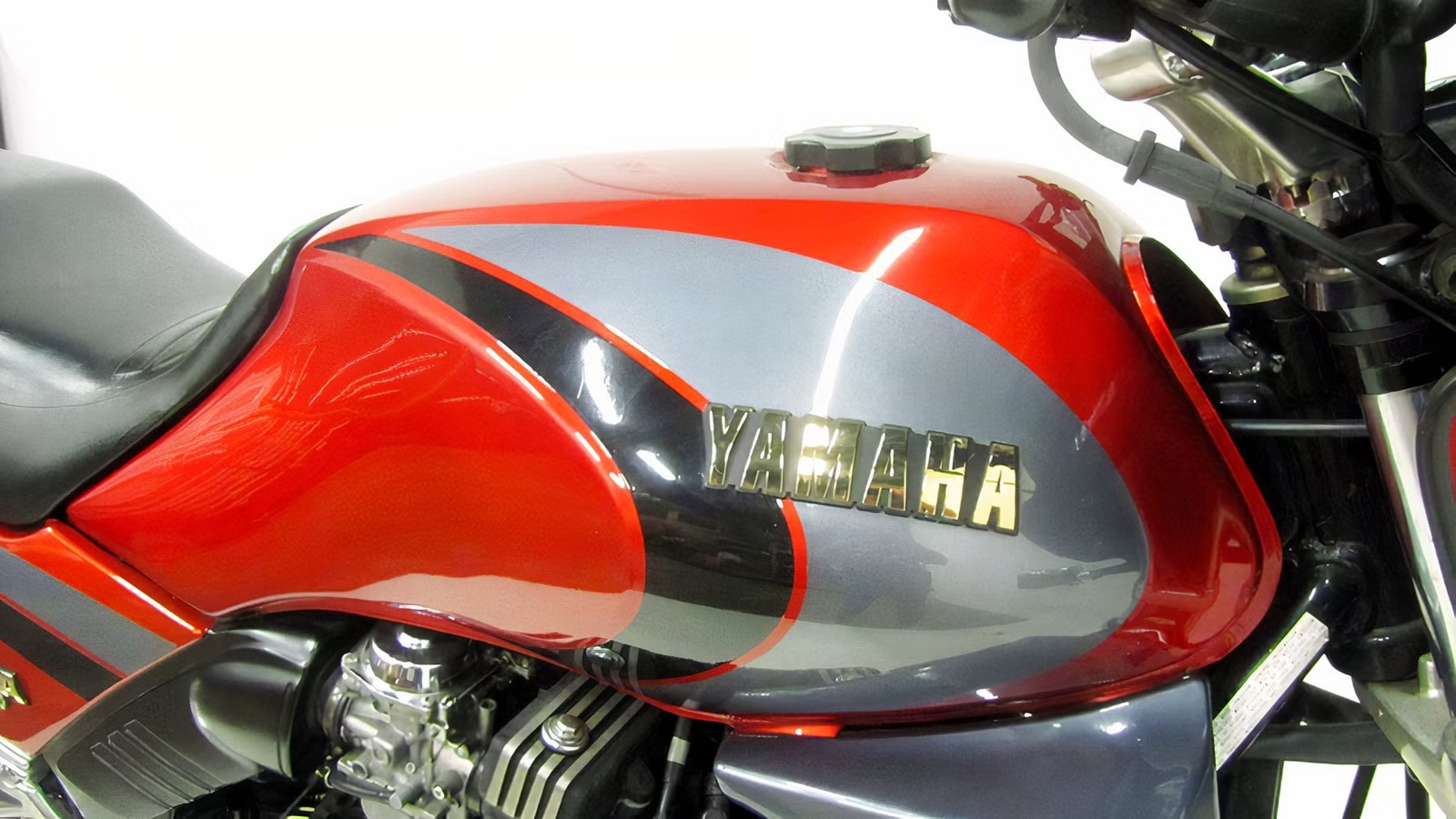
Yamaha had an ambitious plan for the American sportbike market in the early 1980s. It wanted to build a motorcycle that combined the speed and agility of a big sportbike with the long-distance practicality of its touring machines. The result was a motorcycle fast enough to cover the quarter-mile in under 12 seconds, yet it carried a shaft drive instead of a chain drive favored by its sportier rivals. It also had a few engineering compromises that Yamaha struggled to resolve, particularly when the motorcycle was pushed to high speeds. Despite its potential, American buyers got just one year with this unusual machine before Yamaha pulled it off the showroom floor.
Yamaha Wanted A Sportbike With Touring-Machine Practicality
The early 1980s were an important transition period for Japanese motorcycles. Buyers wanted more performance from larger displacement machines, but touring comfort and mechanical durability still mattered. Yamaha attempted to combine those priorities by developing a liter-class sportsbike around its existing air-cooled XJ engine.
The challenge was that the XJ650 and XJ750 platforms were known for their agility, not necessarily for the high-speed stability expected of a motorcycle capable of sustained interstate cruising. Yamaha’s engineers had to increase displacement and performance without losing the compact character of the original design.
The resulting motorcycle also retained a shaft final drive, a feature more commonly associated with touring machines. It offered lower maintenance requirements than a chain, but introduced additional weight and the familiar shaft-drive reaction under acceleration and deceleration.

That compromise would become central to the motorcycle’s character. Yamaha had built something considerably faster than its touring siblings, but it had not entirely escaped their engineering influence.
The 1983 Yamaha XJ900 Seca Was Fast But Not Quite A Superbike

The motorcycle was the 1983 Yamaha XJ900 Seca, also known as the XJ900RK in the American market. Its 853cc, air-cooled, DOHC inline-four was an evolution of the XJ650 and XJ750 engine family, with two valves per cylinder and four 35mm Mikuni carburetors. Yamaha kept the engine narrow by positioning its alternator behind the cylinders rather than at the end of the crankshaft. This unusual arrangement helped create a relatively compact package despite the four-cylinder engine configuration. The engine also featured a five-speed gearbox and was designed to deliver strong midrange performance alongside the high-revving character expected of a large Japanese sports bike.
The XJ900 Seca reportedly made around 97 HP and posted a quarter-mile time of 11.82 seconds at approximately 114 mph. That was respectable performance for a motorcycle weighing around 538 pounds. Its shaft final drive added weight compared to chain-driven rivals, but the Seca could still deliver genuinely quick acceleration and a claimed top speed of around 133 mph.
At $3,000 when introduced in 1983, the XJ900 Seca was an ambitious alternative to conventional sportsbikes. However, its combination of touring-oriented engineering and sporting performance would prove difficult to position as the market moved toward more specialized machines.
The Shaft Drive And Bikini Fairing Created Handling Problems

The XJ900 Seca’s biggest engineering compromise was its shaft final drive. While it reduced maintenance compared with a chain drive, the heavy rear differential introduced unwanted suspension reactions. Opening the throttle causes the rear end to rise, while rolling off could make it squat. This shaft effect, often called jacking or pogoing, created issues when the motorcycle was aggressively ridden.
Yamaha attempted to control these reactions with the twin De Carbon remote-reservoir rear shock absorbers. They offered four-way rebound damping adjustment and five spring-preload settings. However, stiffening the suspension could make the rear wheel lose contact with rough asphalt, compromising traction.
The handlebar-mounted bikini fairing created another problem. American riders received this compact design, but European testers found it could contribute to instability at high speeds and also found the XJ900 to be lacking in sufficient straight-line stability. In an interview, Jiro Izake, who worked with Yamaha’s road-testing group, explained how the Japanese road testers missed checking its high-speed manners because its test track was damaged, preventing high-speed test runs. Instead, they heavily relied on the XJ650’s reputation as a highly stable motorcycle, giving the XJ900 a go-ahead since it was based on the same platform.
Yamaha Replaced The XJ900 Seca With The FJ1100 After Just One Year

The XJ900 Seca’s American career ended almost as quickly as it began. Sold in the US for the 1983 model year, it disappeared from Yamaha’s lineup as the bikemaker introduced the FJ1100 for 1984. The latter had a larger 1,097cc engine, chain final drive, monoshock rear suspension, and a completely different chassis developed with a focus on high-speed stability.
Yamaha’s own historical account confirms that the FJ1100 represented a fundamental change in engineering philosophy. Instead of extending the XJ900’s existing architecture, Yamaha developed a new frame with straight-line stability at extreme speeds as its primary objective.
Meanwhile, the XJ900 continued to find buyers in Europe, where subsequent versions received a frame-mounted fairing that improved stability and offered better wind protection. It eventually established itself as a successful long-distance sports tourer.
That makes the American-market Seca an interesting footnote in Yamaha’s history. It was neither a failed touring motorcycle nor an outright sporting disappointment. Its 853cc engine delivered genuine performance, and its shaft drive offered practical advantages. But the combination never quite satisfied buyers looking for a dedicated heavyweight sportbike. The XJ900 Seca instead became a transitional medium for the FJ1100.

Related posts
Latest Post



No Comments