
The Sports Car With Toyota Reliability And Porsche 911 Thrills
Every car nut dreams of owning a proper sports car. A car with sharp handling, quick acceleration, a great exhaust note, and looks that can turn heads. But here’s the reality of owning cars like these: they’re either too expensive to buy in the first place, or they’re now highly depreciated, with expensive maintenance. This is especially true for most young enthusiasts who just can’t afford cars like these yet. But there is a modern sports car with all of these features, great looks, and Toyota-like reliability that you can afford to own without worries.
The Porsche 911 Is The Ideal Sports Car

If you ask any purist to define the definitive sports car, the answer is almost universally the same: the Porsche 911. For over six decades, Porsche has refined the rear-engine icon, transforming what started as an air-cooled lightweight coupe into the absolute benchmark for automotive engineering. The genius of the 911 lies in its relentless evolutionary cycle.
Porsche never threw away the blueprint; it simply perfected its flaws. It has managed to retain its core identity as a rear-engine sports car with immense traction, telepathic steering feel, and a low-slung ergonomic driving position, while offering cars at different price points to cater to the different needs of enthusiasts. From the accessible base Carrera to track weapons like the GT3 RS, GT2 RS, and the hypercar-rivaling Turbo S, there is a 911 tailored to virtually every driver’s desire. It is, by all traditional metrics, the ideal sports car.
It Is Expensive To Buy And Own

However, the 911 has been put on such a pedestal that it has become far out of reach for the average buyer. Decades of unrivaled reputation have driven prices into the stratosphere. A base 911 Carrera now starts at $135,000, which is expensive. Even on the used market, finding a clean, low-mileage modern 911 for under six figures is becoming a Herculean task. Meanwhile, you can get some great American sports cars, like the base Corvette with a new and more powerful V8, which starts at $71,000.
Then comes the next hurdle: maintenance. While modern Porsches are surprisingly reliable compared to their Italian counterparts, they are still high-strung, precision-engineered German machines. A minor service at a dealer can easily run into thousands of dollars, and out-of-warranty repairs will make even a seasoned enthusiast’s stomach drop. You aren’t just paying for parts; you are paying the “Porsche Tax” on labor and markups. For most people, the dream of 911 ownership remains strictly a dream.
Toyota Has Been Making Some Really Great Sports Cars

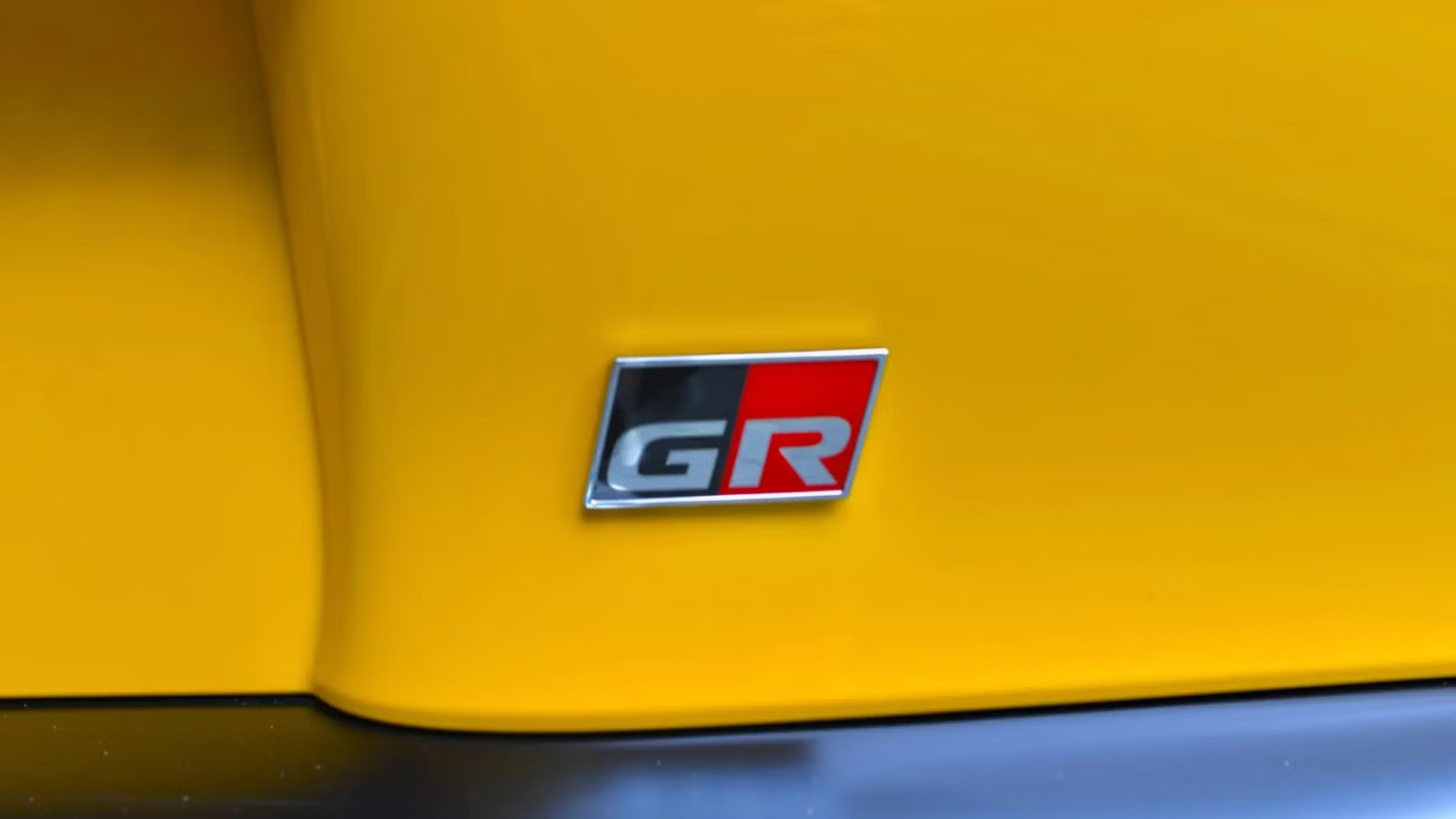
However, over the last decade, Toyota quietly built a portfolio of some of the best driver-focused sports cars. Guided by its car-enthusiast chairman, Akio Toyoda, the brand launched the Gazoo Racing (GR) division that caters to enthusiasts. First came the ultra-nimble GR86, proving that lightweight, analog fun wasn’t dead. Then came the rally-bred GR Corolla, a hyper-aggressive hot hatch that stunned the performance world. But the crown jewel of Toyota’s modern sports car renaissance was the resurrection of an iconic nameplate: the Supra.
Toyota engineered a platform capable of going toe-to-toe with the world’s best sports cars. And while enthusiasts naturally gravitated toward the flagship models, Toyota quietly built a version of the Supra that serves as a shockingly direct, highly reasonable rival to sports cars twice its price.
The Supra 2.0 Is A Fun And Sensible 911 Alternative

When the fifth-generation (A90) GR Supra arrived, the automotive world was thrilled that an iconic nameplate that had been the JDM poster car for many enthusiasts had returned, but there was an immediate problem. Everyone was immediately fixated on the headline-grabbing 3.0-liter inline-six, which was a BMW engine, but the B58 quickly proved itself to be the right engine for this platform. But lost in the shadow of that tire-shredding flagship was its lower-priced, entry-level sibling: the Supra 2.0.
Equipped with a 2.0-liter turbocharged four-cylinder engine, the base Supra was seen as the “lesser” model. But when you look beyond its powerplant, you’ll uncover a secret very few people have come to realize. The Supra 2.0 isn’t just a budget trim; it is a brilliantly balanced, hyper-responsive sports car that offers an amazingly pure driving experience at a fraction of the cost of a 911.
The Four-Cylinder Is Still Good Enough

Don’t let the cylinder count fool you. The BMW-sourced B48 engine under the long hood of the Supra 2.0 pushes out a healthy 255 horsepower and 295 lb-ft of torque, which comes in as low as 1,550 RPM. Unlike its B58 sibling, the smaller and less powerful B48 was tuned to be highly responsive, similar to a naturally aspirated engine. Having a high horsepower machine is great for spec sheet bragging rights, but on the road, you can rarely use 400+ hp without risking a trip to jail. The 2.0-liter engine hits the absolute sweet spot. It allows you to wring out the gears, work the engine, and enjoy the car’s limits without needing a racetrack to experience the thrill.
The Supra 2.0 Is A Great Car to Drive

It may not be as powerful as the B58-powered Supra or the 911, but where it truly matches the spirit of a Porsche 911 is in its chassis dynamics. By swapping out the heavy six-cylinder engine for a compact four-cylinder block, Toyota chopped over 200 pounds off the front axle. That drastic weight loss changes the entire personality of the car.
The front end becomes dart-like and eager to turn in. When you throw the Supra 2.0 into a tight canyon bend, it turns in with an agility that actually eludes the heavier 3.0 model. The steering feels lighter, feedback through the wheel is sharper, and the 50/50 weight distribution gives you the confidence to rotate the car cleanly through corners. Much like a Porsche, it rewards smooth inputs with pure, predictable balance.
A Sports Car You Can Use Everyday

Beyond the backroad thrills, the Supra 2.0 shines in places exotic sports cars fail: daily usability. The Supra in any form is a sports car you can use every day, since it has a generous trunk that can hold a lot of cargo, especially on longer trips. The lighter four-cylinder setup rewards drivers with impressive fuel economy, easily hitting over 30 MPG on the highway, which much more powerful sports cars can only hope to match. Even the 3.0-liter Supra gets better fuel economy than a base 911.
Reliability is also high on the list, and that’s important when considering a car like the 911. The B48 is just as reliable as the B58 and even less complicated. This engine has passed Toyota’s stringent quality control standards with mechanical components designed to withstand daily driving without issues. Finally, servicing a Supra doesn’t require a high-end specialist. It comes backed by Toyota’s accessible dealer network, affordable routine service costs, and a five-year comprehensive factory warranty. This was meant to be the ideal daily driver sports car.
The Four-Cylinder Supra Is Not A Lesser Supra

It’s easy to look at the faster, more aggressive Supra 3.0 and assume the 2.0 is just the second option. But that misses the point of what Toyota created. Just as Porsche offers the 911 in a dozen configurations, ranging from base models focused on purity to ultra-powerful trims focused on brute speed, Toyota gave sports car enthusiasts options. However, Toyota made fewer Supra 2.0 models and finally discontinued it after 2024.
The reason for this was quite simple: buyers all wanted the faster Supra, and if they wanted a less expensive Toyota sports car, they defaulted to the GR86. But the Supra 2.0 is a great alternative for those who want the visual drama of the Supra with slightly better handling and significantly lower running costs. The Supra 2.0 gives you all this for under $40,000. It’s not simply “lesser”; it’s a different flavor of precision performance that costs far less than any 911 that isn’t two decades old.
The Sports Car For Everyone

At the end of the day, the Toyota Supra 2.0 is the sports car for the real world. It’s built for the enthusiast who wants head-turning supercar proportions, sharp handling, and genuine driving joy, but doesn’t want the financial anxiety that usually comes with a European badge. It gives you Porsche-level thrills on a twisty road and Toyota-level peace of mind. And in today’s automotive landscape, that might just make it the smartest sports car purchase you can make.
Sources: Toyota, Porsche, Chevrolet, Fueleconomy.gov

Related posts
Latest Post


No Comments