
Yamaha Built A 113-Cubic-Inch Cruiser With More Torque Than Harley’s Fat Boy
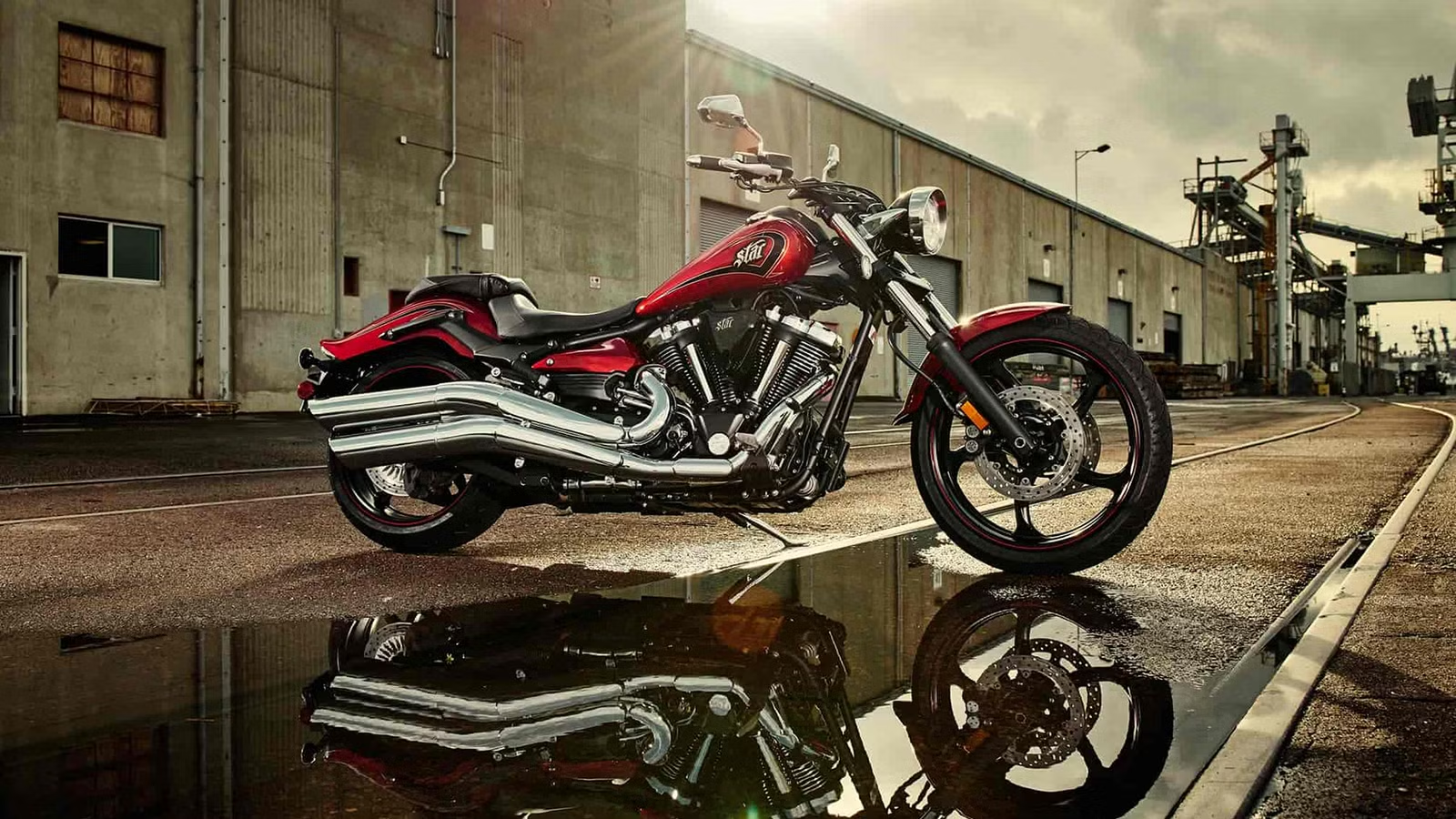
By the mid-2000s, factory motorcycles were borrowing heavily from the custom scene, giving buyers the stretched stance without the expense of commissioning a chopper. Yamaha saw an opening there. It already had a large V-twin available, and the engineering budget to build something more convincing than a styling exercise.
Big V-Twin Cruisers Were Getting Bigger In The 2000s

For manufacturers chasing American cruiser buyers, displacement was an easy number to advertise. Bigger cylinders naturally promised the sort of effortless acceleration that suited a low seat and forward controls. Yamaha’s Star division had already put a 113-cubic-inch engine into the Roadliner and Stratoliner. Those motorcycles supplied a substantial foundation for something with a much more aggressive silhouette.
The opportunity wasn’t simply to build another traditional cruiser. Yamaha’s research found that buyers of larger Japanese cruisers favored custom styling over classic styling by nearly two to one. Appearance, size, and riding position led their purchasing decisions. The challenge was making those proportions work once the motorcycle left the showroom.
Harley’s Fat Boy Set A Familiar Benchmark For Factory Muscle

Harley-Davidson’s Fat Boy provided an obvious point of comparison, even though its solid wheels and substantial front end projected a different attitude from a stretched custom. For 2008, its North American specification listed 89.8 lb-ft of engine torque at 2,750 rpm. That gave buyers a concrete measure of what Harley’s established big-twin cruiser delivered.

The model year matters here. Harley has fitted several generations of engines to the Fat Boy, and comparing an older Japanese motorcycle with whichever version is newest would muddle the story. The relevant contest began in the late 2000s, when Yamaha brought its existing large-displacement engine into a new kind of chassis.
The Yamaha Star Raider Arrived With A 113-Cubic-Inch V-Twin

The new motorcycle was the 2008 Star Raider. Yamaha gave it a high tank, a low saddle, and a front wheel that appeared to sit well ahead of the rider. The engine occupied the middle of that stretched profile with little attempt at subtlety. At 1,854cc, it had the displacement to support the visual promise.
Its engine came from the Roadliner family, but the surrounding motorcycle had a different purpose. The Raider traded the older bikes’ sweeping, traditional bodywork for sharper lines and exposed space around the engine and front end. Cycle World described the engine differences as essentially a fuel-injection recalibration to suit the revised exhaust. Yamaha had already done the expensive powertrain development.
Its 1,854cc Engine Combined Pushrods With Four-Valve Heads

The air-cooled, 48-degree V-twin used pushrod valve actuation, four valves per cylinder, and two spark plugs per cylinder. Those details gave it more sophisticated breathing and combustion hardware than its traditional appearance suggested. Fuel delivery was modern with EFI, but it was still a classic bike at heart, with large external fins preserving the appearance buyers expect from an air-cooled cruiser engine.
The Raider shared the Roadliner’s balancers and oil-cooled cylinder heads, with the engine bolted directly to the frame. Its revised exhaust retained Yamaha’s EXUP valve. Hidden where the pipes joined, the valve adjusted exhaust flow at low and medium revs.
The Raider Delivered More Torque Than A Contemporary Fat Boy

The 2008 Fat Boy’s North American specification listed 89.8 lb-ft. Yamaha’s bigger engine reached 123.8 lb-ft at 2,500 rpm—roughly 38 percent more torque, using the manufacturers’ figures. The Raider borrowed that engine from the Roadliner and Stratoliner. Buyers got the 113-cubic-inch displacement as standard, without paying for a big-bore kit or other engine modifications.
Peak Torque Arrived At Just 2,500 RPM

A low torque peak suited the Raider’s riding position and intended use. The rider could ask for acceleration without first chasing the upper reaches of the rev range. Rider’s contemporary test described an eager launch and a strong response as the engine wound up. Its assessment made clear that the engine had more to offer than relaxed cruising.
Peak torque alone doesn’t determine acceleration, of course. Gearing, weight, and traction decide how engine output reaches the pavement. The useful point is where Yamaha placed the effort: a large engine delivering its strongest twisting force early, with enough willingness to keep pulling afterward. That combination gave the custom styling some substance.
Yamaha Engineered The Chopper Styling Around A New Aluminum Frame

Yamaha’s engineers visited Daytona Bike Week in 2005 to study American custom motorcycles. Long forks, wide rear tires, and prominent engines would all feature in the Raider. Beneath that bodywork, Yamaha used an aluminum frame with redesigned steering-head and engine-mount sections.
The aluminum chassis and long wheelbase supplied the basic structure, but wheel choice also mattered. Cycle World reported that Yamaha selected a 210-section rear tire despite having room for a wider one. Going larger would have strengthened the show-bike impression. Keeping the narrower tire helped preserve steering behavior.
The Raked Fork Hid A Carefully Calculated Steering Geometry

The fork’s angle didn’t tell the whole handling story. Angled triple clamps allowed Yamaha to create the stretched appearance while retaining approximately four inches of trail. That measurement helped explain why the front end behaved more conventionally than its profile suggested. The engineering was largely invisible from the curb.
On the road, the result earned praise for stability and cornering control. Cycle World found that the chassis remained composed even when the footpeg feelers touched down. The Raider still had cruiser limits, but its appearance exaggerated how awkward it might be. Yamaha had made the stance usable.
The Raider’s Size And Riding Position Came With Compromises

Riders found that the long wheelbase and wide rear tire made the Raider harder to steer as it leaned farther over. At 735 pounds on the scales (according to the magazine), it was a substantial motorcycle to muscle through bends. Fuel stops came with a smaller allowance: just 4.1 gallons, including 0.8 beneath the seat.
Still, Yamaha delivered something worthwhile. The Raider combined substantial engine output with a chassis developed around its unusual proportions. Its torque advantage over the contemporary Fat Boy was real on the manufacturers’ specification sheets. More interestingly, Yamaha built a motorcycle capable of making that advantage useful beyond the parking lot.
Sources: Yamaha, Harley-Davidson, Rider, Cycle World

Related posts

Latest Post


No Comments