
America Built A Ferrari In The 2000s
For anyone who has driven in both the USA and Europe, you’ll know things are a bit different. In America, you can drive the North Dakota Highway 46 for more than a hundred miles without turning the steering wheel. Over in Central Europe, however, you might find yourself heel-and-toe downshifting on the Stelvio Pass just to get a morning espresso.

OK, it’s not quite like that everywhere, but the difference in the size and type of roads has made a dramatic difference to the styles of car each continent specializes in. Americans like big, comfortable, powerful V8s to rocket toward the sunset, whereas Europeans historically prefer darty sports cars that eat corners like a cornetto con crema. But one Stateside firm decided that the Euro carmakers had had the supercar game their own way for long enough in the 2000s. It was time for an American supercar challenger.
America Specializes In Muscle
It’s not really a surprise that the muscle car rules the earth in America. They are affordable, loud, fast, and comfortable, the perfect companion for a long road trip. Of course, the muscle car was born in the ’60s and typified a time of rebellion, rock ‘n roll, and free spirit. At the heart of muscle cars is the V8, and there is an unapologetic swagger to almost everything they do. No wonder that, even despite muscle cars all but dying out in the ’70s, the muscle car still captures the imagination of enthusiasts today. America has dabbled in supercars over the years — the Ford GT40 and bonkers Vector W8 being among a few notable examples — but there have been precious few everyday supercar offerings that would worry Maranello or Sant’Agata. But one rebel carmaker sought to change all that.
Saleen Was All About Hot Mustangs and Hypercars


Steve Saleen, a former Formula Atlantic driver, set up Saleen Automotive in 1983, quickly making a mark with modified Mustangs, such as the SSC. Then Saleen shocked the world in 2000, unveiling the S7, a 200 mph supercar with a 7.0-liter V8. The carbon fiber machine then gained twin turbos, taking it up to 750 hp. The only problem with the S7 is that it sits more in hypercar territory, and is probably not something you would consider driving regularly, like, say, a Ferrari 360 or 430. So Saleen needed a new car for that.
Saleen Decided To Build Its Version Of A Ferrari

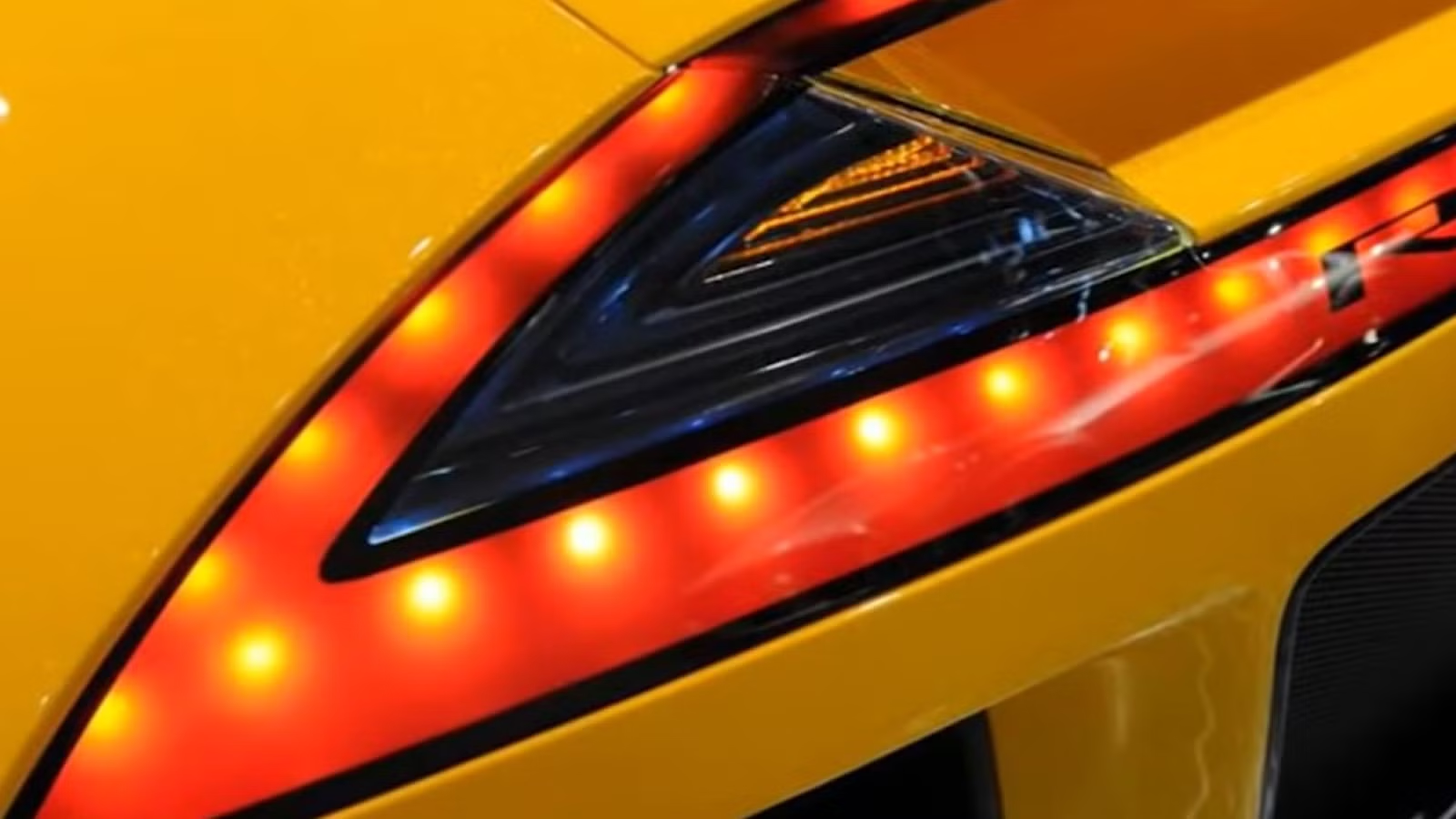
Anyone who remembers the time running up to 2008 will recall a kind of nagging doom in the background. Everything seemed to be normal, but it was hard to escape an expert popping up on the news telling people to batten down the hatches as an economic storm was blowing in. Despite this, the mood at the Saleen stand at the 2008 New York Auto Show was no doubt chipper, thanks in large part to a new car that was being unveiled in bright canary yellow. The Saleen S5S Raptor was a handsome, small supercar that looked similar to the likes of the Ferrari 430 in that it wasn’t too showy and blingy, just purposeful and, well, fast. Steve Saleen had apparently stepped back from the company a year before, and even if there were economic worries in the air, no doubt the S5S Raptor project was already too far in to just pull the plug.
The S5S Looked Like A 430, But Was More Powerful For The Same Money

The idea behind this new Saleen S5S was to be an affordable follow-up to the S7, taking Saleen into more mainstream supercar territory. The styling, said to be penned by David Byron at ASC Creative Services, was well judged, with a rear that wouldn’t look out of place on a sports car today. It may have looked like a European supercar, but at the heart was a Saleen-built supercharged three-valve, single-cam 5.0-liter V8 engine making 650 hp and 630 lb-ft of torque. The Ferrari F430 had significantly less at 483 hp, but reports at the time suggested that the Saleen would cost around the same as the Italian car’s roughly $180,000 list price.
The Saleen S5S’s V8 was paired with a six-speed manual gearbox. The company claimed it would hit 60 mph in 3.2 seconds, complete a quarter-mile run in 10.9 seconds, and exceed 200 mph — big figures for 2008. It also benefited from ABS, stability control, and traction control, making it a promising daily supercar.
America’s Ferrari Rival Never Had a Chance
The Saleen S5S Raptor had all the ingredients to take on the Italian manufacturers at their own game, and with the company’s experience in engines and racing, it stood every chance of succeeding. But in 2009 the company was reportedly sold to MJ Acquisitions, and it wasn’t until 2012 that Steve Saleen managed to reacquire the brand. Combined with the global economic situation, this backdrop meant that the moment for the S5S Raptor appeared to have passed. Sadly, the car never saw the light of a showroom.
How The Raptor S5S Returned — Sort Of

But the idea of a small Saleen supercar didn’t die out completely. In 2026, Saleen announced that it was taking orders for a new model, the S1. If the S1 Street seems familiar, that’s because it was first launched in 2017, but it is finally ready to buy. There is no V8 here, but the 2.2-liter inline four (yes, inline four) pumps out an impressive 450 hp and 425 lb-ft of torque. With just 2,700 lbs to haul around (thanks in part to the use of carbon fiber), the car should be good to hit 60 mph in 3.2 seconds. You also get a 6-speed manual or an optional paddle-shift automatic. It may not be quite the Ferrari fighter that the S5S Raptor promised, but a turbocharged mid-engine car with a manual gearbox will be happily welcomed to the roads right now.
Sources: Saleen

Related posts


Latest Post


No Comments