
10 Most Valuable 440 Six Pack Mopar Muscle Cars
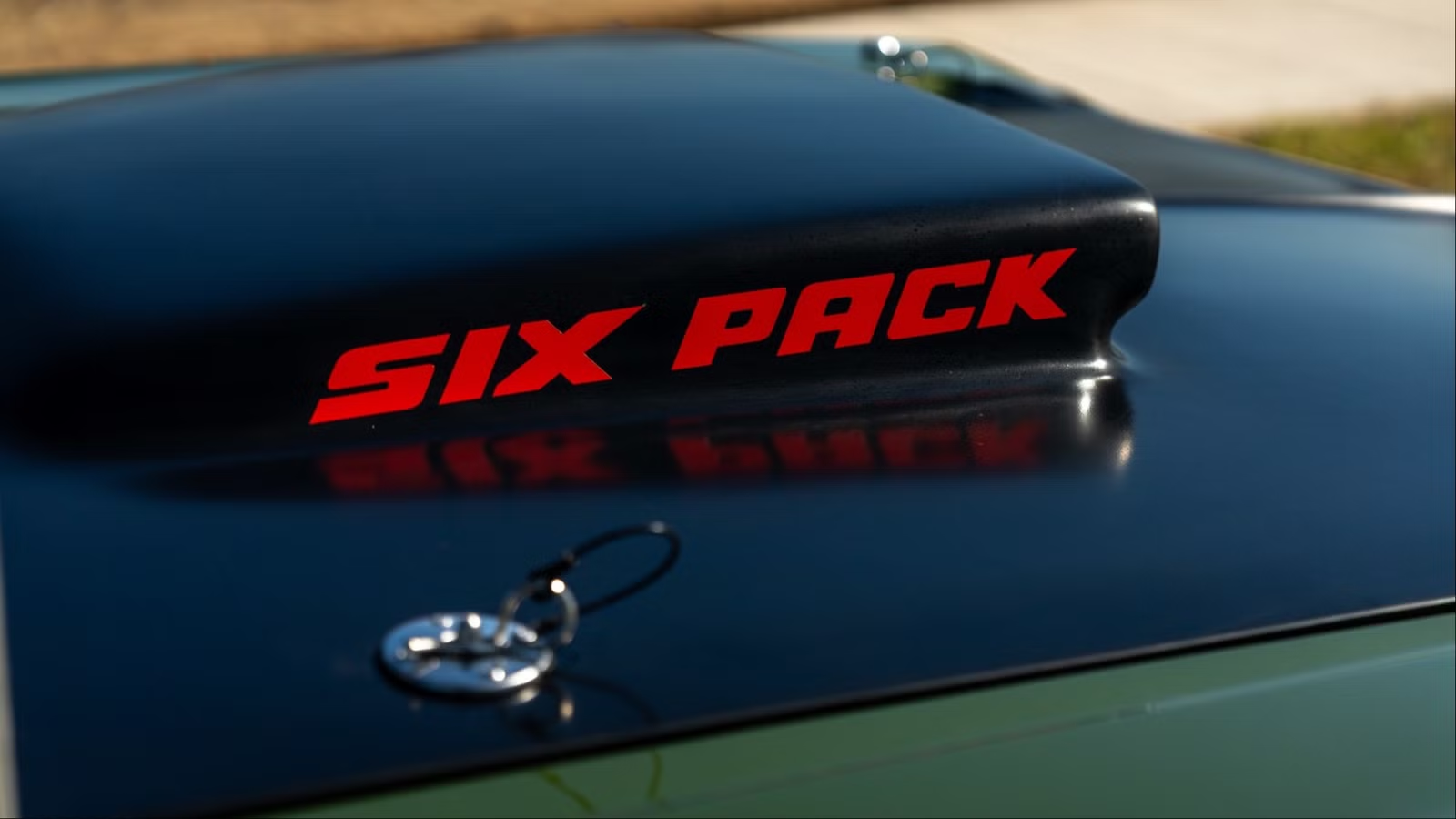
Few engines defined the muscle car era quite like the Chrysler 440ci V-8 — and when Mopar engineers bolted three two-barrel carburetors onto it mid-year 1969, they created something genuinely special. The resulting 390-horsepower monster, Mopar’s second-most-potent big-block behind the 426 Street Hemi, gave buyers a way to get Hemi-level performance at nearly half the price. Dodge called it the Six Pack; Plymouth called it the Six Barrel, often stylized as 6BBL or 440+6. It was a brilliant piece of engineering that punched well above its sticker price — and it’s still punching today, just in the collector market.

Back in the day, a 440 Six Pack car was a cheaper way to get a Hemi-like street ride, and in modern times, it has become a more affordable collectible as 426-equipped Mopars have moved out of reach for most enthusiasts. We should say the 440 Six Packs were a less expensive alternative to the Hemis, because they are really starting to rise in price. With only 13,883 Six Pack/Six Barrel cars produced between 1969 and 1971, they are almost as rare as the 9,761 Hemi cars built from 1966 to 1971 — and they are starting to command 426-level prices at auction.
1970 Plymouth Sport Fury GT
Estimated Value: $100,000
The 440 Six Barrel is usually associated with Road Runners, Super Bees, Superbirds, and other B- and E-body Mopars. However, Plymouth’s most unexpected application of the legendary big-block may have been the Sport Fury GT — the only C-body car ever to receive the powerplant. Built on the company’s massive full-size platform, the Sport Fury GT combined luxury-car dimensions with one of the nastiest engines of the golden era, creating a remarkable gentleman’s muscle car. Thanks to years spent living in the shadow of Plymouth’s more famous muscle machines, the Hagerty valuation of the Six-Barrel-equipped 1970 Sport Fury GT still sits below $100,000. But since only about 64 were built, experts estimate that a documented, running, factory-original 440-6 Sport Fury GT crossing a premier auction block would comfortably command a six-figure price tag.

1970 Dodge Coronet R/T
Estimated Value: $116,000
1970 was the last year for the Coronet as a muscle car, and the R/T is also the most criminally slept-on Mopar. For its final hurrah, the ’70 Coronet R/T got some sexy Coke-bottle curves and the most wicked grille of any Golden Age ride — a style that rivaled the second-gen Charger. It is also one of the least likely Mopars to have a killer big-block option, with just 14 Hemis and only 210 Six Packs. Shockingly, the ultra-rare 426 Hemi cars carry a top value of around $146,000, with the more abundant ’70 Coronet Six Pack R/Ts worth significantly less at $116,000. While there have been three documented Hemi auction sales in the past decade, a ’70 Coronet Six-Pack coupe or hardtop is nearly impossible to find on the open market — making it a true sleeper unicorn. That orange drop-top pictured above, however, sold for $181,500, well exceeding the Hagerty value of $160,000.
1971 Dodge Charger Super Bee
Estimated Value: $124,000

The Coronet-based Super Bee was discontinued in 1970, but the nameplate lived on as the top trim for the third-gen Dodge Charger. Like its predecessor, the 1971 Charger Super Bee continued the mission of delivering a bare-bones street machine at an affordable price — though you’d never know that today, as these are firmly six-figure rides. Hagerty pegs the Concours condition value of a ’71 Charger Super Bee with a 440 Six Pack at $124,000, which is substantially higher than its original MSRP of around $3,800. That is an astonishing increase in value that beats virtually any non-muscle-car investment by miles. If you had the foresight to purchase all 99 ’71 440 Six Pack Super Bees when they were new and held them until now, your initial investment would be worth well over $12 million — and probably more, since they would all be pristine survivor cars.
1970 Dodge Challenger R/T
Estimated Value: $127,000

The Challenger, introduced in 1970, was the last great Dodge muscle car of the classic era, and it only really had two years of full glory before the Malaise Era strangled its power in 1972. Just as the Charger R/T earned lasting fame from Steve McQueen’s classic thriller Bullitt, the Challenger R/T found its own legend as the star of the epic car-chase film Vanishing Point. With 2,035 units in ’70, the Challenger was one of the more common Six Pack Mopars, but they still aren’t cheap — a perfect-condition example is valued at $127,000. A cherry ’70 Challenger Hemi R/T commands around $245,000, though those are substantially rarer at just 345 units. Either way, the 440 Six Packs are now officially out of reach for collectors of ordinary means.
1971 Plymouth Road Runner
Estimated Value: $154,000

The Plymouth Road Runner, introduced in 1968, was the original Mopar stripped-down speed machine — priced so aggressively that buyers still had budget left over for upgrading to the 426 Hemi. No surprise, the Road Runner is the most Hemified model of all time with 2,014 units, roughly double the next closest Mopar, but in a shocking twist, only 55 second-gen 1971 examples were ordered with the Hemi. Even the 440 Six Barrel Road Runners were down in ’71, with just 246 leaving the factory — and that rarity is certainly reflected in their astronomical value. A car that once sold for pocket change is now worth over $150,000, which feels like a betrayal of the Road Runner’s original purpose as an affordable performance machine. It should also be noted that for 1971, the 440 Six Pack/Six Barrel was downgraded from 390 horsepower to 385 — something of an omen for the Malaise Era gloom that followed.
1970 Dodge Charger R/T
Estimated Value: $158,000

While the 1969 arrival of the 440 Six Pack was a joyous occasion, Mopar’s mightiest muscle car, the Dodge Charger, was initially excluded from it. The option became available in 1970, but by that point so few buyers chose it that only 116 units were built — making the ’70 Charger 440 Six Pack R/T one of the rarest classic Mopar muscle cars. Its $158,000 Concours condition value is substantial, though real-world auction results suggest the market has an even higher opinion of it. That black Six-Pack R/T pictured above sold for $297,000 at Mecum Kissimmee 2025 — more than many second-gen Charger Hemis fetch, and clear proof that the Six Pack is gaining serious ground in the collector market.
1971 Plymouth ‘Cuda
Estimated Value: $163,000

Super-rare 1971 Plymouth Hemi ‘Cuda convertibles can and do sell in the multi-millions, with a classic muscle car record $3.5 million gavel drop — which makes the Concours condition value of the hardtops, around $470,000, seem almost reasonable by comparison. That, in turn, makes it feel like they are practically giving away ’71 440+6 Cudas, which top out at $163,000 for a pristine example. The convertibles, on the other hand, are Hemi-esque in price, with one 6BBL drop-top nearly cracking $1 million and another that did reach that mark but failed to meet reserve. Even 340 ‘Cuda convertibles can command serious money — one recently crossed the block at $352,000, while any other Mopar with that small-block would typically be a $50,000-and-under car. The ’71 hardtops are no slouches either, with an In Violet 440+6 ‘Cuda (pictured above) hammering at $390,500 and shattering the Hagerty valuation.
1971 Plymouth GTX
Estimated Value: $164,000

The GTX was billed as the “Gentleman’s Muscle Car,” mostly because it came loaded with every option and feature Plymouth had to offer, making it a pricier proposition than the no-frills Road Runner it was based on. In a bizarre turn of events, it has now become the less valuable of the two. A 1971 second-gen 440+6 GTX carries a perfect condition value of $164,000 — which sounds like a lot until you look at actual auction results. We couldn’t find a sale that broke into six figures, and Mecum has moved several for well under that mark. With only 135 440+6 GTX cars built in ’71, it should be the “Gentleman’s Unicorn” given its rarity and pedigree, but instead it remains something of a budget Mopar — one that hopefully collectors will soon recognize as woefully undervalued and underappreciated.
1972 Plymouth Road Runner GTX
Estimated Value: Unknown
Many enthusiasts assume the 440 Six Pack’s story ended when Chrysler retired it after the 1971 model year, but they’d be wrong. In early 1972, a tiny handful of Road Runner GTXs and Charger Rallyes slipped out of the factory with the 390-horsepower triple-carb setup before the option was canceled. Chrysler originally intended to offer the 440 Six Pack engine option broadly for 1972 and even printed promotional materials stating so. However, the engine failed to pass the newly implemented 1972 EPA emissions standards, forcing Chrysler to cancel the powerplant in early August 1971. Most experts believe only three to five factory-built 1972 Six Pack cars were completed before the plug was pulled, and of those, only one example is widely accepted as surviving today. It’s hard to speculate on value since it has never appeared at public auction, but as an extraordinarily rare car representing the final chapter of the factory Six Pack era, its historical significance would likely make it one of the most closely watched Mopar auction lots in recent memory.
1969 Dodge Super Bee A12
Estimated Value: $168,000

Codenamed “A12,” Dodge’s top-secret mission in 1969 was to equip the super-affordable Super Bee with the capability to take on more expensive Hemi-powered Mopars. The effort was aided by the new Chrysler 440 Six Pack big-block, and by mid-model year 1969, the Super Bee A12 was literally giving 426 cars a run for their money. A half-century later, however, the ’69 Super Bee A12 is anything but cheap, with a Concours condition value of nearly $170,000. There was also a ’69 Plymouth Road Runner A12 with the 440 Six Barrel, but those, for whatever reason, are not as valuable, with a top limit around $115,000. There were 1,412 Road Runner A12s built versus 1,907 Super Bee A12s in 1969 — so the Dodge is actually more common yet radically more collectible, and that, by the way, is the real talk about the birds and the bees that parents should be having with their children.
1970 Plymouth Road Runner
Estimated Value: $181,000

The first-gen Plymouth Road Runner was one of the biggest-selling classic-era Mopar models, but in its final year, sales fell dramatically from an all-time high of 84,420 units in 1969 to just 43,404 in 1970. Anyone who knows Mopar understands that rarity equals serious money in the collector market, and with only 2,531 ’70 Road Runner 440 Six Barrels produced, it’s a top draw. With an $181,000 flawless-condition value, the ’70 Road Runner is more expensive than many B-body Hemi Mopars. That’s not bad for a car that started life as a budget bruiser with an original MSRP of around $3,400 — a figure that, adjusted for inflation, represents a staggering return on investment that makes the S&P 500 look modest by comparison.
1970 Plymouth Super Bird
Estimated Value: $444,000

Since its introduction in 1966, the Dodge Charger proved to be a fairly poor NASCAR racer with both lift and drag issues, so in 1969 Dodge fitted it with an aerodynamic nose cone and stabilizing rear wing to create the Daytona, which thoroughly dominated the circuit. In 1970, Plymouth got its own Road Runner-based aerocar that also crushed it in NASCAR, before both were banned from competition. Dodge Hemi Daytonas sell in the millions, and even standard 440 examples command multi-hundreds of thousands — yet they were far rarer than the Superbirds, with around 500 units total. The ’70 Plymouth Superbird more than doubled that with 1,084 cars, and as a strange historical footnote, buyers weren’t initially impressed: many sat unsold on dealer lots for years. Now, however, they are a hot commodity, with the 440 Six-Barrel cars carrying a Concours condition value of around $444,000. That’s a legitimate figure, as they regularly sell at that level and higher — which leads us to predict the Superbird is the next million-dollar Mopar.
Sources: Hagerty, Mecum

Related posts




Latest Post


No Comments