
What is WLTP?
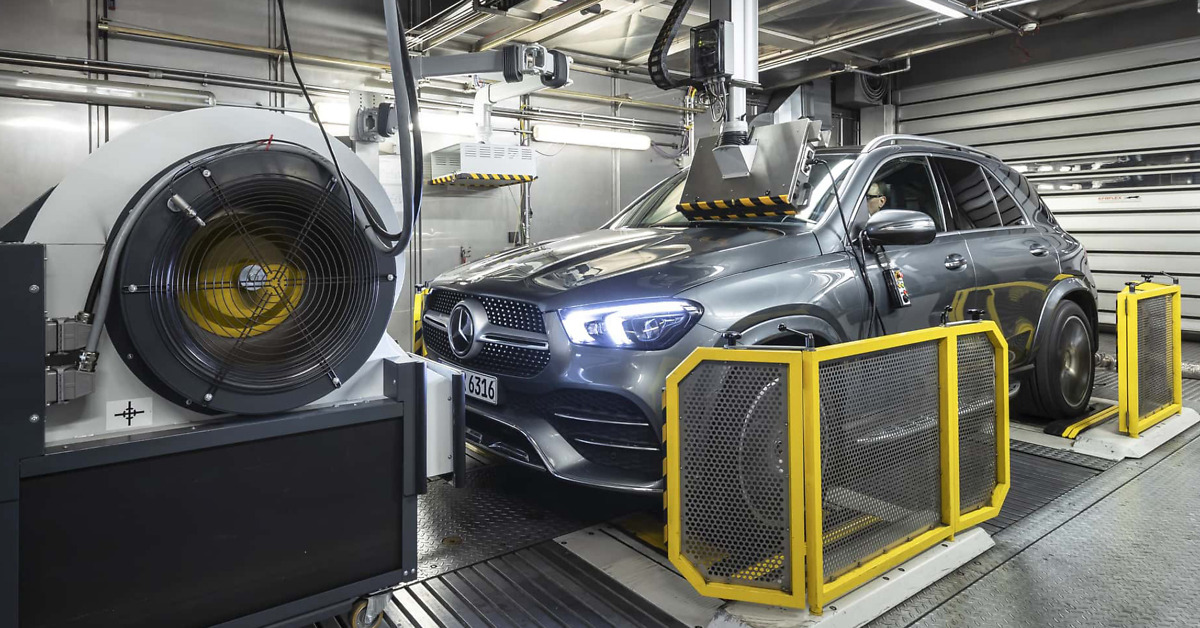
WLTP is the official testing system used by the EU and UK to calculate a new car’s fuel consumption, CO2 emissions, energy consumption and electric driving range. But what do WLTP figures actually tell you, and how accurate are they?
If you’ve been looking for your next car, either new or used, you’ve probably encountered the letters ‘WLTP’. You’ll see them alongside claimed fuel economy figures for petrol, diesel and hybrid cars, the official range of electric cars and plug-in hybrids, and CO₂ emissions figures.

WLTP stands for ‘Worldwide Harmonised Light Vehicle Test Procedure’. It’s a standardised laboratory test designed to give consumers a consistent way of comparing the efficiency and emissions of different cars.
It replaced the previous ‘New European Driving Cycle’ (NEDC) testing procedure, which had become increasingly inaccurate in predicting how modern cars performed in everyday driving. WLTP was designed to provide figures that were closer to real-world results, and it has generally succeeded.
That said, while WLTP is more realistic than the NEDC test it replaces, the figures it produces can still be overly positive about fuel economy and electric driving range.
What does WLTP measure?

Depending on the type of car, WLTP testing is used to establish official figures for:
- fuel consumption
- CO2 emissions
- electric energy consumption
- electric driving range
These are the numbers you’ll see when looking at manufacturer specifications and comparing different new cars.
The testing is standardised so that different cars are assessed under exactly the same conditions. That gives you a reasonably meaningful comparison between two cars, even though your own fuel economy or electric range may be quite different from these official WLTP figures.
For example, if Car A has a WLTP combined fuel economy figure of 50mpg and Car B manages 40mpg, it’s reasonable to expect Car A to be more economical under similar conditions. It doesn’t guarantee you’ll achieve 50mpg on your daily commute, however.
Think of WLTP as a comparison tool, not a promise.
WLTP figures are produced under standardised conditions so you can compare one car with another. Your actual fuel economy or electric range will depend on where, when and how you drive.
How does the WLTP test work?
Although WLTP is more realistic than NEDC, the basic testing process is similar. A car is run on a rolling road – effectively a treadmill for cars – while following a prescribed sequence of acceleration, steady-speed driving, slowing down and stopping.
The procedure includes different phases representing different speeds and driving conditions. The tests will produce data for both city (‘Urban’) and motorway (‘Extra-urban’) driving, with the overall results called the ‘Combined’ figure, which is the number that must be quoted in any advertising claims. The Combined figure is also the one that websites and magazines will use.
Laboratory testing is artificial, but there’s a good reason for it. Driving the same cars on public roads would introduce countless variables that are impossible to control, from weather and traffic to road surfaces and driver behaviour. A controlled test allows different vehicles to be assessed under repeatable conditions.
What was NEDC?
Despite the word ‘new’ in its name, NEDC dated back decades. It had been used to determine official CO2 figures since the 1990s, and its test conditions became increasingly detached from modern cars and everyday driving. The government notes that the gap between NEDC laboratory results and real-world emissions grew as vehicle technology developed.
WLTP replaced NEDC for establishing official fuel consumption and CO2 emissions for new cars from September 2017, becoming mandatory for all new combustion-engined cars by September 2018.
What’s the difference between NEDC and WLTP?
NEDC used a comparatively short and gentle laboratory cycle. WLTP is longer, faster and more demanding, with harder acceleration and a wider range of operating conditions.
WLTP also does a better job of recognising differences between versions of the same car. Optional equipment, different wheels and tyres, and vehicle weight can all affect efficiency.
As a result, WLTP fuel consumption and CO2 figures will often look worse than old NEDC figures for an equivalent car – but that’s largely because the newer test is making the car work harder, not because the car has suddenly become less efficient.
You’ll still see NEDC figures when researching an older used car, even though the system itself has long since been superseded. Because the testing programme is quite different, there’s no way to convert NEDC numbers to WLT.
How accurate are WLTP fuel economy figures?
WLTP provides a better basis for comparison than NEDC, but you shouldn’t assume that the WLTP figures manufacturers advertise represent the exact fuel efficiency that your car will provide in real-world driving conditions.
Fuel consumption is affected by numerous factors. Short journeys with a cold engine can be particularly inefficient, while sustained high-speed motorway driving at a few mph above the speed limit can use considerably more fuel than a laboratory test suggests.
Temperature, traffic, hills, carrying passengers or luggage, tyre pressures, air conditioning and your driving style can all change the result. So you might beat the official WLTP figure under favourable circumstances, or fall well short of it under others.
What does WLTP mean for electric cars?
For an electric car, the main figure buyers look at is battery range. If an EV has an official WLTP range of 300 miles, that means it achieved the equivalent result under the prescribed test procedure. It doesn’t mean the manufacturer is guaranteeing that you’ll travel 300 miles between charges every time.
Real-world EV range can vary substantially. High motorway speeds tend to increase energy consumption, while cold weather can reduce range because batteries perform differently at low temperatures and energy is required to heat the battery and cabin.
On the other hand, gentle driving in mild weather can sometimes produce results that match or even exceed the official figure.
As with a petrol or diesel car, the useful part of WLTP is comparison. If one EV has a WLTP range of 200 miles and another has 300 miles, you can reasonably expect the second car to travel considerably further under broadly similar conditions – even if neither achieves its official figure on a particular journey.
One important difference is that electric cars tend to be more efficient in stop-start driving rather than on higher-speed, steady-state driving. That’s pretty much the exact opposite from petrol or diesel cars, which tend to use much less fuel in motorway driving than around town.
WLTP range isn’t motorway range
This is particularly important when comparing electric cars. A 300-mile WLTP figure shouldn’t be interpreted as meaning you’ll necessarily cover 300 miles at 70mph on a cold winter motorway.
Many manufacturers are starting to publish specific motorway battery range numbers, still obtained using WLTP testing protocols. If long motorway journeys are important to you, look for these numbers as well as the overall figure.
What about plug-in hybrids?
This is where WLTP figures are particularly problematic. A plug-in hybrid combines a petrol engine (or occasionally, a diesel engine) with a battery and electric motor. Its official figures therefore depend heavily on how much of the test can be completed using electricity.
That can result in eye-catching official fuel-economy figures that bear little resemblance to what an owner achieves if they rarely plug the car in.
If you regularly charge a plug-in hybrid and most of your journeys fit within its electric range, you may use very little petrol. If you don’t charge it and regularly make long journeys, the combustion engine will do much more of the work and fuel consumption can be much higher than the headline WLTP figure – and sometimes worse than a regular petrol engine without the hybrid component.
For a buyer interested in plug-in hybrids, it’s critical to be able to charge the car pretty much every day to get the most benefit from it. The good news is that the latest generation of plug-in hybrids have significantly better electric driving range than older models, meaning most of your local driving can now be electric-only as long as you keep the battery charged.
How does WLTP affect the tax you pay?
For cars first registered from April 2020 onwards, WLTP CO2 figures became the basis for calculating the CO2-related first-year Vehicle Excise Duty (VED) charge.
CO2 emissions also matter for company-car taxation, although the rules depend on when the car was registered and, for low-emission cars and plug-in hybrids, other factors such as electric range. HMRC continues to distinguish between relevant NEDC and WLTP figures when dealing with cars from different registration periods.
Why can the same car have several different WLTP figures?
Look closely at a manufacturer’s price list and you may find different WLTP results for different trim variants within the same model line-up. That’s perfectly normal.
Engine and motor specifications obviously matter, but so can the gearbox, battery, vehicle weight, wheel and tyre combination and optional equipment. Larger wheels and wider tyres, for example, can increase energy consumption.
You may also encounter a WLTP range (50-60mpg, for example) rather than one single figure for a particular model. That’s because different configurations of the car can produce different results.
This is an improvement over simply quoting one optimistic figure across an entire model range, but it makes checking the specification of the particular car you’re buying more important.
So, can you trust WLTP figures?
Yes, but as a comparison tool, not a forecast. WLTP is considerably more useful to today’s car buyer than the old NEDC system because its testing procedure is more demanding and better reflects modern driving. But it’s still a controlled laboratory test rather than a prediction of exactly what will happen on your journey.
Don’t treat 50mpg WLTP as a promise that you’ll achieve 50mpg, or a 300-mile WLTP EV range as a guarantee that every full battery will take you 300 miles.
Instead, use WLTP figures for what they do best – comparing the relative efficiency, emissions and range of different cars under the same standardised test conditions. Your mileage, quite literally, may vary.
Read more:

Related posts





Latest Post


No Comments