
Everything you need to know about Citroën

Citroën might be one of the more familiar names on the UK car market, but many probably don’t realise just how innovative the French manufacturer has been over its more than 100-year history.
Many features taken for granted in today’s cars were popularised on Citroëns, among them disc brakes, front-wheel drive and diesel engines.

Citroën was also renowned for the look of its cars, not least the DS of the 1950s, its aerodynamic body and innovative self-levelling suspension earning it third place in a vote for the ‘Car of the Century’. Hydro-pneumatic suspension, providing a far more comfortable ride, would be a distinctive feature of Citroën cars for many years.
Citroën profits never matched the level of its innovation which led to a merger with French state brand Peugeot in the mid-1970s. In the years that followed the distinctive aspects of Citroën were diluted, but in more recent times the brand has tried to recover some of that reputation – particularly in terms of styling.
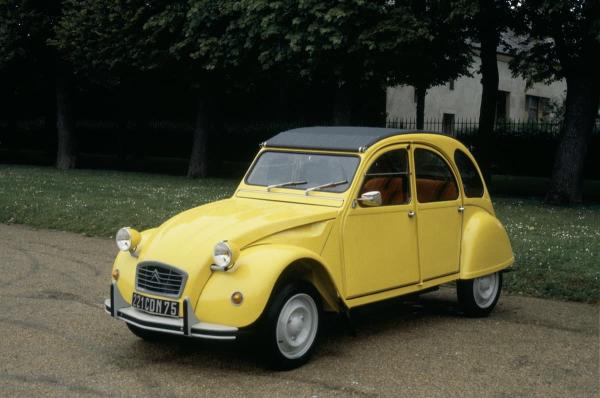
The most famous Citroën model remains the extremely basic, underpowered 2CV, its popularity about to be revived in a new budget electric vehicle – but the 2CV is by no means indicative of what Citroën has been all about.
So who or what is Citroën?
Like many car manufacturers, Citroën started off making something very different – in this case, it was armaments for the French military in the first world war. But company founder André Citroën already had some automotive experience with early manufacturer Mors, and he realised that when the war ended he would own an up-to-date factory with nothing to make.
The result was the Citroën Type A. Unveiled in March 1919, it was a 10hp car designed to be better but cheaper than any rival, and André began selling them from a showroom on the Champs-Élysées in Paris, the building still used by Citroën today.
André Citroën was an innovator. He introduced the first all-steel body on a European car in 1927, thanks to a relationship with American Edward Budd, who made stainless-steel bodies for Pullman cars on the railways.
The first diesel-powered passenger car followed in 1933, while the Traction Avant of a year later was a three-time innovator – the first car without a separate chassis, with independent suspension all round and with front-wheel drive.
However, Citroën’s insistence on selling his cars cheaper than those of rivals led to major losses. In 1934 the company faced bankruptcy and was bought out by tyre manufacturer Michelin. André Citroën died in the following year.
Citroën had also began building half-track military vehicles – these so impressed the US Army that it acquired a licence to produce them and eventually made some 41,000 during the second world war. Ironically, Citroën’s own vehicles were taken over by the Nazi occupiers of France in 1940 and used by the German army, two opposing nations facing each other with the same hardware.
Straight after the second world war, Citroën launched one of its most famous cars – the very basic and dirt-cheap 2CV. Intended to allow French farmers to replace their horses with cars, it became a cult phenomenon and would stay on sale until 1990 with 9 million made.
It was the DS of 1955 that had a more significant effect, however. Not only was it highly aerodynamic compared to rivals, it introduced self-levelling hydro-pneumatic suspension. On turning the key, the car would raise itself to its travelling height, which could be adjusted by the driver. The system would be fitted to more than 9 million Citroën cars over the next few decades.

Citroën also tried to develop more powerful cars in novel ways, not least by buying Italian sports car maker Maserati in 1968, only to sell it again in 1975. While it led to some innovative and impressive cars, the company was never far from financial trouble.
Fiat took a 49% stake from Michelin in 1968, only to sell it back again five years later, and shortly after Citroën again faced bankruptcy. At this point the French government, fearing huge job losses, stepped in and Citroën was merged with its great rival Peugeot.
After this Peugeot and Citroën cars became increasingly similar to one another, the innovative nature of the latter diluted. This was partly addressed in 2009 with the launch of sub-brand DS Automobiles – recalling the classic DS of the early 1950s and boasting a slogan ‘Spirit of Avant Garde’.
DS Automobiles has since been spun off as a standalone brand but remains closely connected to Citroën, which with sister brand Peugeot is now part of the giant Stellantis Group, encompassing brands as diverse as Alfa Romeo, Fiat, Jeep and Vauxhall. And in recent times Citroën has again been trying to build more distinction into its cars, especially in their styling.
In recent times Citroën has suffered at the hands of the new entrants to the UK market, sales sliding 30% in 2025. They’ve recovered somewhat in 2026 as the brand tries to again build more distinction into its cars, especially in their styling – recent comments from Stellantis management suggests this policy will ramp up in coming years, while including the revival of Citroën’s most famous car of all, the 2CV.
What models does Citroën have and what else is coming?
The Citroën model range has been rationalised somewhat in recent years while adopting the move to electric travel, though plans to drop some previous combustion-engined models and go electric only have been backtracked on to an extent.
Core of the range have long been the ‘three Cs’, the C3, C4 and C5 which started life as traditional cars of increasing size. The smallest and cheapest, the C3, arrived in fourth-generation form in 2025 as a visually identical sister to the electric ë-C3, which launched a year earlier. Available with petrol and hybrid engines it’s more upright and boxy, looking more like an SUV and very different to its predecessor that was overshadowed by its SUV sister the C3 Aircross.
A new C3 Aircross arrived in 2025, the small SUV mild-hybrid powered and sharing much of its mechanical specification with sister brand Vauxhall’s Frontera. Neither of the combustion-engined C3 variants have particularly impressed, awarded a New Car Expert Rating of C on The Car Expert’s industry leading Expert Rating index, whereas the electric versions of both models have done significantly better.
The ë-C3 arrived in 2024 as Citroën’s first salvo in offering more affordable electric cars. Reviewers praised its comfort and practicality at an affordable price, The Car Expert editor Stuart Masson describing it as “a great value small electric car” and the ë-C3 earning a New Car Expert Rating of A.
The ë-C3 Aircross has done even better. Again based around the electric version of the Vauxhall Frontera, it was named The Car Expert’s Best Value Family Car for 2026, praised for its affordability and comfort.
The C4 has been around since 2021 as Citroën’s offering in the five-door family car market. This sector is declining and one of the C4’s main rivals, the Ford Focus, is no more. The Citroën has avoided the axe by differentiating itself from remaining rivals such as the Vauxhall Astra, distinctive looks and a higher ride height bringing it closer to SUV status. Its C-level Expert Rating has been earned by low CO2 emissions and running costs countered by an average safety rating and a poor reliability record.
Citroën also launched a sort-of crossover-style saloon version of the C4, dubbed the C4 X, and both have been given the electric treatment. The X struggles for recognition, dubbed by one reviewer as “a C4 with a bigger boot” – both electric C4s manage a New Car Expert Rating of D but the petrol C4 X is only musters a New Car Expert Rating of D.
The Citroën range in our Expert Rating index
Paradoxically Citroën’s larger C5 X, launched in 2022 as effectively a larger variant of the C4, was widely praised, some reviewers describing it as the best Citroën in years and an interesting alternative in the crowded crossover market.
Currently holding a B-level Expert Rating, the C5 X was also rated a better and less conservative bet than its older sister the C5 Aircross, launched in 2019. Unsurprisingly we now have a new C5-Aircross, launched in the summer of 2025 as Citroën’s largest SUV and a rival to the likes of the Nissan Qashqai. Both petrol and electric versions have earned A-level Expert Ratings, praised for their sharper styling, with the only major minus a less than impressive warranty.
Citroën has enjoyed great success with its van-based people-carriers, particularly the Berlingo. Plans to discontinue the combustion-engine version, leaving only the ë-Berlingo, have been dropped and you can buy the car today with a petrol and even a diesel engine. Similarly, the much larger SpaceTourer is available as an EV or with a diesel engine – based on the Dispatch van, it is able to seat nine.
And if you want quirky… Citroën offers the Ami, effectively an electric quadricycle with a roof, seating two and going no further than around 40 miles before you have to plug it in.
Without doubt the most eagerly awaited new model from Citroën is a new 2CV. A star of the 2026 Paris Motor Show, about the only aspect the newcomer shares with its predecessor is a vaguely similar look, Citroën hoping to follow the highly successful route Renault has gone with its retro-styled new Renault 5. The new 2CV is no tin snail but an affordable EV, with predictions it could sell for as little as £13,000 when it goes on sale, possibly in 2028.
Citroën is also putting faith in a revival of the MPV market. The 2026 Brussels Motor Show saw the unveiling of a concept for a sharply-styled people carrier in the mould of the former C4 Picasso. Likely to take the SpaceTourer name and be offered with five or seven-seat layouts, the car could make production by the end of the decade.
Where can I try a Citroën car?
Citroën has around 130 dealerships across the UK, many of them in joint outlets with Peugeot – a postcode finder on the Citroen UK website will help locate the nearest outlet to you.
A much smaller number of outlets also sell cars from spin-off brand DS in what are known as ‘DS Salons’, though DS favours sales through its website.
The largest Citroën dealer group is actually owned by the manufacturer’s owner – called ‘Stellantis & You’, it has 18 sites across the country.
What makes Citroën different to the rest?
It’s fair to say that being ‘different to the rest’ is a trait much more appropriate to the Citroën of earlier years than in more recent years.
The merger with Peugeot robbed Citroën of much of its individuality as the two makes indulged in such economies as platform-sharing and that has only increased since they joined with such brands as Vauxhall in the giant Stellantis group.
In recent times however, as well as launching the spin-off DS brand (which admittedly some buyers still struggle to fully understand) Citroën has tried to revive some of its individuality in the look of its cars, with novel body shapes in its C4 and C5 X, styling touches as the ‘air bubbles’ applied to the side of some models and more stylish interiors.
Today’s Citroën cars certainly look more distinctive than those of sister maker Peugeot and the brand enjoys a generally positive reputation amongst buyers – new models on the way suggest this move towards standing out from the crowd is set to continue.
A Citroën fact to impress your friends
Citroën has a place in the famous Guinness Book of World Records, for the world’s largest advertising sign.
Between 1925 and 1934, the company name and its double chevron logo were illuminated on three sides of the Eiffel Tower in Paris.
It took 250,000 light bulbs and almost 400 miles of cable to make the letters, which were each 30 metres high.
The advertising programme ended in 1934 when Citroën fell into bankruptcy.

Summary
The Citroën of today is a major mainstream manufacturer with a similar appeal to other big names such as its sister Peugeot, Ford and Vauxhall.
But the brand has tried hard to revive some of the distinctive elements of its earlier years and its models can polarise some opinions – in turn making them appeal more to those who want all the practicality of a mainstream car without driving something as bland as the next car in the traffic light queue.
This feature was first published in April 2024 and updated in October 2026
Buy a Citroën
If you’re looking to buy a new or used Citroën, The Car Expert’s partners can help you find the right car.
Lease a Citroën
If you’re looking to lease a new Citroën, The Car Expert’s partners can help you find a competitive deal.

Personal contract hire deals from Select Car Leasing. Find out more

Related posts


Latest Post


No Comments