
Toyota Is Testing A New GR86 Engine That Enthusiasts May Love
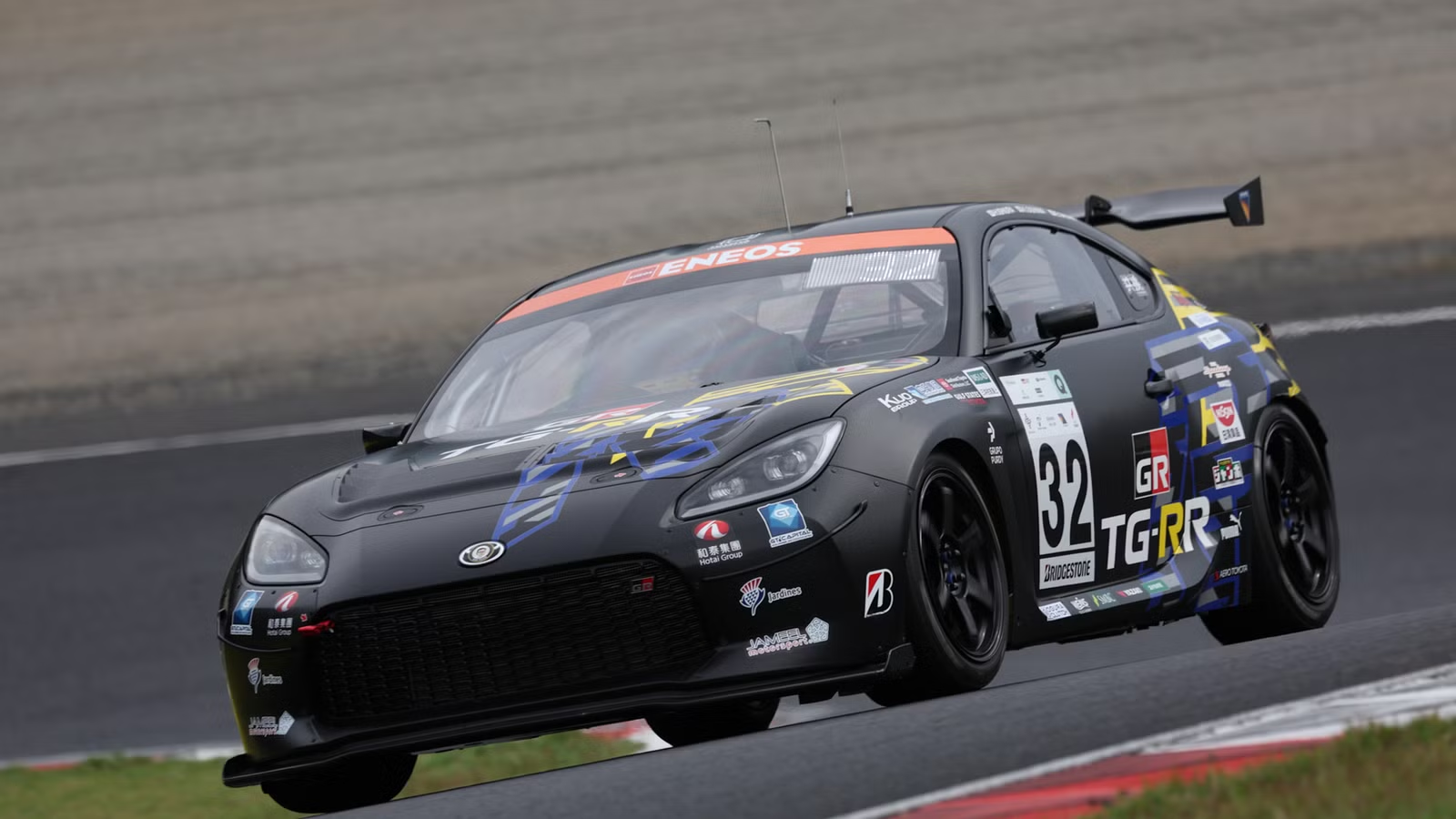
Toyota‘s next GR86 might not need a turbocharger after all. The GR86 Future FR prototype competed at last weekend’s Super Taikyu round at Okayama with a newly developed naturally aspirated 2.0-liter inline-four, codenamed Levin, instead of the turbocharged engines that had fueled years of speculation about where the coupe’s next generation was headed.

The new engine makes around 220 hp, landing close to the 228 hp produced by the current car’s Subaru-sourced 2.4-liter flat-four. That’s a notable step back from the roughly 300 hp Toyota had previously extracted from a turbocharged 1.6-liter triple in earlier Future FR test mules, and it’s a clear signal that Toyota is still chasing balance and feel over raw numbers for its affordable sports car.
Why Toyota Walked Back From The Turbo Route
For the last few seasons, Toyota’s GR86 test mules ran the GR Corolla and GR Yaris-sourced 1.6-liter turbocharged three-cylinder, including a destroked 1.4-liter variant used for synthetic fuel testing. Those outings had GR86 fans bracing for a forced-induction future, especially with Toyota’s G20E turbo inline-four waiting in the wings with over 400 hp out of the gate and a reported ceiling north of 600 hp.

That power is going somewhere, just not into the GR86. The naturally aspirated Levin engine is related to the G20E but strips out the turbocharger and its supporting hardware entirely. Engineers told Japan’s Car Watch that losing the turbo components lightens the front end, and racing driver Kazuya Oshima said the engine revs higher than the development team expected. The GR86 Future FR prototype also picked up double-wishbone suspension at both ends, suggesting handling, not horsepower, is still the priority.
What Linear Power Delivery Means For GR86 Diehards

Trading boost for displacement brings back the exact traits that made the GR86 and its BRZ twin a reference point for budget driver’s cars in the first place: no turbo lag, more predictable throttle response, and torque that builds with revs instead of arriving in a rush. For a chassis tuned around light weight and balance rather than outright grip, that kind of linear power delivery matters more than a bigger dyno number.
If the Levin engine reaches production, it would replace the Subaru-sourced FA24D flat-four, ending the coupe’s longstanding boxer-engine tradition. That would mark a bigger shift in the GR86’s identity than its horsepower figures suggest.
The G20E Turbo Isn’t Going Away, Just Elsewhere

None of this takes the G20E turbo off the table. Toyota has been vocal about the engine’s potential, with over 400 hp promised at launch and up to 600 hp floated for future applications, likely aimed at the rumored MR2 or Celica successor built on a mid-engine platform Toyota is also testing. The GR86 getting the naturally aspirated, non-turbo version of that same architecture suggests Toyota sees a clear lane for each car: a high-output halo for one, and an analog, momentum-driven coupe for the other.
For GR86 enthusiasts who value its analog driving experience, that’s encouraging news. Testing the Levin engine in competition suggests Toyota remains committed to the driver-focused philosophy that made the coupe popular.

Related posts




Latest Post


No Comments