
The Naked Bike That Makes Reliability Feel Exciting
Reliability is rarely treated as an exciting motorcycle feature. Riders praise horsepower, exotic suspension, electronic trickery, and styling sharp enough to frighten household pets. Dependability usually enters the conversation later, often after the warranty expires or a warning light turns a Sunday ride into an expensive roadside picnic. Yet reliability matters most when the motorcycle in question is exciting enough that you’ll actually want to keep riding it for years.
Exciting Motorcycles Can Ask Owners To Accept Drama
Performance motorcycles are usually sold through intensity. Manufacturers chase bigger power figures, lighter components, smarter suspension, and electronics capable of interpreting more data than a small weather station. That technology can produce astonishing machines, but it can also add complexity, increase repair costs, and leave owners wondering whether every new warning message represents a minor sensor tantrum or the opening scene of a financial horror movie.

At the other end of the spectrum, reliability is often associated with motorcycles engineered around modest expectations. Think small-displacement commuters, understressed engines, basic suspension, and equipment lists that can be summarized before your coffee cools down. Those bikes are useful and sensible, but riders searching for serious performance may not find much emotional pull in choosing something primarily because it’s unlikely to inconvenience them.
The more interesting question is whether proven engineering can coexist with superbike-adjacent acceleration, aggressive styling, and enough character to make a routine ride worth extending. A motorcycle doesn’t need to be fragile or temperamental to be memorable. In fact, the ability to start every morning and perform consistently can make speed easier to enjoy because the rider spends less time wondering what the machine might demand in return.
Complexity Isn’t Always The Same Thing As Character


Electronic suspension, variable valve timing, forced induction, active aerodynamics, and elaborate rider aids can all make a motorcycle technically fascinating. None of those features automatically creates a stronger connection between the rider, throttle, tires, and road. Complexity can expand capability, but character still comes from how the engine responds, how the chassis communicates, and whether the machine encourages its owner to take the long way home.
Simplicity doesn’t have to mean primitive, either. A mature engine can be paired with modern safety systems, a well-developed chassis, quality suspension, and useful conveniences without turning the motorcycle into a rolling technology demonstration. Sometimes the strongest formula is one that has been refined for years, with each update improving the experience rather than replacing the entire foundation just to create another headline.
The Good Old Inline-Four Still Offers A Rare Combination Of Smoothness And Power

The good old inline-four engine is one of the most familiar layouts in performance motorcycling, and familiarity shouldn’t be mistaken for irrelevance. A well-tuned four-cylinder engine can idle cleanly, pull smoothly through traffic, and remain remarkably civilized at everyday speeds. Open the throttle farther and let the revs climb, though, and that same engine can become a completely different animal with a sharper sound and increasingly urgent acceleration.
Japanese manufacturers have spent decades refining this configuration across commuters, sport-tourers, roadsters, and race-bred superbikes. One company in particular has repeatedly placed muscular four-cylinder engines inside upright naked bikes, creating motorcycles that offer superbike-derived energy without the folded ergonomics or higher insurance premiums that often accompany a fully faired machine.
The Kawasaki Z900 Makes Reliability Feel Exciting

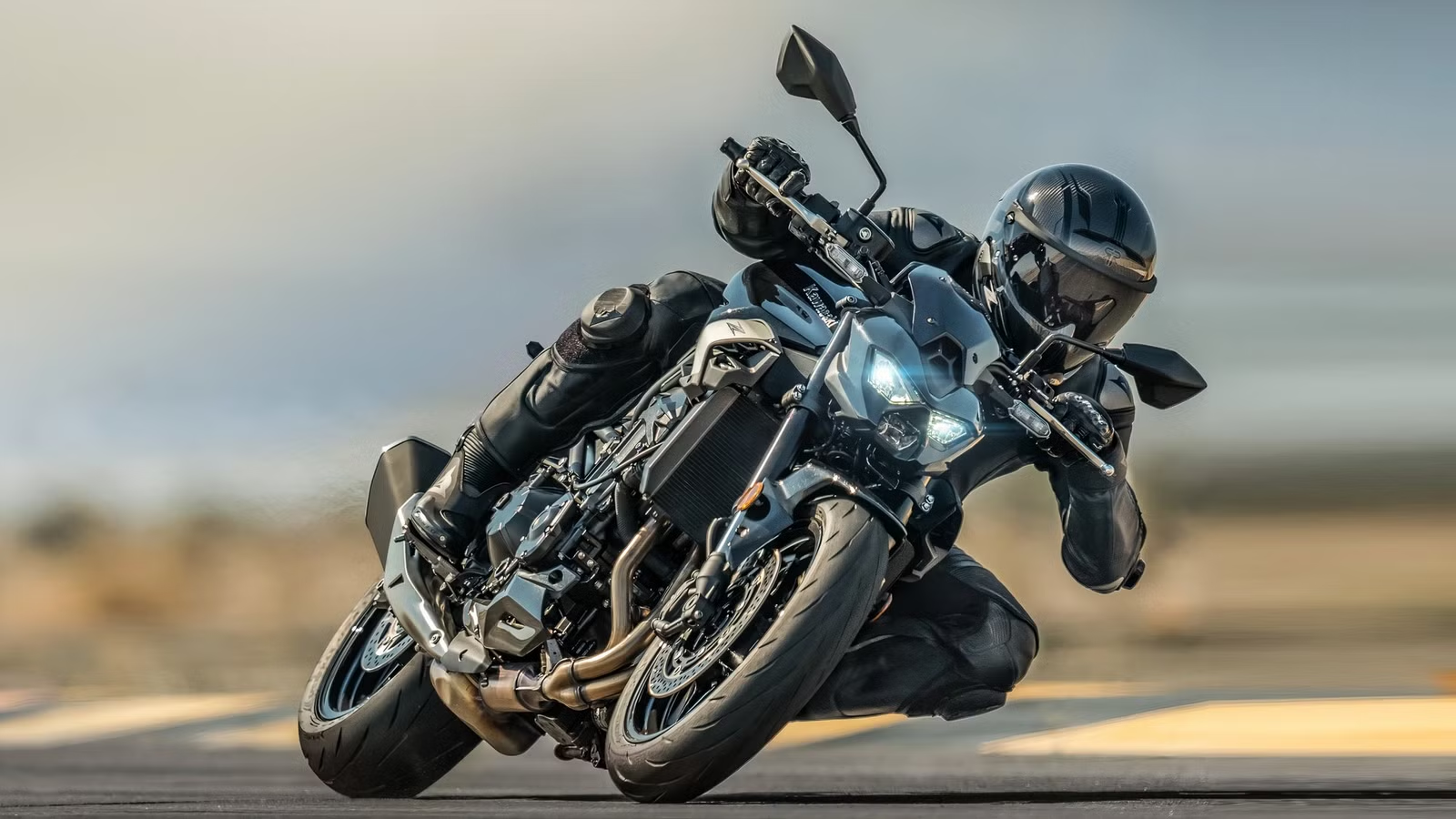
That motorcycle is the Kawasaki Z900. It starts at $9,999, giving riders a 948cc liquid-cooled inline-four producing a claimed 123 horsepower and 73.1 pound-feet of torque. The engine uses dual overhead camshafts and four valves per cylinder, while a six-speed transmission, assist-and-slipper clutch, and chain final drive handle the delivery.
A claimed 123 horsepower is plenty, but peak output doesn’t explain why the Z900 works so well as a road bike. The 948cc four-cylinder engine is designed to deliver usable torque through the middle of the rev range, allowing it to pull cleanly through traffic or surge forward without requiring several downshifts. It can behave politely when the rider is relaxed, yet there’s always a deeper layer waiting farther around the throttle.

That accessible delivery makes the motorcycle easier to enjoy away from a racetrack. It doesn’t need a screaming launch or constant clutch work to feel quick, and the broad powerband gives riders several ways to build speed. Keep the revs moderate, and it moves with muscular ease. Push toward the upper end of the tachometer, and it delivers the escalating rush and sharper soundtrack expected from a large Japanese inline-four.
The Construction Is Simple And Compact

Its chassis dimensions keep the motorcycle compact without making it nervous. The Z900 has a 57.3-inch wheelbase, 24.5 degrees of rake, 4.1 inches of trail, and a 32.7-inch seat height. Wet weight comes in at about 468 pounds. Fuel capacity is 4.5 gallons, while the upright handlebar and relatively neutral footpeg position make it less demanding than a supersport during commutes, highway stretches, and longer days in the saddle.
The front end uses a 41mm inverted fork with adjustable compression damping, rebound damping, and spring preload. At the back is Kawasaki’s horizontal back-link suspension with adjustable rebound damping and preload. Twin 300mm front discs are grabbed by radial-mount four-piston calipers, while a single-piston caliper and 250mm disc manage the rear. Dunlop Sportmax Q5A tires measure 120/70 ZR17 up front and 180/55 ZR17 at the rear.
Just The Right Amount Of Electronics

Modern electronics are present, but they support rather than overwhelm the mechanical package. Ride-by-wire enables electronic cruise control, selectable full- and low-power modes, integrated Sport, Road, Rain, and customizable Rider modes, plus Kawasaki Traction Control. An inertial measurement unit supports Kawasaki Corner Management Function and IMU-enhanced ABS, helping the systems respond more appropriately when the motorcycle is leaned over.
A bidirectional Kawasaki Quick Shifter allows clutchless upshifts and downshifts, while a five-inch TFT display provides smartphone connectivity through Kawasaki’s Rideology app. LED lighting, a USB-C outlet, and turn-by-turn navigation capability add everyday usefulness. These systems make the latest Z900 more complete, but they’re layered over an engine and chassis concept Kawasaki has developed steadily rather than reinvented around an unproven gimmick.
The Z900 SE Adds Premium Hardware Without Rewriting The Formula

The Kawasaki Z900 SE costs $11,999, exactly $2,000 more than the standard bike. It retains the same 948cc engine, claimed output, frame, electronic package, and basic riding position. The extra money is spent primarily on chassis hardware, giving enthusiastic road riders better components without adding a radically more complicated powertrain or another layer of software.
At the rear, the SE replaces the standard shock with an Öhlins S46 unit featuring a remote preload adjuster. Its 41mm inverted fork receives gold-colored outer tubes and model-specific settings, while Brembo radial-mount front calipers, Brembo discs, and steel-braided brake lines upgrade the stopping hardware. Distinct finishes and trim details help the SE look more special without turning it into a completely separate motorcycle.
Reliability Matters Most When A Motorcycle Is Worth Keeping
A dependable motorcycle is valuable for more than its ability to avoid repair bills. It remains available whenever its owner wants to ride, whether that means a spontaneous Sunday blast, a week of commuting, or a multi-day trip planned with more optimism than luggage space. Over time, that consistency allows the rider to learn the machine’s responses, trust its behavior, and develop the familiarity that makes a good motorcycle even better.
There are faster naked bikes, more exotic naked bikes, and machines with spec sheets that read like applications for low-altitude flight. But ownership isn’t lived entirely at full throttle or inside comparison charts. The Z900 works because it gives riders plenty to get excited about each time they start it, along with fewer reasons to worry about whether it’ll be ready to do the same thing again tomorrow.
Source: Kawasaki

Related posts


Latest Post


No Comments