
Mopar’s Forgotten V8 Was The Working-Class Answer To The Hemi
It’s no secret that a Hemi engine is expensive. The least powerful Hemi V8 engine that’s currently available with the 2026 Dodge Durango brings the MSRP to $43,290. Then the most powerful variant increases the price to $80,990. These prices could persuade drivers to look for more practical or affordable options.

However, this isn’t a new trend. Hemi engines have come at a premium price for decades. Smart buyers have always been looking for better deals without sacrificing power. Back in the late 1960s and early 1970s, there was an excellent option that brought the heat without the Hemi price, but it’s sadly undervalued today.
This classic engine option deserves more respect as the working man or woman’s economical answer to the 426 Hemi that could keep up with it on the drag strip. It wasn’t a consolation prize, as it has true value against the legendary powerhouse that helped Mopar rule NASCAR and drag strips. The benefits of picking this forgotten V8 were too good to ignore.
The 426 Was The Top Dog

I’m not here to shame the famous 426 Hemi V8 engine. It made Chrysler the king of NASCAR and drag racing with innovative high performance and raw power that rivals desperately tried to match. The Elephant Engine is a pure race engine adapted to the street that managed to skirt around restrictive, engine choking regulations.
The 426 cubic-inch (7.0-liter) V8 delivers a factory-rated 425 horsepower and 490 lb-ft of torque. However, it may have been underrated to avoid higher insurance premiums. This engine could actually deliver over 500 hp. It powered the Dodge Charger, Coronet, Super Bee, Challenger, Dart, Belvedere, Satellite, Road Runner, Barracuda, GTX, and Superbird. This engine has the ability to accelerate from 0 to 60 mph in about 4.8 to 5.7 seconds depending on the vehicle, gearing, and tire traction, clearing the quarter-mile in the mid-to-low 13-second range in popular muscle cars of the era. Factory lightweights and modified versions were much, much faster.
But this engine didn’t exactly come without a few issues. It was pretty expensive in the 1960s, and cost about $800 to add, which is the equivalent of about $5,700 today. It’s massive and heavy, leading to significant front-end weight that impacts handling and cornering abilities. Plus, it requires frequent valve adjustments to avoid serious problems.
Only Two Were Made: Dodge’s Rarest Hemi Muscle Car Ever Built
It’s not a Challenger or a Charger. It’s the other Mopar muscle car that got the ball rolling. Today, this unicorn is worth millions.
Smarter Drivers Picked The Underrated Mopar 440 Six Pack Instead

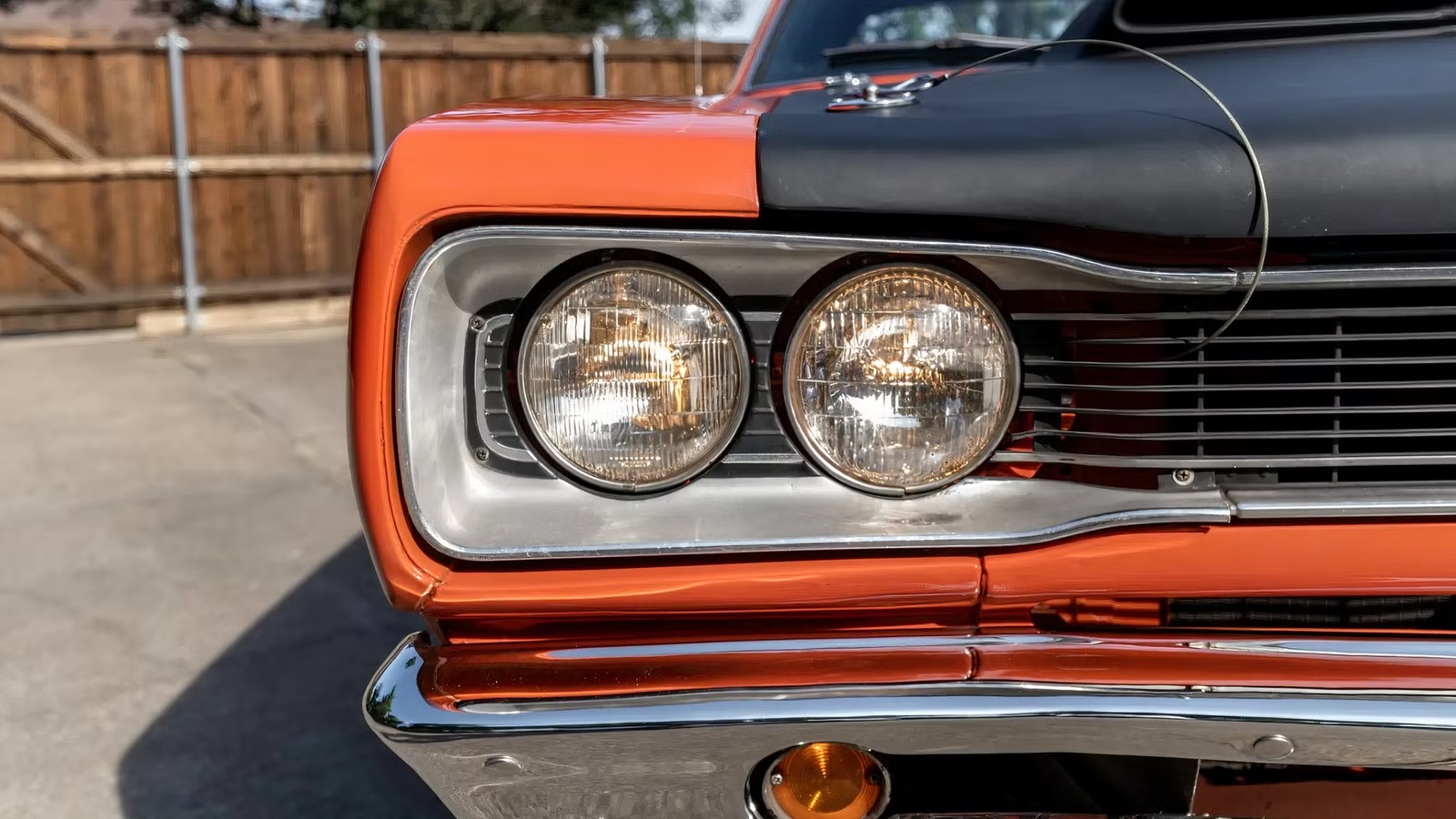
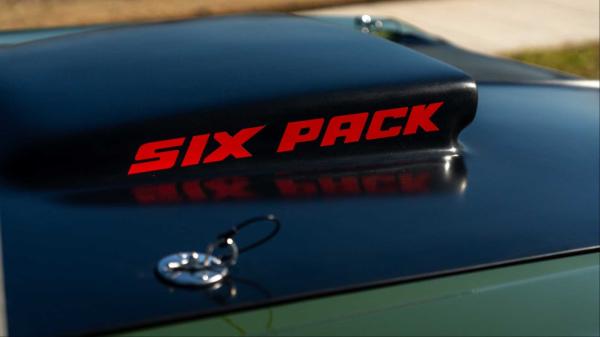
But you didn’t have to go for the 426 Hemi to win at the drag strip. Drivers figured out that they could opt for the Dodge 440 Six-Pack, which is also known as the Six-Barrel under Plymouth. It’s a high-performance V8 for $119 to save about $581. The ‘Six-Pack’ or ‘Six-Barrel’ title refers to how the engine has three two-barrel carburetors or six barrels total. Under normal conditions, the engine runs on the center, two-barrel. Then when you slam the accelerator, the front and rear carburetors open up to unleash maximum power from all six barrels.
The 440 cubic-inch (7.2-liter) V8 engine pumps out 390 hp and 490 lb-ft of torque. It was available in the Dodge Super Bee, Charger, Coronet, Challenger, Plymouth Road Runner, Barracuda, GTX, and Sport Fury GT. It helped these muscle cars accelerate from 0 to 60 mph in about 5.1 to 6.2 seconds and cover a quarter mile in about 12 to 13 seconds. Plus, it has a top speed of between 130 and 146 mph. Once again, the times depend on the specific car, gearing, tire traction, and aerodynamic drag. However, this engine kept up with the 426 Hemi at a fraction of the cost.
|
Engine |
HP |
Torque |
0-60 MPH |
|
426 cubic-inch (7.0-liter) HEMI V8 |
425 |
490 LB-FT |
4.8 seconds |
|
440 cubic-inch (7.2-liter) Six Pack V8 |
390 |
490 LB-FT |
5.1 seconds |
Enthusiasts and fans regularly watch the 440 Six-Pack outperform the 426 Hemi in straight-line acceleration and off-the-line performance. Chrysler designed this engine as a street-friendly alternative to the 426 Hemi that was easier to tune with the ability to own red-light drag races, and it certainly achieved its goals.
The 440 Six Pack Outsold the 426 Hemi

While the Mopar 440 Six-Pack was in production from 1969 until 1971, it was placed in 13,883 vehicles. The 426 Hemi was in production from 1964 until 1971 and was placed in about 10,000 vehicles. So in two years compared to seven, the 440 Six Pack outsold the 426 Hemi by roughly 3,883 units. If the engines had the same production run, the number could be much higher.
The Hemi-beating bargain was too good to pass on as it closed the performance gap on the street. Because the 440 Six Pack is 140 pounds lighter than the 426 Hemi, the weight reduction over the front wheels made it easier to transfer power to the rear tires during launches. This provided better traction and less front-end dive during heavy braking and hard acceleration.

But the 426 Hemi gets all the glory as it won NASCAR races and other racing series. To be fair, the 440 Six Pack does run out of breath at higher RPMs, and the 426 Hemi has a better top-end charge. But not every driver was a racing professional who spent time on tracks. They only needed to defeat others at the drag strip.
Cars with the 440 Six-Pack can be found for $50,000 to over $250,000 depending on the model and its condition. On its own, the engine could sell for as much as $14,000, with complete intakes alone bringing in $1,500 on the low side. Vehicles with the 426 Hemi fetch between $150,000 and over $3,000,000. On its own, the engine is worth between $15,000 and over $45,000. So, the 440 Six-Pack is still a more affordable option as it lives in the Hemi’s shadow.
10 Most Valuable 440 Six Pack Mopar Muscle Cars
These rare Mopar muscle cars with triple two-barrel carburetors are commanding six-figure prices at auction.
Here’s Why The 440 Six Pack Has Real Value

The 440 Six-Pack V8 engine is much easier to find than the 426 Hemi, and it’s much more affordable, making it a great option for project builds. Both options have historical value and racing heritage. However, the 426 Hemi is more of a holy grail find than an accessible option in hot-rodding communities.
Plus, the 426 Hemi is more complex to work on due to its massive cylinder heads and complicated valve train. It makes routine maintenance and tuning more difficult and time-consuming. Keep in mind that setting up the mechanical linkages requires patience. Also, tuning the dual carburetors for smoother performance has an infamous reputation for being painstaking, but the 440 also has a multi-carb setup and similarly complex tuning demands.

The 440 Six-Pack has a traditional wedge-shaped combustion chamber design and inline valves, making the engine much easier to work on in the engine bay. Also, the 440 V8 has a high production volume and shares parts with other wedge-head engines that makes repairs and restoration simple. Reproduction parts are widely manufactured, with strong aftermarket support. Hemi-specific components are more expensive and often harder to find. Last but not least, the 440 has better street manners for daily driving. It delivers peak torque earlier in the RPM range, meaning it’s more responsive and driveable for everyday conditions.
Source: Hemmings, How Stuff Works, Mecum

Related posts



Latest Post


No Comments