
The Dodge Charger Body NASCAR Officially Stretched Its Own Rule To Keep Petty Racing
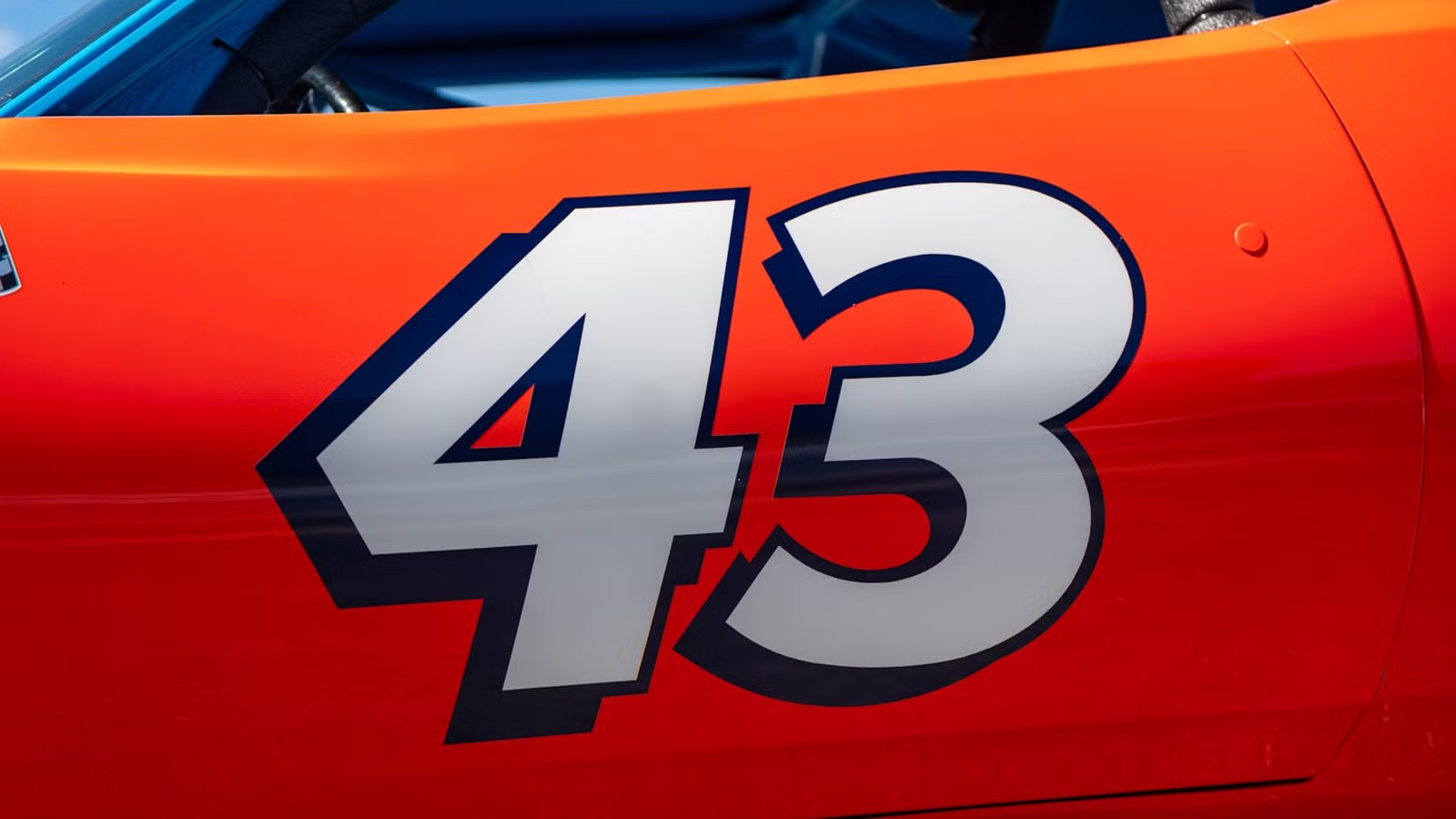
Back when NASCAR was still a stock car racing circuit, it had a saying that went essentially: win on Sunday, sell on Monday, which meant fans wanted to own the same cars their favorite drivers were taking the checkered flags in. Richard Petty made a name for himself behind the wheel of a Plymouth Belvedere and all of his Sunday wins turned into Monday sales, but later in his career, when he switched to a Dodge Charger, it was no longer possible for his fans to pick up his winning car. The reason for this is that his third-gen Charger was discontinued, but Petty kept driving it for years because he loved it so much, even commenting that it was his favorite race car. NASCAR even had to make a special exemption for Petty to continue driving the Charger, which is understandable given his royal status in the racing world.
Petty Jumps On Third-Gen Charger

Dodge dropped the third-gen Charger in 1971, replacing it with a radically redesigned “fuselage” body style that was a pony car on steroids, featuring a long hood, short decklid, and bold, aggressive stance. Until recently, collectors were not high on this version of the iconic muscle car, but at the time, it was quite popular, even outselling the legendary second-gen. Much of the second-gen Charger’s success was in no small part due to the fact that Richard Petty was driving one into the winner’s circle on a regular basis. ’71 was the last great year for the Charger, as the 426 Hemi and 440 Six Pack were dropped, plus the 440 Magnum was detuned for ’72. Also, the 383 Magnum was replaced by the 400 V8, which made the same 300 hp, but was unfortunately the top engine option.

1972 wasn’t all bad, as that’s when Petty made the jump from Plymouth to Dodge, and he proceeded to win the NASCAR Winston Cup championship. He followed that up with a six-win, 15 top five finishes, fifth-place season in 1973, and then another championship in 1974. Not coincidentally, the Dodge Charger’s sales increased substantially after Petty got behind the wheel, racking up wins. The third-gen Charger sold 58,560 units in 1971, but when Petty started driving one in 1972, sales went up to 75,594 cars. In 1973, production went through the roof with 119,318 units and in 1974 still held strong with 74,396 in sales. This was tangible proof of the win on Sunday, sell on Monday ethos. The Charger had never moved units like this before and, as we mentioned, the post-’71 third-gens weren’t the bruising street brawlers they had been before, so people were really buying them because of Petty’s success.
Dodge Boxes Up The Charger


Now here’s where this story gets remarkable, as Dodge pulled the plug on the Petty/Charger juggernaut. Richard Petty was crushing it in the third-gen, but when Dodge introduced the fourth-gen in 1975, it was more of a personal luxury vehicle than a muscle and, more importantly, not compatible with NASCAR racing. The ’75 Charger was boxier and less aerodynamic, making it completely unsuitable for high-speed, closed-circuit racing. Dodge had a superstar racer in Richard Petty and, for whatever reason, built a car he could not possibly use on the track. ’75 saw the Charger’s sales numbers tank with just 30,812 units, and while some of that is due to the general lack of appeal of the fourth-gen, it’s mostly because nobody saw Richard Petty take a checkered flag in one.

1975 ended up being a pretty wild year because Richard Petty won 13 races and theNASCAR Cup Series championshipbehind the wheel of a discontinued car. Fans, however, could no longer rush down to the Dodge dealership on Monday after a spectacular win and purchase a Petty-driven Charger. In 1976, Petty finished second in points, which still would have moved some vehicles off the lot, but by then the third-gen was two years gone. Sales for the 1976 Charger actually rebounded to 65,500 units, but that was still far off from the glory days of the 1971-1974 third-gen dominance.
NASCAR Bows To The King

NASCAR had a “three-year eligibility” rule that meant a car had to be from the current model year, the previous year, or the year before that to race. Despite driving a discontinued third-gen Charger, Richard Petty was good to go in 1975 and 1976, but for 1977, not so much. At that point, Petty had won six NASCAR championships and 180 races, so he really was The King and as Mel Brooks’ Louie XVI from History of the World Part I said, “it’s good to be the king.” NASCAR, of course, bent its rules to allow Petty to compete in the 1977 season with his beloved third-gen Charger, and the antiquated Mopar didn’t disappoint, with five wins and 20 top-five finishes, which saw Petty come in second in points for the championship.

In 1978, Dodge retired the Charger nameplate, replacing it with the Magnum, which actually was designed so Richard Petty could use it in competition. Petty started the ’78 NASCAR opener in his favorite third-gen Charger, but quickly switched to the Magnum for the first half of the season. Though Dodge had built the Magnum with racing in mind, it wasn’t a particularly good car; Petty described it as “undrivable at 190 MPH” due to its high-speed instability. After 19 races, Petty switched to a Chevy Monte Carlo that he purchased from a third party. ’78 was the first time in Petty’s career that he didn’t take a single checkered flag since 1959. It’s not all doom and gloom though, as Petty would win his eighth NASCAR championship in 1979, marking his first non-Mopar Cup Series victory.
Sources: Dodge, NASCAR

Related posts

Latest Post


No Comments