
The Motorcycle That Explains Why Royal Enfield Is Growing So Fast
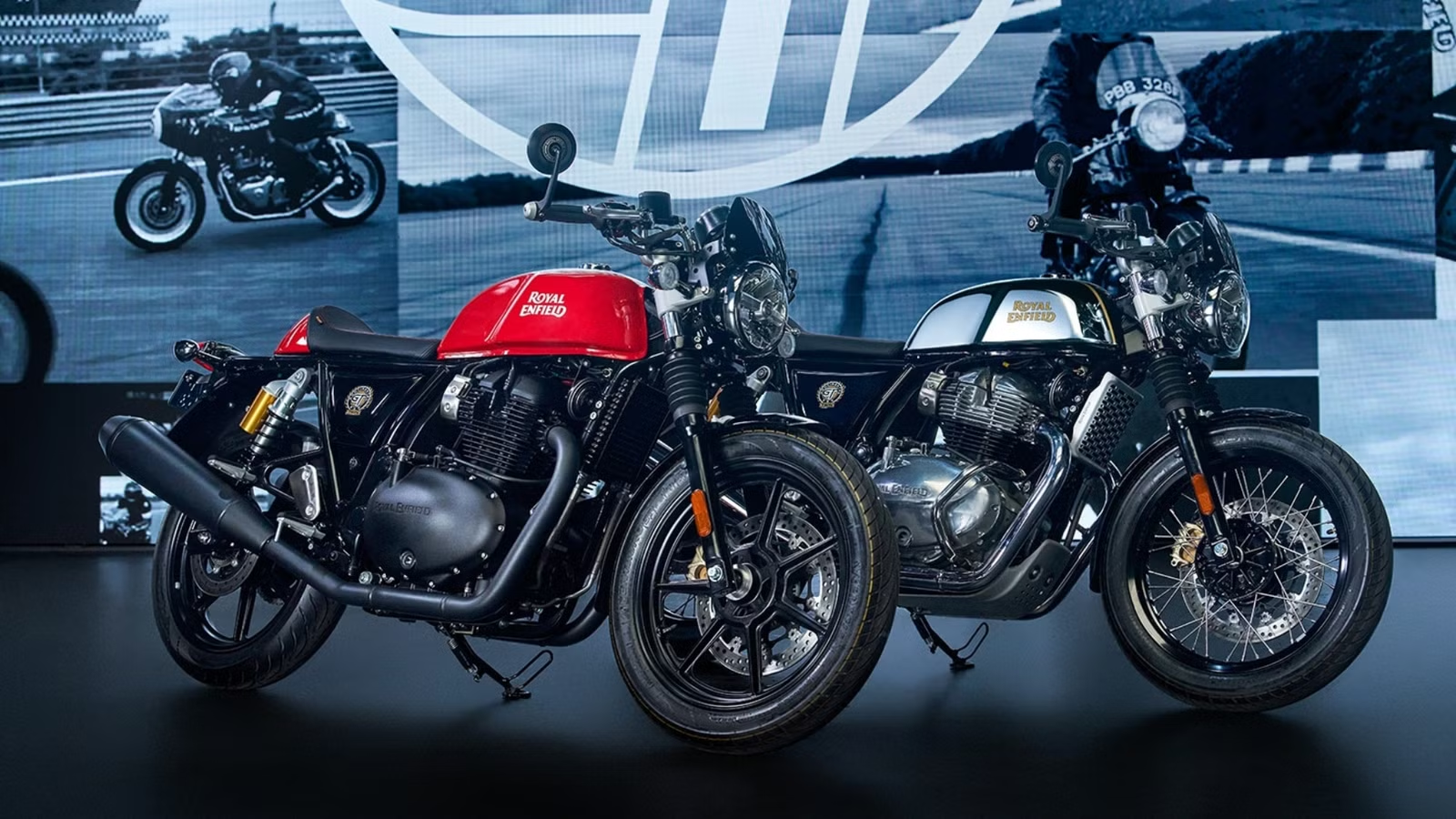
Getting a twin-cylinder motorcycle in America used to mean overpaying. For years, a proper middleweight twin sat behind a price wall that pushed new riders toward a wheezy single or a used bike with a history you did not want to know. Then one motorcycle quietly moved the wall. It did not just sell well. It birthed an entire lineup and rewrote what buyers expected from an affordable bike. More importantly, it dragged a 125-year-old company into the fastest growth run of its life. Here’s us diving deeper into how it all panned out.
Royal Enfield Has Long Encashed On Nostalgia

Royal Enfield built its name on standing still, and doing it beautifully. While most of the industry chased more power and more plastic, Royal Enfield sold simple, old-school machines that looked like they rolled straight out of the 1950s. The thumping single-cylinder Bullet became a cult object in India, passed down through families and ridden hard for decades. Around it, the brand grew an entire catalog of small-capacity bikes, most of them 350cc, tuned for character rather than speed. In Asian markets, where roads are tight and traffic is dense, that formula worked. Buyers did not want a superbike. They wanted something honest, cheap to run, and easy to love, and Royal Enfield gave them exactly that, over and over.
But A Bigger Engine Was Needed To Take On The World

The problem showed up the moment Royal Enfield looked past Asia. A 350cc single is charming on a crowded city street. It is out of its depth on an American interstate or a German autobahn. Those small bikes could not hold freeway speeds with any confidence, which quietly capped the customer base in markets built around long, fast roads. If Royal Enfield wanted riders in the United States and Europe to take it seriously, nostalgia alone was never going to cut it. It needed an engine with real lungs. So the company built one, and that single decision changed its direction for good.
Royal Enfield’s 650 Range Changed The Math


In 2018, Royal Enfield launched two motorcycles powered by an all-new 648cc parallel twin, its first modern twin-cylinder engine. One was the INT650, a relaxed roadster. The other was the Continental GT 650, and it is the one that made the noise. A twin-cylinder cafe racer, with clip-on bars and a 1960s racing shape, priced within reach of an ordinary rider, was something the market had not seen in recent memory. Cafe racers were supposed to be expensive, temperamental, or both. The Continental GT 650 was none of that. It looked like a bike three times its price and started at a price that made rivals wince. With the arrival of the 650 twins, the old joke about Royal Enfield being a museum brand stopped landing.
The Popularity Urged Royal Enfield To Grow The Lineup

The response was loud enough that Royal Enfield leaned all the way in. That same 648cc twin has since become the backbone of an entire family. The Super Meteor 650 arrived in 2023 as a low-slung cruiser. The Shotgun 650 followed as a bobber-flavored custom, and the Bear 650 added a scrambler with dirt in its blood. The Classic 650 dropped the twin into the brand’s most iconic silhouette, and a Bullet 650 is on the way to do the same. Every one of them shares the same fundamental engine, which keeps costs down and reliability predictable. What started as two bikes is now a full range, and it is the single biggest reason Royal Enfield keeps rewriting its own sales records.
The Continental GT 650 Still Serves As One Of The Most Popular Budget Cafe Racers

Years later, the bike that started the charge is still one of the few genuinely affordable cafe racers you can walk into a dealer and ride home on. It has aged well, and the reasons are refreshingly simple.
The 648cc Twin Punches Above Its Price

*Super Meteor shown
The heart of the Continental GT 650 is that 648cc air- and oil-cooled parallel twin, and it is a genuinely good engine, not just a characterful one. It makes 47 hp at 7,150 rpm and 38 lb-ft of torque, with a 270-degree crank that gives it a rich, uneven exhaust note closer to a big V-twin than a buzzy commuter. Power comes in low and stays friendly, so newer riders never feel bullied, yet there is enough on tap to hold 75 mph on the freeway all day and still keep something in reserve for a pass. For a bike that starts at $6,349, that is a lot of real motorcycle.
A Proven Platform With Years Of Owner Miles

The 648cc twin has been in the wild since 2018, and that matters more than any spec. Seven years of owners piling on miles means the weak points are known, the fixes are documented, and the forums are full of high-mileage bikes still running strong. Royal Enfield backs the package with a three-year, unlimited-mile warranty in the United States, which is not the move of a company nervous about its own hardware. For a buyer who wants character without gambling on reliability, that track record does a lot of quiet reassuring.
Simplicity Is The Theme Everywhere

The rest of the bike follows the same honest logic. The frame was developed with Harris Performance, a name that means something to anyone who follows racing, and it is paired with plain telescopic forks and twin rear shocks rather than fashionable electronic trickery. Braking comes from a 320mm front disc and a 240mm rear, both with ABS. The instruments are clean, the switchgear is straightforward, and there is a USB port and LED lighting for the modern touches. Nothing here is trying to win a spec-sheet argument. Everything is trying to work, and to keep working, which is exactly why owners trust it.
The 650 Range Will Morph Into A Bigger Platform Soon

Royal Enfield is not standing still this time. The next chapter is already testing on public roads, and it is bigger in every sense. A new 750cc platform is on the way, expected to bring a fresh parallel twin making somewhere near 55 hp and 48 lb-ft of torque, along with a revised chassis. The long-rumored Himalayan 750 is set to become the brand’s first twin-cylinder adventure bike, and a sportier 750 is expected to follow it onto showroom floors.
If the 648cc twin was the engine that made the world take Royal Enfield seriously, the 750 is the one meant to keep it there. The company that once sold nostalgia by the crate load has quietly learned how to sell the future, and it learned the trick from one affordable cafe racer that refused to know its place.
Source: Royal Enfield

Related posts

Latest Post


No Comments