
12 Bona Fide Supercars That Are Still Cheaper Than The Corvette C8 ZR1
The C8 Chevrolet Corvette ZR1 is one of the most audacious performance cars ever to wear an American badge. A mid-engined monster revealed in 2024, it packs a twin-turbocharged 5.5-liter V8 producing 1,064 horsepower and 828 lb-ft of torque — enough to propel it to a verified top speed of 233 mph, making it the fastest Corvette ever built. For perspective, the Bugatti Veyron — launched roughly two decades earlier — made do with less power from a quad-turbocharged V16. The world has changed dramatically since then.

What made the Chevrolet Corvette C8 ZR1 truly jaw-dropping, though, wasn’t just the 2.3-second sprint to 60 mph, or the fact that the available ZTK Performance pack helps it demolish a quarter-mile in 9.6 seconds at 150 mph. It was the price. This hypercar-baiting Corvette starts at $174,995 — a long way from the million-dollar club and, frankly, cheaper than many supercars. To put that in context, a Lamborghini Huracán starts above $249,000, meaning you could buy a ZR1 and a BMW M2 and still have enough left over for a serious champagne collection. So the ZR1 has few new-car rivals at its price point. But what about the used market? HotCars went hunting for ten true supercars that are cheaper than a ZR1, using Classic.com to establish average prices by model year. Entries are ordered from cheapest to most expensive.
2002 Ferrari 360 Modena F1: $65,617
2002 Ferrari 360 Modena F1 Specs
|
Engine |
 71 autotech 3.6-liter V8 |
|
Power |
394 hp |
|
Torque |
Insert Text |
|
0 – 60 mph |
4.5 seconds |
Source: Ferrari
For the price of a Corvette ZR1, you could buy nearly three Ferrari 360s. The catch is that, despite the clean-sheet design still looking handsome today, you’ll be acquiring a car that is more than two decades old. The engine was derived from the unit in the F355, with displacement bumped slightly to 3.6 liters. This mill produces 394 horsepower, and the 360 reaches 60 mph in 4.5 seconds — just a tick ahead of a Volkswagen Golf R. The Ferrari’s top speed, however, is sizzling at over 183 mph.
2013 Dodge Viper SRT: $100,814

2013 Dodge Viper SRT Specs
|
Engine |
8.4-liter V10 |
|
Power |
640 hp |
|
Torque |
600 lb-ft |
|
0-60 mph |
4 seconds |
Source: Dodge
Call it a muscle car or a sports car if you like, but with an 8.4-liter V10 — a displacement larger than the V16 in the new Bugatti Tourbillon — and 640 horsepower on tap, the fifth-generation Viper SRT is a bona fide supercar. Compared to more polished trims like the GTS, the SRT is raw and uncompromising, built for pure thrills. When it debuted in 2013, it was more powerful than any Corvette on the market, including the C6 ZR1. Recent auction data on Classic.com shows a good example will set you back around $100,000, while the more comfort-oriented GTS hovers in the $120,000–$130,000 range for 2013 and 2014 models — still significantly cheaper than a new ZR1.
2012 McLaren MP4-12C: $103,253

2012 McLaren MP4-12C Specs
|
Engine |
3.8-liter twin-turbocharged V8 |
|
Power |
592 hp |
|
Torque |
443 lb-ft |
|
0-60 mph |
3.0 seconds |
Source: McLaren
We are so accustomed to the flowing design language of modern McLaren road cars that it’s easy to forget the MP4-12C was the car that, bar the legendary F1, launched the company’s road car division. The MP4-12C wore slightly more traditional small-supercar styling and, thanks to 616 horsepower and 443 lb-ft from its twin-turbo V8, delivered brutal performance. It hits 60 mph in 3.1 seconds and tops out at 207 mph. Early examples are accessible by supercar standards, averaging around $103,253 for a 2012 model.
2006 Lamborghini Gallardo: $106,743

2006 Lamborghini Gallardo Specs
|
Engine |
5.0-liter V10 |
|
Power |
512 hp |
|
Torque |
376 lb-ft |
|
0-60 mph |
4.3 seconds |
Source: Lamborghini
Lamborghini had come a long way since the Countach by the time the Gallardo arrived. The company was acquired by Audi in 1998, which brought financial stability and the engineering discipline to build a more refined, dependable car. The result was the Gallardo, launched in 2003 and described even by Lamborghini itself as a ‘super sports car for day-to-day’ use, thanks in part to its compact Italdesign-Giugiaro proportions.
2015 Audi R8 V10: $123,091

2015 Audi R8 V10 Specs
|
Engine |
5.2-liter V10 |
|
Power |
525 hp |
|
Torque |
391 lb-ft |
|
0-60 mph |
3.4 seconds |
Source: Audi
A supercar for everyday use? That will be the R8. Much like the original NSX, the R8 demonstrated that genuine supercar presence, desirability, and an illustrious badge could coexist with a car that’s equally happy in stop-and-go traffic. If anything, the R8’s popularity means examples barely turn heads anymore — and there are plenty on the used market to keep prices in check. A total of 45,949 R8s have left the Neckarsulm and Böllinger Höfe plants since 2007, according to Audi, and a 2015 model can be found for close to half the price of a new ZR1.
2009 Ferrari F430 F1: $123,250

2009 Ferrari F430 F1 Specs
|
Engine |
4.3-liter V8 |
|
Power |
490 hp |
|
Torque |
342 lb-ft |
|
0-60 mph |
3.9 seconds |
Source: Ferrari
The F430 is pure Ferrari drama. The successor to the 360 sharpened the styling and introduced a new 90-degree V8 with a flat-plane crankshaft — no components were carried over from the 360 Modena’s engine. Drawing on Formula 1 expertise, Ferrari increased displacement by 20% while keeping the weight gain to just 4 kg. The Pininfarina body features advanced aerodynamics developed using the same computational models and wind tunnel testing as the F1 team.
2019 Aston Martin DB11 – $136,200

2019 Aston Martin DB11 AMR Specs
|
Engine |
5.2-liter twin-turbocharged V12 |
|
Power |
630 hp |
|
Torque |
516 lb-ft |
|
0-60 mph |
3.4 seconds |
Source: Aston Martin
The Aston DB11 is a supercar, British-style. That means a svelte, classy body that turns heads without shouting, and a cabin packed with luxury. The 2019 DB11 was available with two engines: a twin-turbocharged 4.0-liter V8 producing 503 horsepower and 498 lb-ft, or a twin-turbo 5.2-liter V12 in the AMR variant, good for 630 horsepower and 516 lb-ft. Both are paired with an eight-speed automatic transmission. Classic.com puts the average price for a 2019 DB11 at $136,200 across all variants, though AMR examples frequently trade closer to the $150,000 mark.
2015 McLaren 650S: $141,678

2015 McLaren 650S Specs
|
Engine |
3.8-liter twin-turbocharged V8 |
|
Power |
641 hp |
|
Torque |
500 lb-ft |
|
0-60 mph |
2.8 seconds |
Source: McLaren
With a clear nod to the multi-million-dollar P1 in its styling, the McLaren 650S doesn’t look its age. This is a supercar that blends race-bred technology with a hand-crafted cabin, creating an experience so compelling that buyers genuinely reconsidered their Italian exotic shortlists. The 650S produces 641 horsepower, reaches 60 mph in under three seconds, and carries a 207 mph top speed.
2019 Mercedes-AMG GT R – $144,650

2019 Mercedes-AMG GT R Specs
|
Engine |
4.0-liter twin-turbocharged V8 |
|
Power |
577 hp |
|
Torque |
515 lb-ft |
|
0-60 mph |
3.5 seconds |
Source: Mercedes-AMG
The Mercedes-AMG GT is already a serious machine, hitting 60 mph in 3.9 seconds and reaching a top speed of 189 mph. The GT R pushes this potent coupe firmly into supercar territory through a suite of aerodynamic and chassis upgrades designed to sharpen its focus. The R variant trims the sprint to 60 mph by a meaningful margin and tops out at 198 mph.
1989 Ferrari Testarossa: $147,153

1993 Ferrari Testarossa Specs
|
Engine |
4.9-liter V12 |
|
Power |
385 hp |
|
Torque |
361 lb-ft |
|
0 – 60 mph |
5.2 seconds |
Source: Ferrari
Whether you played Out Run or watched Miami Vice, the Testarossa was arguably the car that defined the 1980s — that and the Lamborghini Countach, of course. Unveiled at the Paris Motor Show in 1984 as the successor to the 512 BBi, its dramatic side strakes made it the ultimate emblem of excess. Under that wide body sits a 4.9-liter twelve-cylinder — some call it a flat-twelve, Ferrari calls it a V12 — producing 385 hp, enough for a 180 mph top speed and a 0–60 mph time of 5.2 seconds.
2017 McLaren 570S – $165,118

2017 McLaren 570S Specs
|
Engine |
3.8-liter twin-turbocharged V8 |
|
Power |
562 hp |
|
Torque |
515 lb-ft |
|
0-60 mph |
2.7 seconds |
Source: McLaren
The McLaren 570S arrived as an all-new model for 2016 and remains one of the closest used-car rivals to the C8 Corvette ZR1 in a straight line. Powered by a revised version of McLaren’s 3.8-liter twin-turbocharged V8, it dispatches 0–60 mph in 2.7 seconds — genuinely rapid by any modern benchmark. Around $160,000 will secure a lightly used 570S with low mileage. The real question is whether a used McLaren 570S makes a compelling alternative to a brand-new ZR1. That’s a fine problem to wrestle with.
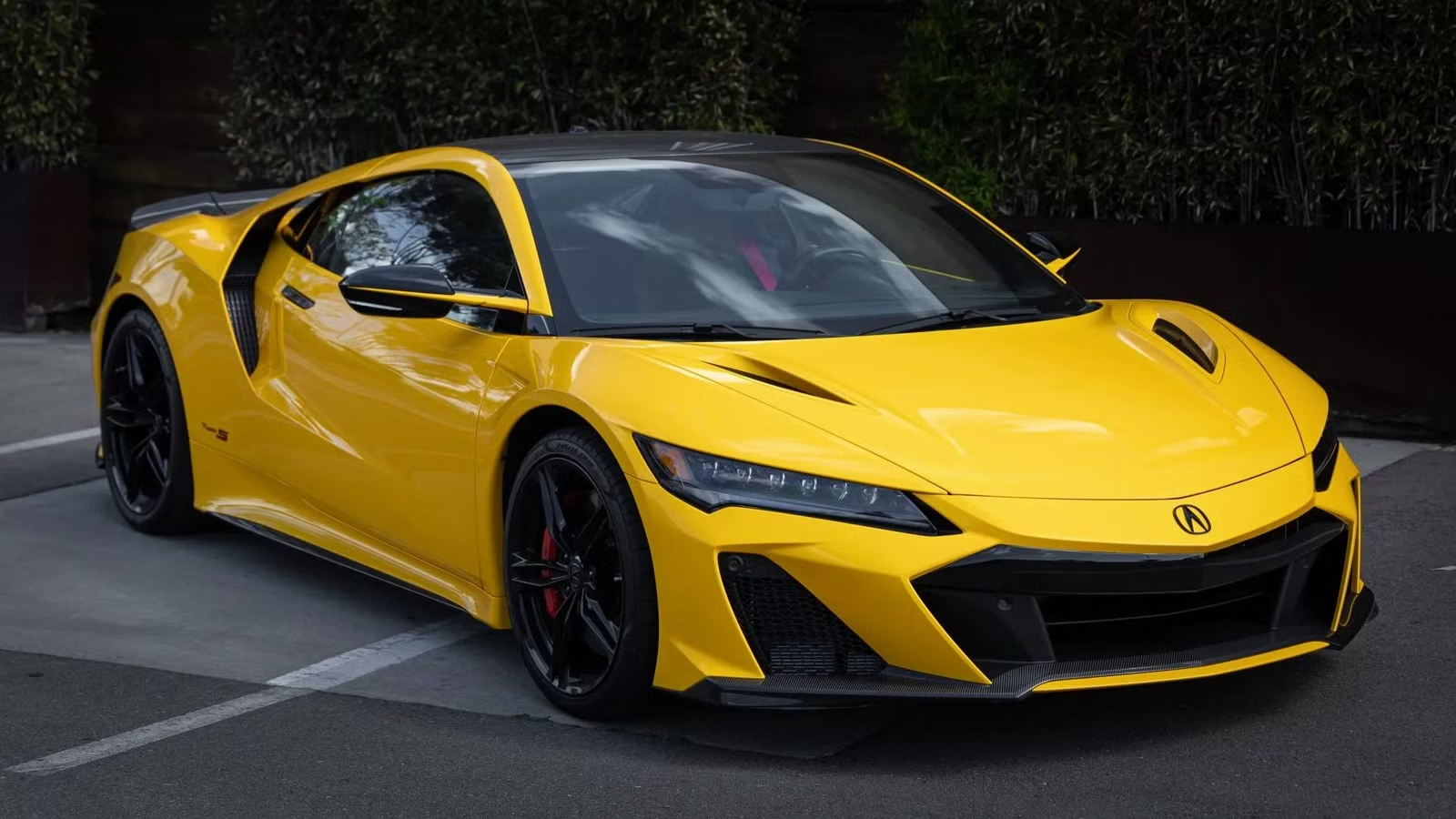
2021 Acura NSX – $165,500

2021 Acura NSX Specs
|
Engine |
3.5-liter twin-turbocharged V-6/ hybrid |
|
Power |
573 hp |
|
Torque |
476 lb-ft |
|
0-60 mph |
2.9 seconds |
Source: Honda
Fans waited more than a decade for the return of the Acura NSX — a car that arrived in the late 1980s and rewrote the rulebook by proving supercars didn’t have to be claustrophobic or terrifying to drive. The original also showed the world that Japanese performance cars weren’t limited to rally-bred sedans, which is no small part of why it commands such a devoted following.
The second-generation NSX, which arrived for 2016, took a different approach: a more sophisticated hybrid powertrain and, arguably, less distinctive styling. But gearheads are wrong about the NSX. At its core, this is still an easy-to-live-with supercar that takes the sting out of ownership — and you’re probably less likely to attract paparazzi-style attention at every stoplight, too.
Sources: Classic.com; Bringatrailer.com

Related posts



Latest Post


No Comments