
The Lightweight Sport Bike That Builds Faster Riders
Every new sports bike fanatic eventually runs into the same dilemma. Buy a bike that’s too small, and you’ll probably outgrow it within a year. Buy something with far more power than your experience can handle, and suddenly the motorcycle starts dictating the pace instead of you. Neither path is ideal for developing real riding skills. The truth is, the ceiling on rider performance isn’t determined by engine size alone. It’s shaped by how much feedback the motorcycle gives you and how much room it leaves to grow.
The Problem With How New Riders Actually Progress

Learning to ride quickly isn’t about finding the fastest motorcycle you can afford. It’s about spending enough time on a machine that teaches you something every ride. Unfortunately, many beginners end up on motorcycles that stop challenging them. Some bikes often prioritize affordability over handling precision, leaving little room for a rider to explore cornering, braking, or chassis balance. Once those basics are mastered, the motorcycle has little else to offer.
The opposite happens just as often. Riders jump onto 100-horsepower middleweights before they’ve fully developed smooth throttle control or refined braking technique. The motorcycle becomes something to survive rather than something to learn from. That’s one reason the sub-500cc sport bike segment has experienced a resurgence in the United States. Modern lightweight sport bikes aren’t simply beginner machines anymore. They’re inexpensive to insure, approachable to ride, and, perhaps most importantly, they’re built on chassis platforms capable of genuine performance improvements through aftermarket upgrades.
Why Displacement Isn’t The Limiting Factor

Horsepower grabs attention because it’s easy to measure. Riding skill isn’t. Early in a rider’s development, outright acceleration contributes surprisingly little to becoming faster. Learning how to trail brake into a corner, maintain smooth body positioning, manage weight transfer, and confidently pick a line through a bend matters far more. Those are skills that come from chassis communication. A motorcycle that tells you what the tires are doing and rewards precise rider input will develop better habits than one that simply overwhelms mistakes with brute force. That’s why picking a good, proven machine is important, and Kawasaki has one such option for you.

The Kawasaki Ninja 500 Is A Great Lightweight Sport Bike For Learners
Base Price: $5,399

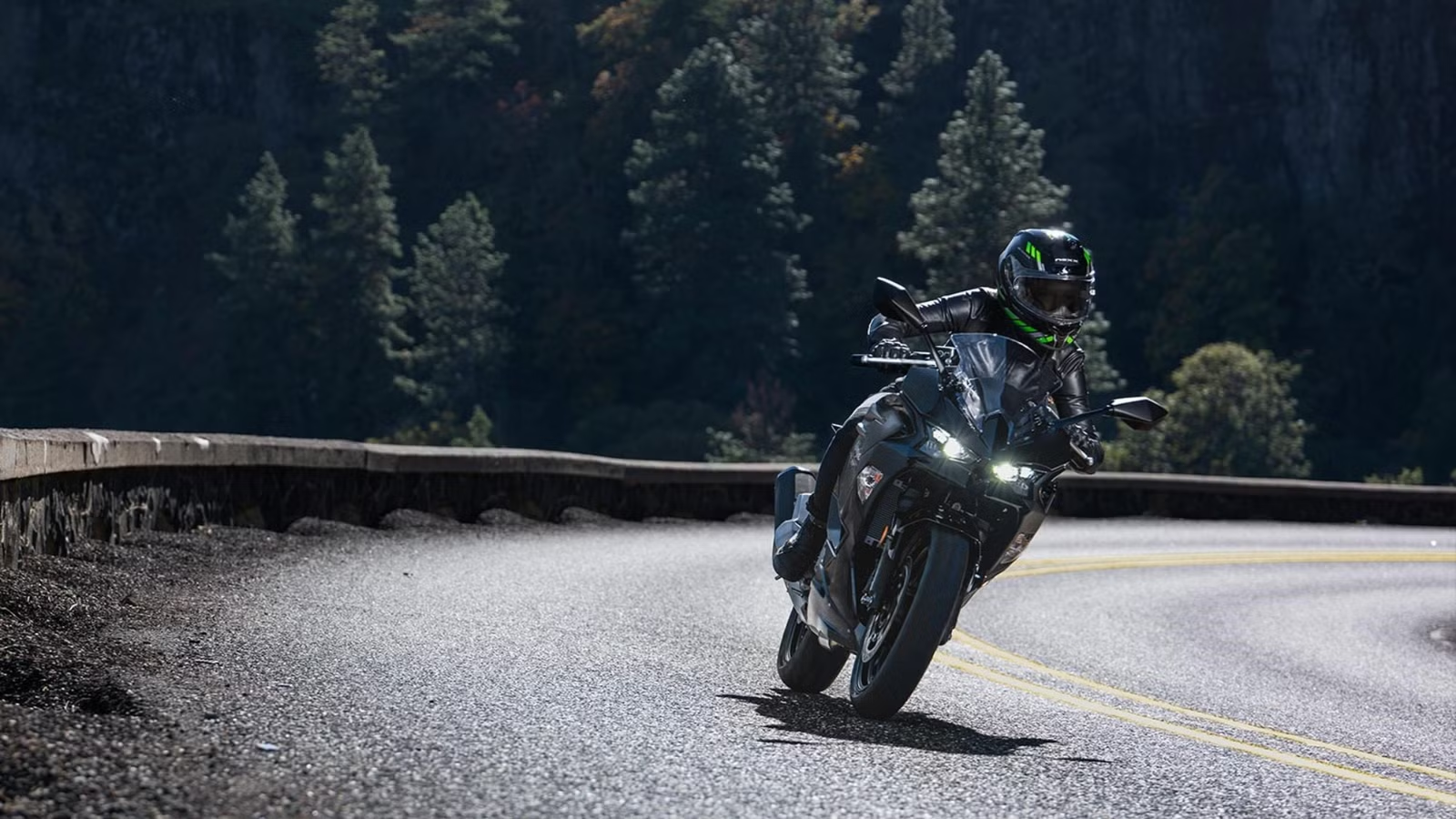
Few motorcycles illustrate this philosophy better than the Kawasaki Ninja 500. The 2026 Ninja 500 starts at $5,399 before Kawasaki’s $650 destination charge for the non-ABS model. ABS versions range from $5,799 to $5,999, while the better-equipped SE ABS carries an MSRP of $6,499. It packs a 451cc liquid-cooled parallel twin producing 51 horsepower, weighs under 373 pounds curb in non-ABS trim, and features a confidence-inspiring 30.9-inch seat height. On paper, those figures suggest an approachable motorcycle. Underneath the fairings, though, lies a platform capable of growing far beyond beginner status.
The 451cc Heart Is An Ideal Training Partner

Kawasaki didn’t simply rebadge the old Ninja 400. The Ninja 500’s engine retains much of the architecture that made the Ninja 400 famous while increasing displacement through a longer stroke. That pushes torque lower into the rev range without sacrificing the engine’s willingness to spin toward redline. Peak output stands at 51 horsepower and 31.7 lb-ft, figures that won’t intimidate newcomers but remain entertaining long after the basics are mastered. The real advantage isn’t outright speed. On canyon roads, riders can focus on carrying corner speed rather than relying on acceleration to compensate for mistakes. That characteristic makes it an excellent training tool.
A Chassis Built To Take Modification Seriously

Kawasaki equips the Ninja 500 with an assist and slipper clutch, lightweight trellis frame, 17-inch wheels, preload-adjustable rear suspension, and braking components that offer plenty of room for improvement through aftermarket upgrades. Rather than creating a motorcycle that’s merely acceptable in stock form, Kawasaki built a platform enthusiasts can continuously refine. Better suspension doesn’t just improve lap times. Better brakes don’t simply shorten stopping distances. They change the feedback riders receive every time they enter a corner.

Another reason the Ninja 500 enjoys such strong aftermarket support is its close relationship to Kawasaki’s recent lightweight family. Much of its design language, chassis philosophy, and component compatibility trace back to the hugely successful Ninjas of yore. That means manufacturers already had years to develop upgrade parts before the Ninja 500 even arrived. Instead of waiting for companies to catch up, owners inherit an aftermarket ecosystem that’s already mature.
An Aftermarket Catalog That Basically Never Runs Dry

For many owners, the first modification is an exhaust. Slip-on mufflers from companies like Akrapovič and Yoshimura reduce weight, sharpen throttle response, and give the parallel twin a noticeably richer soundtrack. There are several companies building proper exhaust systems for the Ninja, and they are suitable for all budgets.

As for hardware upgrades, the market is again vast. Drop-in fork cartridge kits from companies such as Öhlins or K-Tech, upgraded rear shocks, and even well-documented suspension swaps give the Ninja 500 dramatically improved composure over rough pavement and during aggressive cornering. Braking upgrades are equally transformative. Steel-braided brake lines reduce lever flex. Higher-performance brake pads improve feel and consistency.
Last but not least, adjustable rear-set foot pegs from companies like Woodcraft, clip-on handlebars, frame sliders, and fender eliminator kits are becoming increasingly common as riders begin attending track days. Rear-set foot pegs allow more aggressive body positioning. Clip-ons encourage better upper-body posture during corner entry. Frame sliders add inexpensive insurance against low-speed mistakes.
Why Upgrading In Stages Builds A Faster Rider Than Buying A Faster Bike

A rider who installs upgraded suspension before adding horsepower learns how to interpret chassis movement. They recognize when tires are loading during braking. They understand how smoother steering inputs produce cleaner corner exits. A rider who jumps directly to a 150-horsepower superbike often skips those lessons because the motorcycle’s acceleration dominates the experience.
Each carefully chosen modification teaches something different. Improved brakes reward practicing trail braking. Higher-quality suspension rewards smoother throttle application. Rear-set foot pegs encourage disciplined body positioning. Stickier tires expose mistakes while simultaneously raising the motorcycle’s capabilities. All these upgrades help the rider grow as a motorcyclist.
Track Days As The Feedback Loop

Track days provide an environment where riders can safely explore braking limits, corner speed, and body position without worrying about traffic, intersections, or roadside hazards. The Ninja 500 happens to be exceptionally well suited for that environment. Its purchase price is relatively low. Tires last longer than they do on heavier, more powerful motorcycles. Brake pads, levers, and replacement fairings cost substantially less than comparable components for liter bikes.
By the time riders finally decide to move on to something larger, they’ve already built the habits that allow them to fully exploit a more powerful machine instead of merely surviving it. That’s what makes the Kawasaki Ninja 500 such a compelling lightweight sport bike. It’s approachable enough for a beginner’s first season, capable enough for years of continued improvement, and supported by one of the deepest aftermarket ecosystems in motorcycling. Rather than encouraging riders to chase horsepower before they’re ready, it rewards patience, precision, and purposeful upgrades.
Source: Kawasaki

Related posts



Latest Post


No Comments