Why This 3-Year-Old Hybrid SUV Makes More Sense Than Buying New
11 minutes reading
Sunday, 26 Jul 2026 13:00 0 104 autotech
Buying the latest and greatest SUV can be worthwhile if you are looking for the absolute last word in the latest tech, design cues, and zero miles on the odometer. This is especially true if the model you are looking at has just undergone a refresh or upgrade. However, if you still want good tech and low miles, you really don’t need to buy new.
Waiting for depreciation to take hold on a few-year-old SUV can pay dividends. You are likely to still get the same equipment list and power outputs, and this Hyundai hybrid SUV proves that waiting a couple of years can be a smarter move than buying new.
The Best Used Hybrid SUVs Aren’t Always The Cheapest
Front 3/4 action shot of 2023 Subaru Crosstrek Hybrid driving off-roadSubaru
Shopping used is often treated like a race for the lowest price, but the smartest buys usually sit somewhere in the middle of the market. The cheapest hybrid SUVs can come with patchy service histories, high mileage, or older battery tech that makes any up-front savings less convincing. Spending a little more on a newer, well-maintained used example often means lower running costs, better reliability, and a much more up-to-date feel.
Take the ever-popular RAV4, for example. While an older 2020 model looks like a bargain (the current average used price sits between $21,700 and $26,000), it could be a better option to opt for a 2023 model, which will likely have lower mileage and more warranty remaining. This is true even despite costing between $26,400 and $34,500.
Front 3/4 of Toyota RAV4 Prime parkedToyota
The same goes for the likes of the 2023 Subaru Crosstrek Hybrid. While it still has an average used price of $24,700, down from the MSRP of $38,070, you get an up-to-date plug-in system (the last MY to get it before turning fully hybrid), standard all-wheel drive, modern safety tech, and a vehicle that is likely to have lower mileage and less wear. It even looks like a good proposition compared to the 2020 model, which has an average used price of $22,800.
Three Years Is Where Value And Modern Features Finally Meet
Shot of 2023 Kia Telluride interior showing front cabinKia
By 2026, 2023-model-year SUVs sit in an attractive position. They’ve already taken a big hit in depreciation, but they’re still packed with features that we expect in a modern SUV. Large infotainment screens, wireless phone connectivity, adaptive cruise control, and digital displays are generally always included.
The 2023 Mazda CX-5 still feels like a new SUV. Its upscale cabin, refined dynamics, and premium build quality mean it has aged remarkably well, making it feel competitive with many newer rivals. According to CarEdge, the CX-5 will lose 30 percent of its value in the first three years, and then only another nine percent by the time it reaches five years old.
Front 3/4 action shot of 2023 Mazda CX-5 driving on roadMazda
Likewise, the Ford Escape Hybrid shows how little you have to sacrifice by choosing a three-year-old model over the latest one. You still get around 39 combined mpg and a comfortable ride, so unless the brand has introduced an all-new platform or really upgraded the powertrain, the real-world ownership experience changes very little.
Buying New Means Paying Thousands More For Very Little Extra
Front 3/4 of 2023 Toyota RAV4 Prime parkedToyota
For most mainstream hybrid SUVs, the biggest financial hit comes in the first few years of ownership. Buying new means paying a premium for a vehicle that, in many cases, offers little more than a fresh warranty, delivery mileage, and the satisfaction of being the first owner. Once depreciation takes hold, though, those advantages become much harder to justify against the price difference.
The 2023 Hyundai Tucson Hybrid Still Feels Like A Brand-New SUV
Front 3/4 shot of 2023 Hyundai Tucson Hybrid parkedHyundai
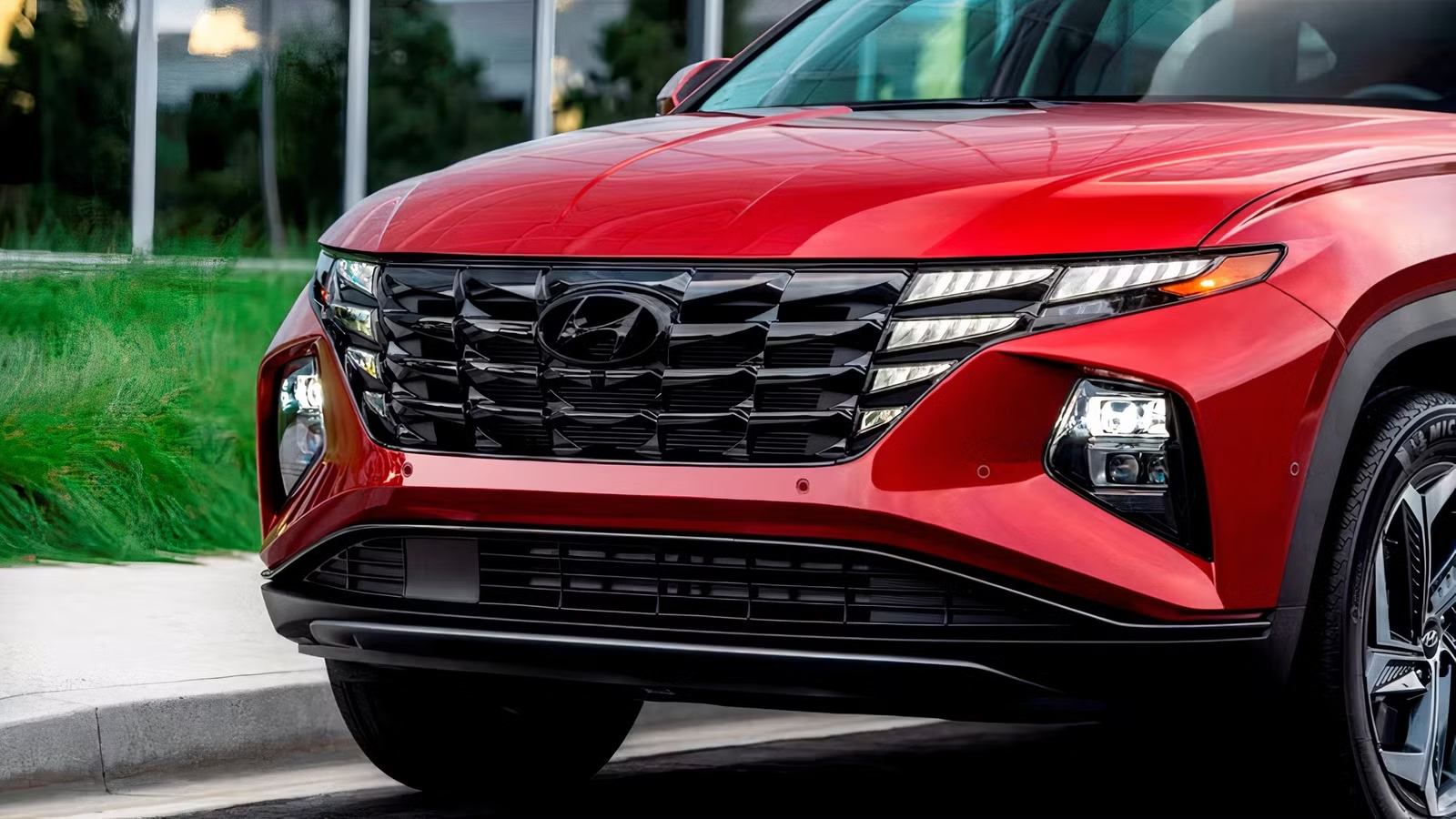
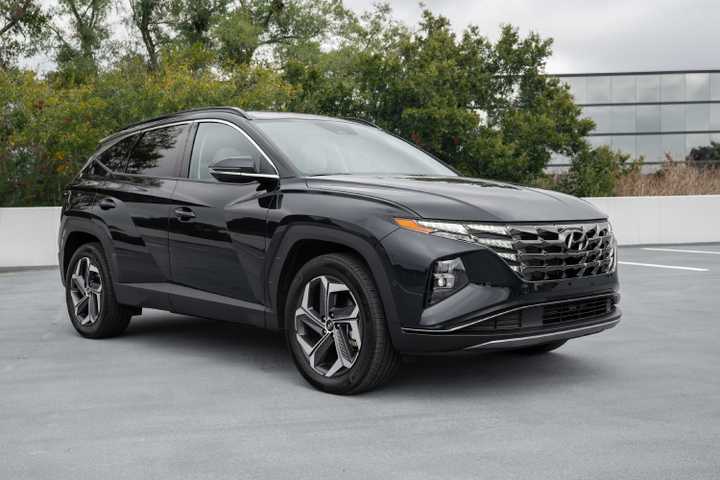
The 2023 Hyundai Tucson Hybrid is a prime example of why you should buy a three-year-old model instead of shelling out for a new one. The 2026 Hyundai Tucson Hybrid is well-priced, with an MSRP of $32,450 and a top-end starting price of $42,075.
However, thanks to an average three-year depreciation rate of 25.7 percent and a five-year depreciation rate of 47 percent, prices for a 2023 model are considerably more attractive. There are three trims of the 2023 Tucson Hybrid: the SEL Convenience, the Blue, and the Limited. Original starting prices for the SEL were $35,645, $35,685 for the Blue, and $40,445 for the Limited. Today, average used prices for the SEL are $24,300, $23,100 for the Blue, and $27,000 for the Limited.
Its Hybrid Powertrain Remains One Of The Segment’s Biggest Strengths
Close-up shot of 2023 Hyundai Tucson Hybrid engine bayHyundai
There is just one powertrain choice for the 2023 Tucson Hybrid. It comes equipped with a 226-horsepower/258-pound-foot 1.6-liter turbocharged inline-four paired with an electric motor and a 1.49-kWh battery, with power routed through a six-speed automatic. You also get all-wheel drive as standard on all trims.
0–60 mph times are not class-leading, at between 6.3 and 7 seconds, but the real strength of this powertrain is its fuel efficiency. FuelEconomy.gov estimates that the least efficient ’23 Tucson Hybrid can achieve 37 combined mpg (37 mpg city/36 mpg highway), while the Tucson Hybrid Blue can achieve 38 combined mpg (38 mpg city/38 mpg highway).
Front 3/4 shot of 2023 Hyundai Tucson Hybrid parkedHyundai
To put that into perspective, the 2026 Hyundai Tucson Hybrid can achieve between 36 and 38 combined mpg. A front-wheel-drive 2026 RAV4 can achieve 43 combined mpg; however, starting prices are $31,900, so some $4,000 more than the top trim of a used 2023 Tucson Hybrid.
High-End Features Come Standard On Used Models And Cost Less Than A New Base Trim
Shot of 2023 Hyundai Tucson Hybrid interior showing front cabinHyundai
Close-up shot of 2023 Hyundai Tucson Hybrid touchscreenHyundai
You also don’t have to sacrifice a modern interior or up-to-date equipment. The entry-level Blue gets an eight-inch touchscreen with wireless Apple CarPlay and Android Auto, dual-zone climate control, heated front seats, and stain-resistant cloth upholstery; the 2026 model gets a 12.3-inch touchscreen, but you still get the same climate control and seating options.
The SEL Convenience gets a bit more, with a larger 10.25-inch touchscreen with built-in navigation, paired with a 10.25-inch instrument cluster, wireless charging, a hands-free power liftgate, and H-Tex leatherette seating surfaces. The top-end Limited trim gets the most, with ambient lighting, a Bose audio rig, leather-trimmed seats, a heated steering wheel, and a Blind-Spot Monitor.
Shot of 2023 Hyundai Tucson Hybrid cargo areaHyundai
The ’23 Tucson Hybrid also gets 38.7 cubic feet of cargo capacity behind the second-row seats, and an impressive 74.8 cubic feet when you fold down the rear 60:40 split-folding seats. It is equipped with a dual-level cargo floor, underfloor cubbies, molded trunk cubbies, and cargo hooks, making hauling cargo easy. Interior volume is a roomy 146.7 cubic feet, while there is also 107.9 cubic feet of passenger volume.
Side-shot of 2023 Hyundai Tucson Hybrid rear seatsHyundai
This opens up 40.1 inches of front headroom (without the sunroof), 38.1 inches of front headroom (with the sunroof), 41.4 inches of front legroom, 39.5 inches of rear headroom (without the sunroof), 38.7 inches of rear headroom (with the sunroof), and 41.3 inches of rear legroom. To put this into perspective, the 2026 Tucson Hybrid has exactly the same interior dimensions and passenger space. Plus, the base-trim 2026 Tucson Hybrid has a starting price of over $30,000, which is considerably more than the highest trim of the 2023 model.
It’s The Kind Of SUV That Keeps Saving You Money
Profile shot of 2023 Hyundai Tucson Hybrid parked off-roadHyundai
On top of the depreciation that has already hit the 2023 Tucson Hybrid, running costs are impressively low. Edmunds estimates that the Tucson Hybrid Blue will cost you $43,749 to own over five years; the SEL Convenience will cost you $46,752 over the same time, and the top-tier Limited will cost $47,977 over the same time. Because of the higher up-front costs, the 2026 Tucson Hybrid will cost you between $51,089 and $60,503 to own over five years.
Excellent Fuel Economy Makes Every Commute Cheaper
Rear shot of 2023 Hyundai Tucson HybridHyundai
As an exceptionally fuel-efficient hybrid SUV, the 2023 Tucson Hybrid brings along the most savings at the pump. FuelEconomy.gov estimates that it will cost you between $1,650 and $1,700 a year for gasoline (based on driving 15,000 miles a year, with 45 percent highway/55 percent city driving). It will cost you $57 to fill the 13.7-gallon tank and between $2.73 and $2.80 to drive 25 miles.
The gas tank range is impressive at between 507 miles and 521 miles, while average gas cost savings range between $2,500 and $2,750 over five years compared to the average modern vehicle. The 2026 model delivers similar fuel costs, but the upfront costs will mean it will take longer to see any kind of savings from fuel costs.
Strong Reliability And Low Ownership Costs Add To Its Long-Term Appeal
Front shot of 2023 Hyundai Tucson Hybrid parked on roadHyundai
In recent years, Hyundai has gained a reputation for being a reliable Korean brand. The 2022 Tucson Hybrid doesn’t have the best reputation, with owners reporting infotainment blackouts and battery system glitches. The 2023 Tucson Hybrid is the second model year of the fourth generation, but it was released with the teething problems fixed.
According to J.D. Power, the ’23 Tucson Hybrid is rated 80 out of 100 for reliability, while owner reviews on Kelley Blue Book rate it 4.3 of 5 for reliability, with 77 percent of owners recommending it. This also translates to low garage costs, which RepairPal says will cost you $426 a year for maintenance.
Front 3/4 action shot of 2023 Hyundai Tucson Hybrid driving off-roadHyundai
Edmunds breaks it down a little further, and puts maintenance costs slightly higher. Edmunds says it will cost you between $6,897 and $7,594 for maintenance over five years, and $2,431 in repairs. Edmunds estimates that a 2026 model will cost you between $5,560 and $6,458 in maintenance and $894 for repairs over five years. While that may look enticing, bearing in mind the $32,450 to $42,075 price range for a new model, the only slightly better five-year maintenance costs don’t offset the price difference.
Close-up shot of 2023 Hyundai Tucson Hybrid front endHyundai
Insurance costs over five years for a 2023 model are estimated to cost between $6,419 and $6,445; for a 2026 model, it will cost between $6,482 and $6,509 for insurance. Insurance on the 2023 model is only marginally more affordable than on a 2026 model, but if saving money on a modern hybrid SUV is the goal, every bit counts.
Unless You Need The Latest Model Year, The 2023 Tucson Hybrid Is The Smarter Buy
Front 3/4 action shot of 2023 Hyundai Tucson Hybrid driving on dirt roadHyundai
There are some SUVs where buying the newest model is absolutely worth the extra outlay. When a brand introduces an all-new platform, a much-improved hybrid system, or noticeably better packaging, it can completely change the characteristics of the ride. The latest-gen RAV4 and Kia Sportage Hybrid, for example, saw big enough updates over their predecessors that buying a newer one could have some upsides.
The Tucson Hybrid is in a different position. Hyundai hasn’t fundamentally reinvented the model since the 2023 model year, and the 2023 Tucson Hybrid is only the second model year of the most recent generation. That means you’re getting almost the same ownership experience for less money up front.
Shot of 2023 Hyundai Tucson Hybrid interior showing front cabinHyundai
The hybrid powertrain remains just as smooth, standard all-wheel drive is still included across the lineup, and the interior design still looks modern. Yes, the new Tucson Hybrid has a bigger touchscreen and a panoramic curved display with slightly improved graphics, a sportier and bolder look, and sleeker wheels, but unless you’re determined to have the latest model year, there’s little that changes the daily driving experience.
Both the 2023 and 2026 Tucson Hybrid have the same cargo capacities, and both can tow up to 2,000 pounds when fitted with trailer brakes. So, if you are looking for a used hybrid SUV that can handle family life, still provide the same sort of space as the new model, and costs less to buy and run, there is little sense in choosing a new model.
Profile action shot of 2023 Hyundai Tucson Hybrid driving on roadHyundai
The 2023 Tucson Hybrid is the sweet spot. It has already taken its hit on depreciation, but it hasn’t reached a point where its technology, efficiency, or design feel dated. Instead of paying a premium simply because an SUV has just rolled off the production line, you can put your money toward a higher trim or lower overall costs. In short, you get most of the benefits of a new hybrid SUV but without taking the biggest financial hit.
Base Trim Engine
1.6L Turbo Inline-4 Hybrid
Base Trim Transmission
6-Speed Automatic
Base Trim Drivetrain
All-Wheel Drive
Base Trim Horsepower
226 hp
Base Trim Torque
258 lb-ft @ 1500 rpm
Fuel Economy
38/38 MPG
Base Trim Fuel Economy (city/highway/combined)
38/38/38 mpg
Make
Hyundai
Model
Tucson Hybrid
Infotainment & Features
8 /10
Sources: Hyundai, Edmunds, J.D. Power, FuelEconomy.gov, CarEdge, iSeeCars, Kelley Blue Book, and RepairPal.













No Comments