
The Best 2027 Genesis GV80 Coupe Trim Isn’t The 409-HP Flagship
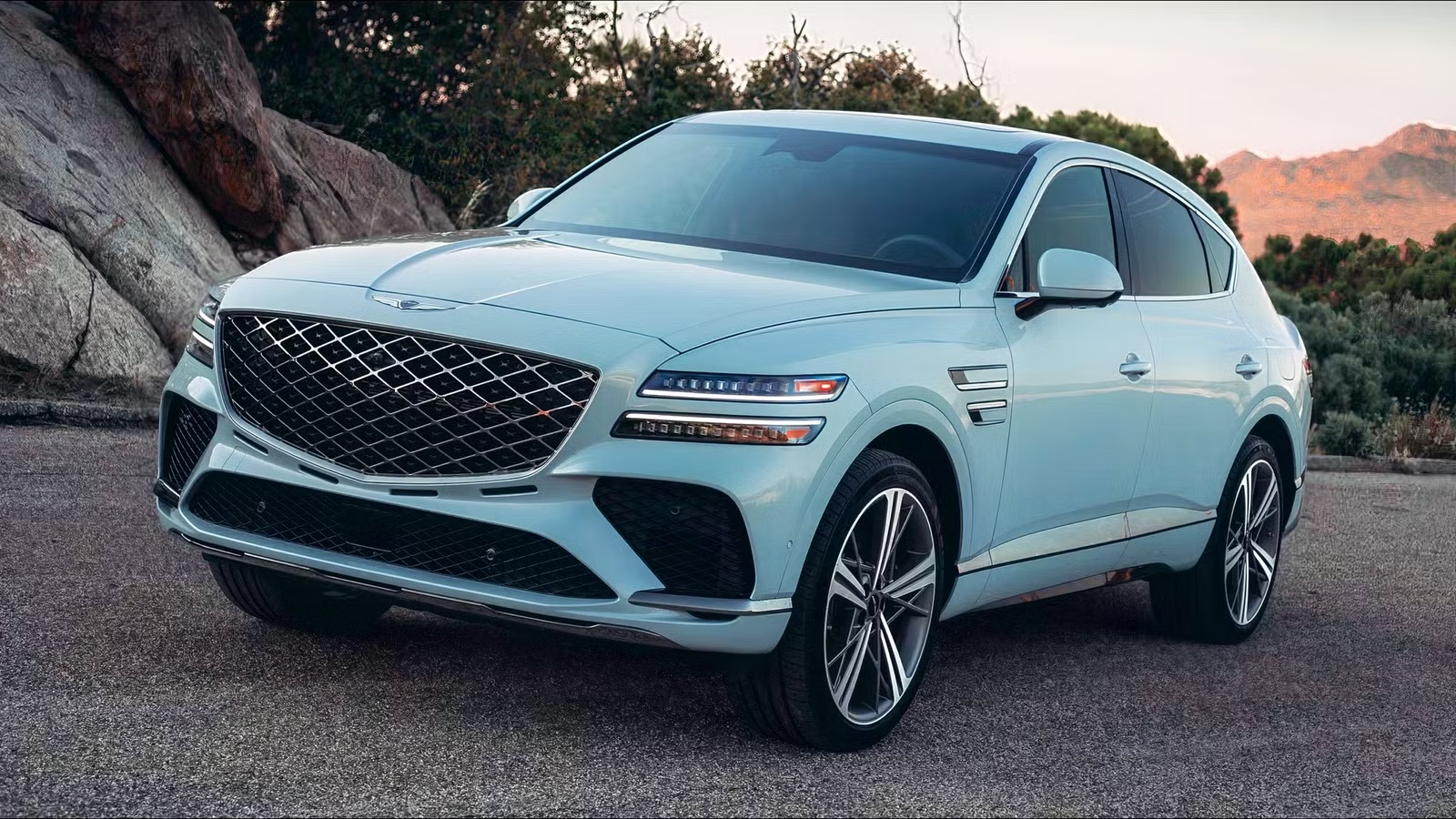
You want your next luxury SUV to feel special, but buying the most powerful version can complicate a decision that should be about years of ownership. The 2027 Genesis GV80 Coupe makes that tension clear: its 409-horsepower e-supercharged engine promises sharper response, while the standard 375-horsepower version asks considerably less of your budget. If you plan to keep your Genesis beyond 100,000 miles, the cheaper trim deserves more than a passing glance.

The 3.5T Advanced AWD is the stronger value recommendation, although that conclusion needs an honest foundation. Its case rests on a lower purchase price and fewer added powertrain systems, rather than proof that the flagship will become unreliable.
The Most Powerful GV80 Coupe Is An Easy Trim To Want
The E-Supercharger Answers A Real Weakness Of Turbo Engines
The e-supercharger’s appeal extends beyond its 409-horsepower rating. Genesis explains that the electric compressor operates below 1,750 RPM, helping build airflow when the exhaust-driven turbochargers have less energy available. At higher engine speeds, air bypasses the electric compressor as the turbochargers take over.

That gives the technology a purpose you can appreciate in everyday driving. Pulling away from an intersection or accelerating after slowing for a turn places greater emphasis on initial response than on maximum horsepower. If the flagship feels more immediate in those situations, its advantage matters even when you never use full throttle.
The 2027 Price Gap Makes The Standard 3.5T Interesting
The 3.5T Advanced Starts $11,300 Below The E-SC Prestige

Genesis lists the 2027 3.5T Advanced AWD at a starting MSRP of $77,200 and the 3.5T e-SC Prestige AWD at $88,500. That creates an $11,300 difference between these specific trims before accounting for destination charges, options, and the final vehicle configuration.
The distinction matters because this is an Advanced-to-Prestige comparison, not an isolated engine surcharge. You are buying a different equipment package along with the e-supercharged powertrain. Calling the entire difference a complexity tax would ignore the additional features that could justify part of the price for you.
Its 375 HP Is Already Plenty For The Coupe’s Mission

The Advanced gives up 34 horsepower, or roughly eight percent of the flagship’s output. That is a meaningful difference on paper, but it leaves you with a 375-horsepower twin-turbo V6 rather than a modest engine fitted simply to advertise a lower starting price.
Maximum output also tells you little about how satisfying the engine feels during your commute. A direct test drive should establish whether the standard powertrain responds adequately when joining traffic, climbing a grade, or accelerating with passengers aboard. If it does, the extra horsepower becomes a preference rather than a requirement.
The E-SC Adds More Than An Electric Compressor
The 48V System Brings Several Additional Components

Hyundai Motor Group’s explanation of the e-SC powertrain describes a 48V mild-hybrid starter-generator, a lithium battery, and an electric compressor. The higher-output version also uses a higher-capacity turbocharger and an additional water-cooled intercooler. This is a coordinated powertrain upgrade, not a single accessory attached to an otherwise identical engine.
Those components perform useful jobs, including energy recovery, starting assistance, and improved response. Their presence does not demonstrate poor durability, and modern control systems can make complex hardware work reliably. Still, choosing the standard engine means choosing fewer of these additional systems to diagnose or replace if a problem develops.
That is a reasonable ownership preference, especially if you intend to keep the vehicle long after its initial purchase. It is not a prediction of repair bills, because component failure rates and replacement costs would be needed to make that calculation. Simpler hardware gives the Advanced a defensible appeal without establishing a proven reliability victory.
The Flagship’s Gains Need To Justify Their Cost
Acceleration And Fuel Economy Need Like-For-Like Numbers

A claimed half-second advantage would sound persuasive, but it requires matching tests of both versions. The available e-SC acceleration result cannot establish how much quicker it is than the 2027 Advanced. Launch conditions, tires, weather, and testing procedures can influence the comparison.
Fuel economy deserves the same discipline. Mild-hybrid assistance has an efficiency purpose, but that does not establish how much fuel you will save, and earlier EPA figures should not be presented as verified 2027 ratings. Use the window stickers for the two vehicles you are considering, then separate official estimates from any owner’s reported results.
Even a modest economic advantage needs to be weighed against the purchase difference. Divide the extra cost by realistic annual fuel savings before treating efficiency as a reason to upgrade. The stronger e-SC argument is likely to be its driving character and equipment, which you can assess directly.
The Warranty Helps, But Ownership May Outlast It

Genesis provides a five-year/60,000-mile new-vehicle limited warranty and a 10-year/100,000-mile powertrain limited warranty for original owners. Those terms support confidence during a substantial portion of ownership. They do not make every component subject to the same coverage.
Before purchasing the e-SC, check the applicable warranty booklet for the electric compressor, starter-generator, battery, and related electronics. The general powertrain headline should not substitute for the component-specific terms. Clear coverage information is more useful than either assuming everything is protected or assuming the 48V system will become expensive.
If you expect to keep the Coupe beyond 100,000 miles, maintenance and repair planning will eventually matter with either engine. The Advanced remains a turbocharged luxury vehicle with substantial mechanical and electronic complexity. Choosing it reduces the amount of added hardware under consideration, but does not eliminate the need for careful ownership.
The 3.5T Advanced Is The Better Buy For Most Keepers
Choose The E-SC Prestige If Its Response And Features Are The Point

The e-SC Prestige can make sense if its initial response is noticeably better to you and its equipment includes features you would use regularly. There is nothing irrational about paying for a more satisfying vehicle when the benefits are clear. The mistake would be buying it solely because the horsepower number is larger.
Drive both versions on the same route and concentrate on ordinary acceleration, ride comfort, and the features that affect your time behind the wheel. If the Prestige repeatedly delivers something the Advanced lacks, its premium has a personal justification. You do not need an exaggerated performance or reliability claim to explain that choice.
Choose The Advanced If You Want The Coupe For The Long Haul
The 3.5T Advanced is the more persuasive starting point if you value the Coupe’s design and substantial V6 power while keeping purchase cost under control. Its $11,300 lower starting MSRP creates a concrete advantage today. Avoiding the e-SC’s additional hardware is a further reason to prefer it if mechanical simplicity matters to you.
That makes the Advanced the recommended trim for a buyer planning years of ownership, not a certified winner in a reliability contest that has not happened yet. Choose it because its price and powertrain fit your priorities. The smartest GV80 Coupe is the one whose extra cost buys benefits you will actually use.
Sources: Genesis, Edmunds, Kelley Blue Book

Related posts





Latest Post




No Comments