
2026 Kawasaki Z900RS First Look: Retro Refined
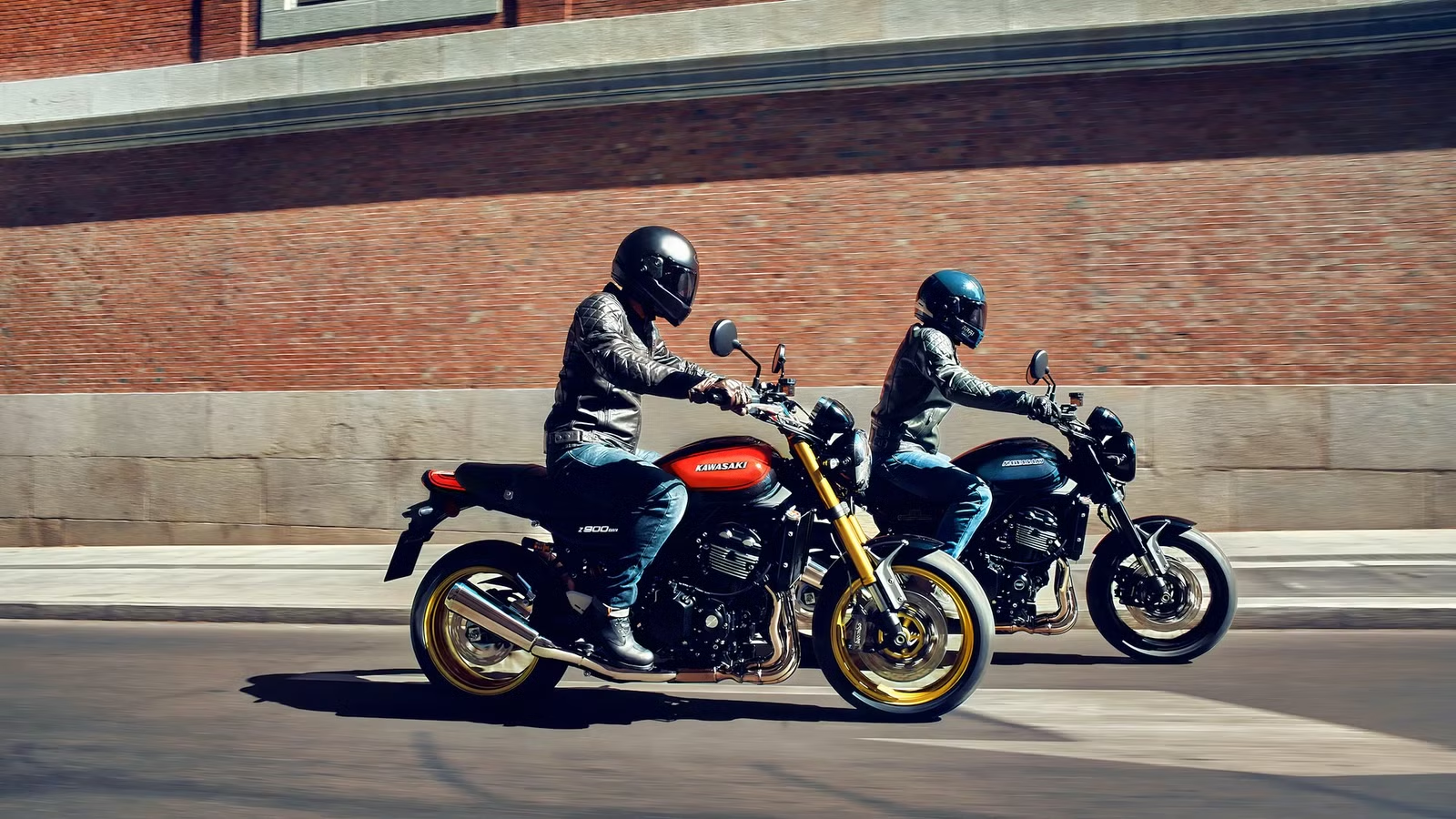
The Kawasaki Z900RS occupies a clear place in the retro-bike market. It takes the visual language of the original 1972 Z1, and wraps it around a modern 948cc inline-four and contemporary chassis with technology that more than justifies its price tag. For 2026, Kawasaki has done far more than add new paint. Its role is clear: this is Kawasaki’s premium full-size retro roadster, not simply an older-looking alternative to the standard Z900.

The 2026 Z900RS gets more power, electronic throttle valves, an IMU-supported electronics package, cruise control, a quickshifter, smartphone connectivity, revised ergonomics, and an updated exhaust. The standard Z900RS ABS starts at $12,899, while the Z900RS Cafe ABS costs $13,299 and the more extensively equipped Z900RS SE ABS is priced at $14,599.
A Proven Powertrain Gets A Proper Update
The Z900RS retains its liquid-cooled, DOHC, 16-valve 948cc inline-four, but Kawasaki has reworked the engine for 2026. Electronic Throttle Valves (ETV) are now part of the package, and the compression ratio rises from 10.8:1 to 11.8:1. Kawasaki says these changes improve control at low and middle engine speeds while increasing output higher in the rev range.

Peak output now stands at 115 horsepower at 9,300rpm and 73 lb-ft of torque at 7,700rpm. For reference, we’re seeing notable gains as the 2025 Z900RS produced 110 horsepower at 8,500rpm and 72.3 lb-ft at 6,500rpm. A six-speed transmission and chain final drive remain, while the bike features a new megaphone-style silencer and reshaped exhaust headers that reinforce its Z1-inspired appearance and give the four-cylinder engine a revised exhaust note.

The Z900RS also differs from the regular Z900 in engine tuning. Both use 948cc inline-four engines with the same 73.4mm by 56.0mm bore and stroke. However, Kawasaki gives them different output targets. The 2026 Z900 makes 123 horsepower, leaving the Z900RS focused more on character and road manners than outright peak performance.
Modern Electronics Finally Catch Up With The Retro Styling

One of the biggest changes for 2026 sits beneath the intentionally old-school bodywork. The Z900RS gets IMU-enhanced chassis orientation awareness, allowing Kawasaki to add its Cornering Management Function alongside updated traction control and ABS.
The equipment list also includes selectable power modes, electronic cruise control, and Kawasaki’s bidirectional quickshifter. Electronic throttle valves along with a full throttle-by-wire system enable several of these features and bring the Z900RS in line with Kawasaki’s newer-generation motorcycles.
Smartphone connectivity through Kawasaki’s proprietary Rideology mobile app also joins the package. The system supports vehicle information and ride logging, while licensed functions add voice commands and turn-by-turn navigation. Kawasaki retains LED lighting and the analog-looking presentation that defines the Z900RS.
The Chassis Is The Same, But The Riding Position Changes

The Z900RS continues to use a high-tensile-steel trellis frame with a 41mm inverted fork offering compression, rebound, and spring-preload adjustment. Front wheel travel is 4.7 inches, while the horizontal back-link rear suspension provides 5.5 inches of travel with adjustable rebound damping and spring preload. Braking comes from dual 300mm front discs with four-piston calipers and a single 250mm rear disc. The bike rolls on 17-inch wheels wearing 120/70 front and 180/55 rear tires. Curb weight is listed at 476.3 pounds, while the fuel tank holds 4.5 gallons.
Kawasaki has also changed the ergonomics. Thanks to some adjustments to the bike’s subframe, seat height drops to 31.9 inches from the previous model’s 32.9 inches, while overall width shrinks from 34.1 to 32.1 inches. The wheelbase is now 57.7 inches, and Kawasaki says the new setup creates a more relaxed riding position. These changes make the Z900RS easier to manage without altering its recognizable silhouette.
The SE Gets The Fancy Hardware

For riders who want the premium version, the $14,599 Z900RS SE ABS has hardware that clearly separates it from the standard bike. Its rear suspension uses an Öhlins S46 shock with 30-position rebound adjustment and stepless spring-preload adjustment, while Brembo M4.32 monobloc four-piston calipers handle braking up front with dual 300mm discs. The SE also gets stainless-steel braided front brake lines, gold-colored fork outer tubes, a handlebar-mounted USB-C outlet, and Kawasaki’s reworked interpretation of the classic Z1 “Fireball” color scheme. Seat height is 32.3 inches and curb weight remains 476.3 pounds.

Meanwhile, the $13,299 Z900RS Cafe ABS takes a different approach. It uses the same updated 948cc engine and electronics package but adds a cafe-racer-style front cowl, lower black handlebar, model-specific seat, brushed exhaust finish, and graphics inspired by Kawasaki’s historic Mach series.
Still Retro, But Thoroughly Modern Underneath
At $12,899, the 2026 Z900RS ABS costs $2,900 more than the $9,999 Z900 ABS which shares a basic architecture. It also sits well above the $8,999 Z650RS middleweight roadster.
For 2026, buyers no longer have to accept a basic electronics package in exchange for the retro styling. With 115 horsepower, IMU-supported rider aids, cruise control, a bidirectional quickshifter, adjustable suspension, and the Z1-inspired design that defines the model, the Z900RS combines classic styling with modern-day technology. The clothes may still be from the 1970s. But the electronics and performance clearly aren’t.
2026 Kawasaki Z900RS Photo Gallery
2026 Kawasaki Z900RS Specifications
Engine:
|
Type |
Inline-four; DOHC; 16 valves |
|
Displacement |
948cc |
|
Bore x stroke |
73.4mm x 56.0mm |
|
Maximum horsepower |
115 horsepower @ 9,300 rpm |
|
Maximum torque |
73 lb-ft @ 7,700 rpm |
|
Compression ratio |
11.8:1 |
|
Valvetrain |
DOHC; 4 valves per cylinder |
|
Fueling |
DFI w/ 36mm throttle bodies; Electronic Throttle Valves |
|
Exhaust |
4-into-1 exhaust w/ megaphone-style silencer |
|
Cooling |
Liquid |
|
Transmission |
Six-speed, return shift |
|
Clutch |
Wet multi-disc assist-and-slipper clutch |
|
Final drive |
Sealed chain |
Chassis:
|
Frame |
High-tensile-steel trellis frame |
|
Front suspension; travel |
41mm inverted telescopic fork, adjustable for compression damping, rebound damping and spring preload; 4.7 inches |
|
Rear suspension; travel |
Horizontal back-link suspension w/ gas-charged shock, adjustable for rebound damping and spring preload; 5.5 inches |
|
Wheels |
Cast-aluminum |
|
Front wheel |
17-inch diameter |
|
Rear wheel |
17-inch diameter |
|
Tires |
Tubeless |
|
Front tire |
120/70 ZR17 |
|
Rear tire |
180/55 ZR17 |
|
Front brake |
Dual 300mm discs w/ four-piston calipers |
|
Rear brake |
Single 250mm disc w/ single-piston caliper |
|
ABS |
Standard IMU-enhanced ABS integrated with Kawasaki Cornering Management Function |
|
Electronic rider aids |
Electronic Throttle Valves; Traction Control; Power Modes; Kawasaki Cornering Management Function; IMU-enhanced chassis orientation awareness; Kawasaki Quick Shifter; electronic cruise control; Economical Riding Indicator; Rideology smartphone connectivity |
Dimensions & Capacities:
|
Wheelbase |
57.7 inches |
|
Rake |
25.0 degrees |
|
Trail |
3.9 inches |
|
Seat height |
31.9 inches |
|
Ground clearance |
5.3 inches |
|
Lean angle |
Not Provided By Manufacturer |
|
Fuel capacity |
4.5 gallons |
|
Estimated fuel consumption |
Not Provided By Manufacturer |
|
Curb weight |
476.3 pounds |
Price & Warranty:
|
Website |
kawasaki.com |
|
Price |
$12,899 MSRP |
|
Warranty |
12-month limited warranty |
|
Service interval |
Every 7,600 miles or one year, whichever comes first |
|
Color |
Ebony (for ABS and Cafe), Metallic Spark Black (for SE) |
Source: Kawasaki

Related posts

Latest Post


No Comments