
AMC Hid A 315-HP 390 V8 And Hurst Four-Speed In A Plain Rambler
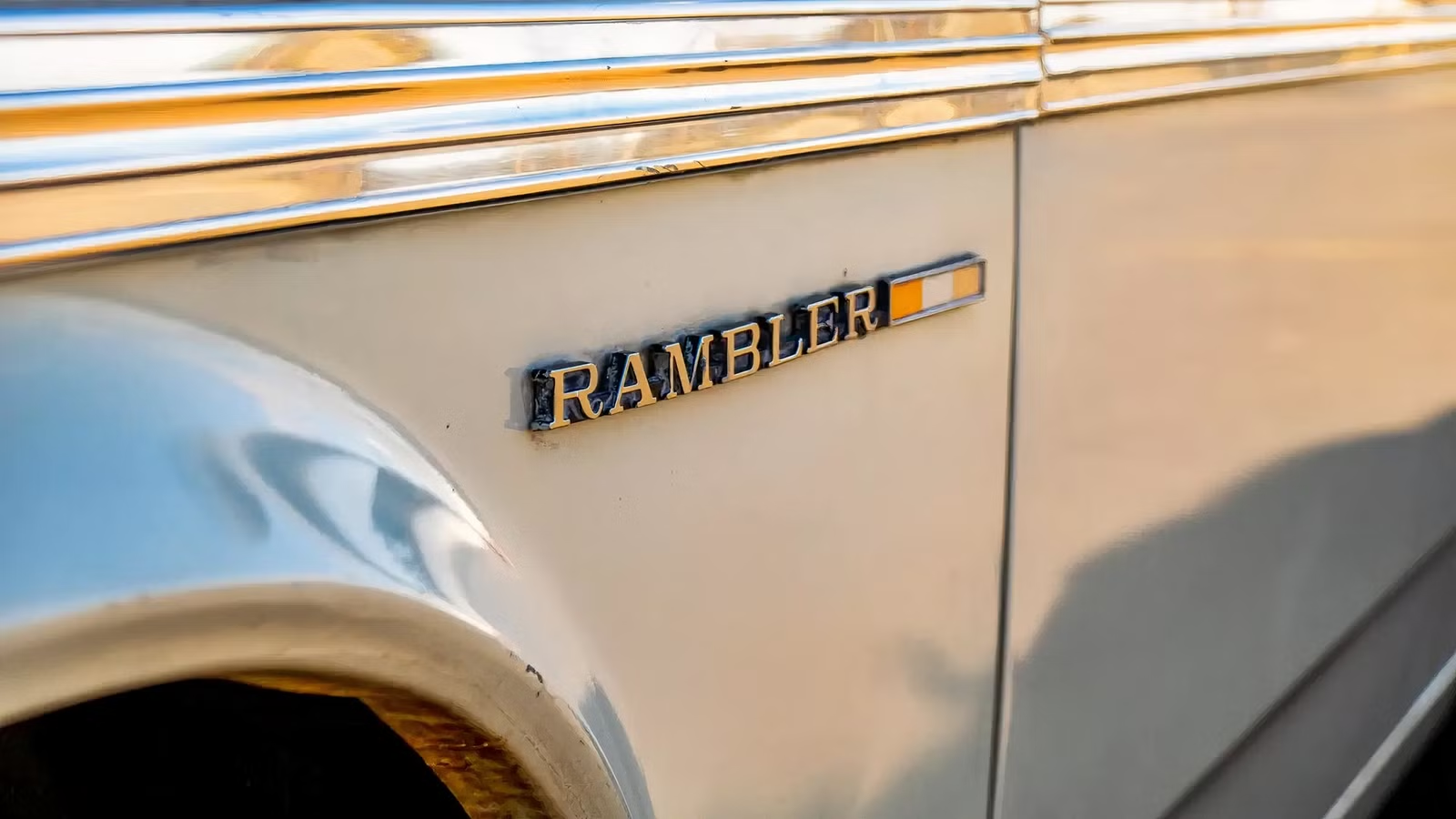
Imagine buying a plain little Rambler and finding out it has a 315-hp V8 under the hood, a four-speed manual on the floor and a Hurst shifter to row through the gears. Sounds like somebody at AMC had a little too much fun in the workshop, doesn’t it? That’s pretty much what happened in 1969. American Motors wasn’t exactly famous for building wild Muscle Cars, but it had a few tricks up its sleeve. It teamed up with Hurst, gave its humble compact a serious performance makeover and planned just 500 examples. Then it kept going. Way past 500.
AMC Was An Unlikely Muscle-Car Builder In The 1960s

American Motors was the smaller guy in Detroit. While Ford, Chevrolet and Dodge were busy fighting over muscle-car buyers, AMC was better known for practical, affordable cars that got families from A to B without emptying their wallets. That didn’t mean the company had no interest in performance. The AMX and Javelin had already shown that AMC wanted a piece of the action. But it couldn’t throw money at every crazy idea that came along. A limited-production performance car was a safer bet.
Build a small batch, see how buyers reacted and avoid being stuck with thousands of unwanted cars if things went sideways. For this particular project, AMC teamed up with Hurst Performance. Hurst was already a familiar name among muscle-car fans, especially for its performance shifters. It was a pretty good partner for a company looking to turn an ordinary-looking Rambler into something with a serious attitude problem.
AMC And Hurst Built A Compact Rambler For NHRA Drag Racing


The plan was to build a compact car with genuine performance and drag-strip credentials. AMC had a small body that could take a much bigger engine, and the project was aimed at NHRA F/Stock competition. So, the mechanical hardware had to be up to the job. This wasn’t going to be some regular economy car with a couple of stripes and a fancy badge. AMC wanted something that could actually move. The company initially planned to build 500 examples, exactly what NHRA required to make it legal for Stock-class racing. That was a cautious target, especially with muscle cars grabbing so much attention. Still, a compact body, a big V8 and Hurst hardware sounded like a pretty tasty combination.
The 1969 AMC SC/Rambler Packed A 315-HP 390 V8 And Hurst Four-Speed

Meet the 1969 AMC SC/Rambler, better known as the Scrambler. Under that hood sat AMC’s 390-cubic-inch V8, pumping out 315 horsepower and 425 lb-ft of torque. Think about that for a second. This was a compact Rambler carrying a V8 that wouldn’t have looked out of place in a much bigger muscle car. The contrast was half the fun. And AMC didn’t stop at the engine. The Scrambler came with a Borg-Warner T-10 four-speed manual, operated through a Hurst shifter, plus a 3.54:1 Twin-Grip differential to help get the power down.
So, yes, you got a proper four-speed to work that big V8, not some boring automatic that did all the thinking for you. Then you got to look at the thing. Red, white and blue graphics, a hood scoop and enough visual attitude to make a family Rambler look like it had joined a drag-racing team. It wasn’t exactly subtle, but who cares? At $2,998, it gave buyers a relatively affordable way to get their hands on big V8 performance.
AMC Planned 500 SC/Ramblers But Ended Up Building 1,512

AMC thought 500 examples would do the trick. Turns out, that wasn’t quite enough. Production eventually reached 1,512 cars, roughly three times the original target. But there’s a little more to this story than buyers simply demanding more Scramblers. The first batch sold quickly, yet plenty of dealers found the car a tough sell, so the bigger run wasn’t purely a case of runaway demand. The expanded run also brought a second paint scheme.
The original A-scheme cars wore loud red, white and blue graphics, while the later B scheme was mostly white, with red and blue stripes along the lower body. Apparently, some buyers wanted the V8 and four-speed without making quite such a big patriotic statement. Exactly how many cars wore each scheme is still disputed, with estimates for the B cars ranging from fewer than 300 to roughly half the run.
The SC/Rambler’s Quarter-Mile Times Backed Up Its Wild Looks

The SC/Rambler had the hardware to back up all that noise. Period road tests recorded quarter-mile times from around 14.1 to 14.4 seconds, depending on the test and conditions. One test produced a best run of 14.14 seconds with just the driver and half a gallon of fuel aboard. Another recorded 14.4 seconds at 100.44 mph. That’s genuinely quick for a compact car from the late 1960s. Its power-to-weight ratio suggested it could give some much bigger muscle cars a serious headache, although that doesn’t mean it beat every rival in every comparison.
AMC had another go at the compact performance formula with the 1971 Hornet SC/360. It packed a smaller 360 V8 and took a slightly more restrained approach as insurance costs started hammering performance-car buyers. AMC hoped to sell thousands, but only 784 rolled out. That makes the Scrambler’s 1,512-car production run look pretty impressive. 1969 was also the final year for the Rambler name in America, with the Hornet taking over for 1970. Not a bad send-off for the underdog.
Sources: Classic.com, Mecum

Related posts
Latest Post


No Comments