
The Kia Telluride Hybrid Makes The Gas Model Hard To Defend
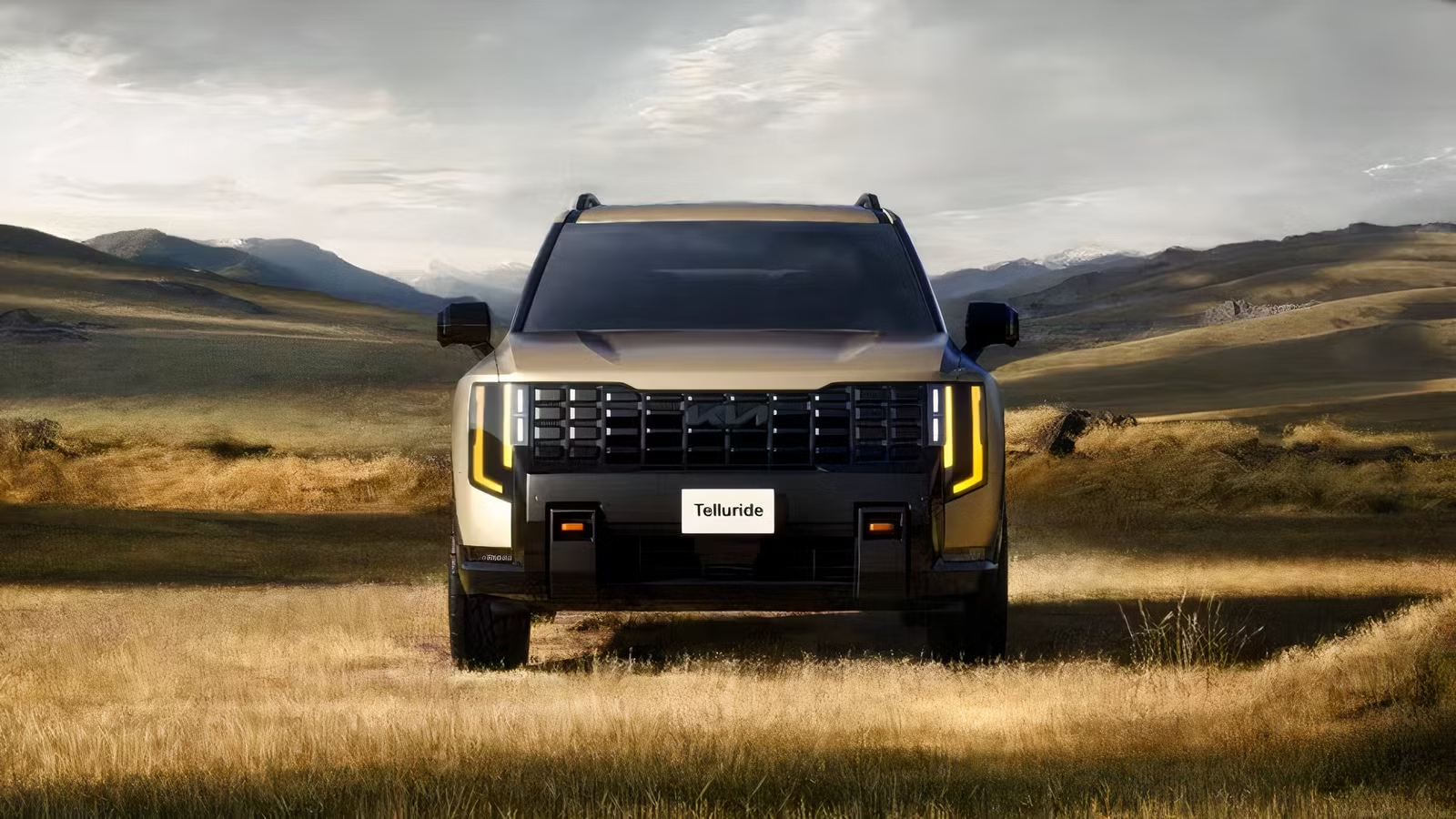
Ever since it first rolled onto dealership floors in early 2019, the Kia Telluride has enjoyed an almost untouchable status in the three-row family SUV segment. It combined striking styling, a cavernous interior, and a comfortable ride into a package that punched well above its price tag. Yet, for all its accolades, the traditional Telluride relied on a conventional, naturally aspirated engine that, while smooth, was increasingly burdened by thirsty fuel consumption figures relative to modern powertrain tech.

Enter the electrified variant: a model engineered not just to keep pace with industry trends, but to fundamentally alter the value proposition of large family haulers. When a hybrid setup yields sharper performance while radically slashing fuel bills, the traditional internal-combustion-only model stops looking like the safe, sensible choice and starts looking like an unnecessary compromise.
Breaking The Traditional Trade-off: More Muscle, Less Gas
Shattering The Efficiency Compromise
For decades, automotive engineering operated under an unyielding law of equivalent exchange: if you wanted more power, heavier towing capacity, and quicker throttle response, you had to pay a penalty at the fuel pump. Larger displacement engines or forced-induction setups guzzled gasoline in direct proportion to the excitement they provided. Buyers looking for efficiency were historically forced to temper their expectations, settling for sluggish acceleration and uninspiring powertrain behavior.

The Kia Telluride Hybrid completely shatters this archaic paradigm. By integrating a high-output turbocharged internal combustion engine with a robust electric motor and battery architecture, Kia’s engineers have decoupled performance from high fuel consumption. Instead of asking drivers to choose between grunt and green credentials, the hybrid powertrain delivers a masterclass in efficiency optimization. Energy that would otherwise be wasted during deceleration and braking is captured and repurposed, turning routine city driving loops and stop-and-go school runs into opportunities for passive power generation.
The Numbers Game Beyond Total Horsepower

To understand why the hybrid makes its conventional sibling look obsolete, you only have to look at the spec sheet. The standard gas-powered Telluride relies on a 2.5-liter turbocharged gas engine that produces a respectable, if unexceptional, 274 horsepower and 311 pound-feet of torque. It gets the job done, but it never feels genuinely fast or effortless when loaded down with passengers and luggage.
By contrast, the Telluride Hybrid leverages its 2.5-liter turbo-hybrid powertrain to churn out a commanding 329 horsepower and 339 pound-feet of torque. That is a substantial jump of 55 horses and nearly 30 pound-feet of twisting force over the standard model. Crucially, this extra muscle arrives in the lower rev range, transforming the driving dynamic from a strained mechanical effort into an effortless surge. When a vehicle is simultaneously faster, more responsive, and dramatically more efficient, the traditional gas engine loses its primary reason for existing.
At The Pump: The Practical Daily Payoff
Real-World Mileage Gains

The theoretical advantages of hybridization quickly translate into undeniable financial relief the moment you pull up to a local fuel station. Traditional three-row gas SUVs are notorious fuel sponges, frequently hovering in the high teens or low twenties during mixed daily driving. The Telluride Hybrid, however, redefines what a large utility vehicle can achieve on a gallon of gas.
The 2027 Kia Telluride Hybrid delivers versatile fuel economy across its entire lineup without forcing drivers to sacrifice capability or luxury. Base and mid-tier grades (LX/EX) maximize efficiency with an EPA-estimated 35 MPG combined (36 city/34 highway), nearly doubling the fuel economy of the legacy gas model. Stepping up to upper-tier luxury trims (SX/SX-Prestige) yields a resilient 33 MPG combined (34 city/32 highway) despite the added weight of premium features and standard all-wheel drive.
Even rugged off-road variants (X-Line/X-Pro) maintain a strong 31 MPG combined (30 city/32 highway), proving that all-terrain styling no longer comes with a severe penalty at the pump. Compared to the standard gas variant, the Telluride Hybrid sees efficiency gains between 55 and 65 percent across all comparable trim levels.
Highway Range And Reduced Refuel Frequency

Beyond the headline-grabbing EPA numbers, the daily payoff manifests as an astonishingly long leash between fill-ups. The standard gas-powered Telluride typically demands a weekly stop at the pump for average commuters, stretching patience during long road trips.
With the Telluride Hybrid’s fuel efficiency paired with a standard fuel tank capacity, drivers can easily eclipse the 600-mile mark on a single tank of gas. For family road trips, this translates to skipping entire legs of tedious highway rest stops, bypassing overpriced interstate gas stations, and arriving at destinations with fuel to spare. It alters the rhythm of travel, turning what used to be a frequent chore into a seamless, uninterrupted journey.
Behind The Wheel: Instant Torque And Refined Power Delivery
Electric Assistance Where It Matters

Numbers on a spec sheet tell half the story; how a powertrain behaves in the real world is where the hybrid truly separates itself from the gas model. Traditional internal combustion engines suffer from a fundamental lag: pistons must build speed, turbochargers must spool, and transmissions must hunt for lower gears before power actually reaches the pavement.
The Telluride Hybrid leverages instantaneous electric torque fill to eliminate these frustrating delays. When you step on the accelerator from a dead stop or signal to merge into fast-moving highway traffic, the electric motor kicks in instantly. There is no hesitation, no waiting for revs to climb, just immediate, linear thrust. This seamless integration makes highway passing maneuvers significantly safer and gives the large SUV a nimble, light-footed character that defies its physical footprint.
Quiet Cabin Dynamics And Seamless Shifting

Refinement is the ultimate currency of modern luxury, and the hybrid architecture elevates the Telluride’s cabin environment to near-executive levels of tranquility. Because the electric motor handles low-speed maneuvering and crawling traffic, the internal combustion engine remains off during city idling and parking lot crawls.
When the gas engine does fire up, it operates under lighter, more consistent loads thanks to the electric assist, resulting in significantly lower noise, vibration, and harshness (NVH) levels. Paired with a smooth-shifting hybrid-tuned automatic transmission that avoids the jerky gear hunts plaguing older multi-speed units, the cabin remains a serene sanctuary. Conversations are easier, audio systems sound clearer, and long drives induce markedly less fatigue.
Total Cost Of Ownership: Is The Pure Gas Engine Obsolete?
Upfront Price Premium Vs. Fuel Savings Payback
Inevitably, skeptics point to the upfront price gap as the primary defense for sticking with the traditional gas model. With the Telluride Hybrid commanding a higher starting MSRP than its base gas counterpart, buyers must weigh immediate outlay against long-term operational costs.
However, simple math quickly dismantles this objection. Factoring in average annual mileage (around 15,000 miles) and average national gas prices, the hybrid’s massive leap in fuel economy saves drivers hundreds, if not thousands, of dollars annually. Over a typical three-to-five-year ownership cycle, those compounding fuel savings rapidly erode the initial price premium, turning the hybrid from an added expense into a sound financial investment.
Sources: Kia, Edmunds, EPA

Related posts





Latest Post


No Comments