
Every 2026 Harley-Davidson Softail Now Ships With Cornering ABS And A 117 V-Twin
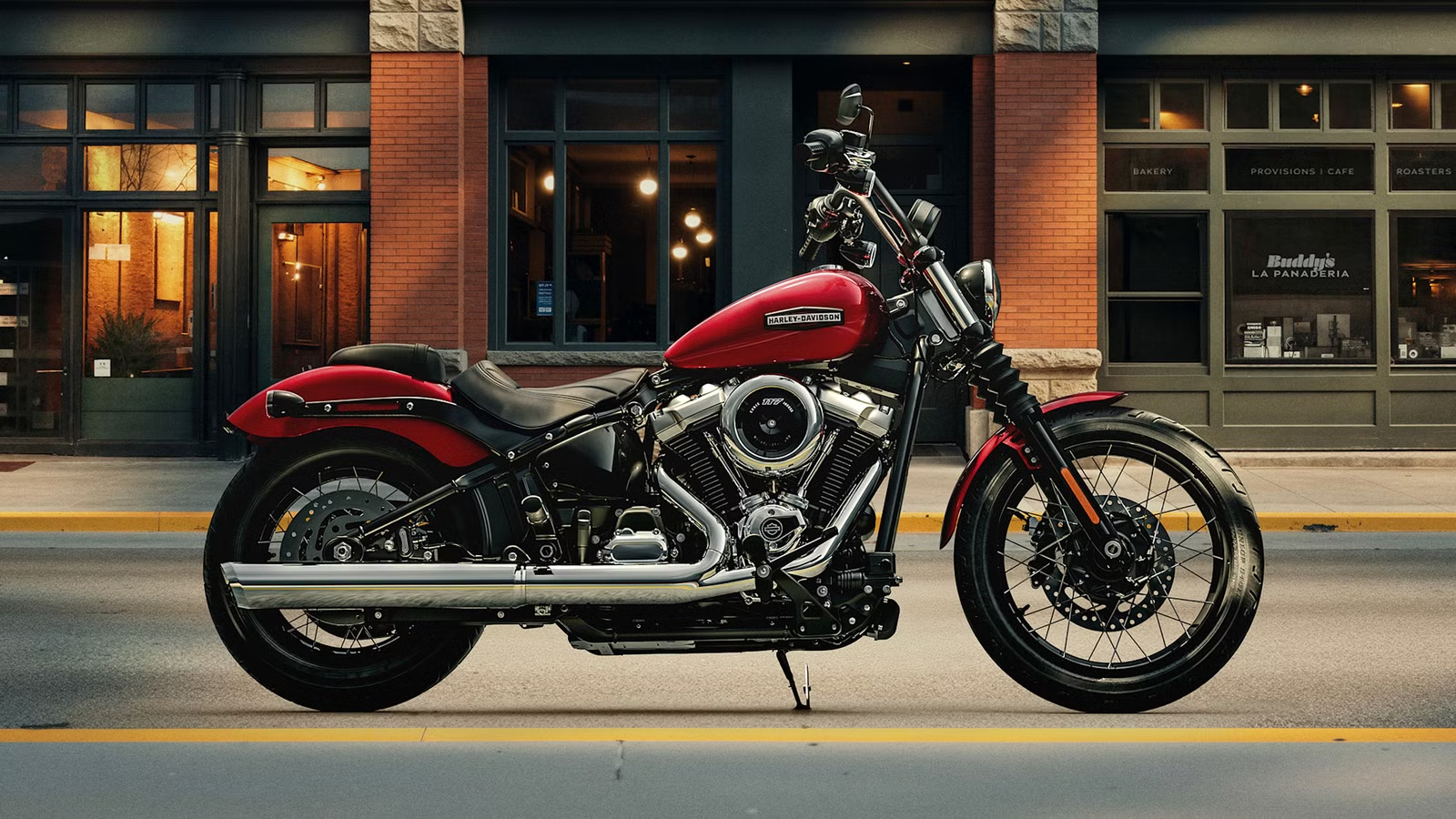
In Harley-Davidson‘s stable, sophisticated electronic aids were reserved for special models like the CVO and Trike, or were available as an option on most touring models. The technological infusion, however, was kept to a bare minimum for the Softail models, which exemplified the whole idea of raw Harley experience. That seems to have changed in recent times.

The entire 2026 Softail lineup is now equipped with the full Rider Safety Enhancements suite, which includes most of the safety aids available on Harley’s high-end touring motorcycles. This might look like a routine portfolio upgrade to some, but in essence, it is a major shift in the philosophy and direction Harley-Davidson had been following for years. A purist might not approve of this transition, and that’s where the new Deadwood and Solo Trim package come into the picture. They aptly manage to hide the inevitable modernization of the most traditional Harleys.
Every Softail Now Wears The Full Electronic Safety Net
The Softail series includes the Street Bob, Fat Boy, Heritage Classic, Breakout, Low Rider S, and Low Rider ST. These motorcycles can be considered the epitome of the pure Harley experience with a no-nonsense persona. Proper bar hoppers, if you will. The rollout of basic technology such as conventional traction control took place as late as 2023 in Softails, and only in select bikes like the Breakout and Fat Boy. This was the same year that advanced technology like radar-based cruise control had become commonplace among full-size adventure tourers.


All of that has changed this year. Harley-Davidson’s long-standing dismissal of equipping its cruisers with electronics has turned into a surrender to changing times and evolving needs. After all, not only do the big tourers need electronics, but the cruiser riders would also prefer the additional layer of assurance that comes with these safety features. Hence, every model in the Softail family now incorporates lean-sensitive ABS, traction control, drag-torque slip control, and a tire pressure monitoring system. Also included are selectable ride modes, cruise control, USB-C charging, and LCD instrumentation, all part of Harley’s Convenience package.
One Milwaukee-Eight 117 Engine, Three Different Tunes

Another big shift has come in the form of the same 1,923cc, Milwaukee-Eight 117 engine being used across the Softail series with three different states of tune, depending on each model’s character, persona, and requirement. In Harley’s words, the tunes are High Output, Custom, and Classic, while enthusiasts tend to call them Muscle, Torque, and Classic, respectively. A quick look at the spec sheet reveals a telling difference in their power and torque output numbers. Each one of the tunes has been achieved through a variation in intake, exhaust, and cam profiles.
The Muscle tune is reserved for the Low Rider S and ST, which are the sporty tourers of the lineup and, as such, make the highest power at 114 hp and the most torque at 128 lb-ft. On the lower end of the performance spectrum is the Classic tune for the Heritage Classic and Street Bob. As these are the more easygoing models, both produce 98 hp and 120 lb-ft, tuned to deliver smoother and more accessible power. Lastly, the Breakout and Fat Boy receive the Torque tune, delivering 103 hp and 124 lb-ft. Here, the intake and cam profiles have been specifically optimized for aggressive low- and mid-rpm pulling power, quintessential to big cruisers.

The M8 117 is one of the most modern engines in Harley-Davidson’s lineup and offers a host of benefits over the previous 114ci and the older version of the 117 powerplant. Meaningful revisions such as a reshaped combustion chamber, an improved oil-cooling system, and a larger 58mm throttle body not only broaden the scope for extracting more performance, but also lower emissions. Even the most stripped-down models like the Street Bob use this new-age powerplant, thereby aligning with the evident shift in direction at Harley-Davidson.
Solo Trim And The Deadwood Represent Cultural Camouflage

While the aforementioned modernization should be laudable for those with a more progressive mindset, purists might roll their eyes and perceive it as an affront to Harley’s long-running heritage. But some compensation for loyalists comes in the form of the new Deadwood and Solo Trim package, both of which beautifully represent the quintessential Harley persona, at least visually, if not with regard to the platform they’re built around. While embracing inevitable modernity, the Deadwood and Solo Trim-equipped motorcycles also offer relatively more affordable entry points into the brand.
The Deadwood name itself is reminiscent of Harley’s rich heritage — this stripped-down cruiser honors the history of Deadwood in South Dakota and its deep connection with the Sturgis Rally. The post-WWII custom culture inspiration can be seen in elements like the ape-hanger handlebar, three-pod headlamp, chunky fenders, wire-spoke wheels, and a completely blacked-out treatment for every component. Hiding behind that retro camouflage, however, is the same electronics package available across Softail models. With an MSRP of $17,999, pricing is also on the lower side of the spectrum.

The Solo Trim serves a similar purpose. Available for the Street Bob and Heritage Classic, it suits those who, as the name suggests, ride solo. Not only does it remove the pillion seat and footpegs, but it also eliminates any choice of color—Solo Trim is available in Dark Billiard Gray only. And the classy-looking wire-spoke wheels of the standard version are replaced with cast wheels. With the Solo Trim, buyers stand to save roughly $1,000 compared to the conventional two-up configuration of the Street Bob and Heritage Classic. In essence, the Solo Trim package paints the stripped cruiser picture quite well, while letting Harley subtly slide the modern platform into the mix.
Low Rider ST Is The New Factory Sport-Tourer in Cruiser Clothing

The new Low Rider ST is another indication of Harley-Davidson’s gradually changing strategy of moving away from raw and rugged cruisers toward sport tourers with more finesse. On one hand, it wears a substantial fairing inspired by the iconic FXRT to create an old-school aesthetic. At the same time, propelling it is the modern M8 117 engine with the performance-centric 114 hp Muscle tune. At first glance, the small analog dial and petite LCD display give it a deceptively retro appearance. But a look at its spec sheet reveals a comprehensive electronics suite that further cements its identity as a contemporary, sporty motorcycle dressed in vintage clothing.
The End Of The Luddite Softail

It’s always difficult for a brand like Harley-Davidson to preserve its perception of a heritage brand while keeping up with modern times. But how could a company not offer safety aids that are becoming commonplace, especially when it is for the rider’s own good? The approach that was followed for years had to change at some point, even if it came at the cost of upsetting purists.
From a rider’s point of view, the new Softail models are more capable and safer than ever. But when viewed through a purist’s eyes, the raw bar hopper that enthusiasts once swore by has slowly been retired. The Solo Trim and Deadwood, meanwhile, could be considered Harley’s best attempt to disguise a change in philosophy that is unacceptable to some but welcome to others.

Related posts



Latest Post


No Comments