
Kawasaki’s 165-MPH Ninja Was Fast Enough To Win Magazines, Not Drag Racers
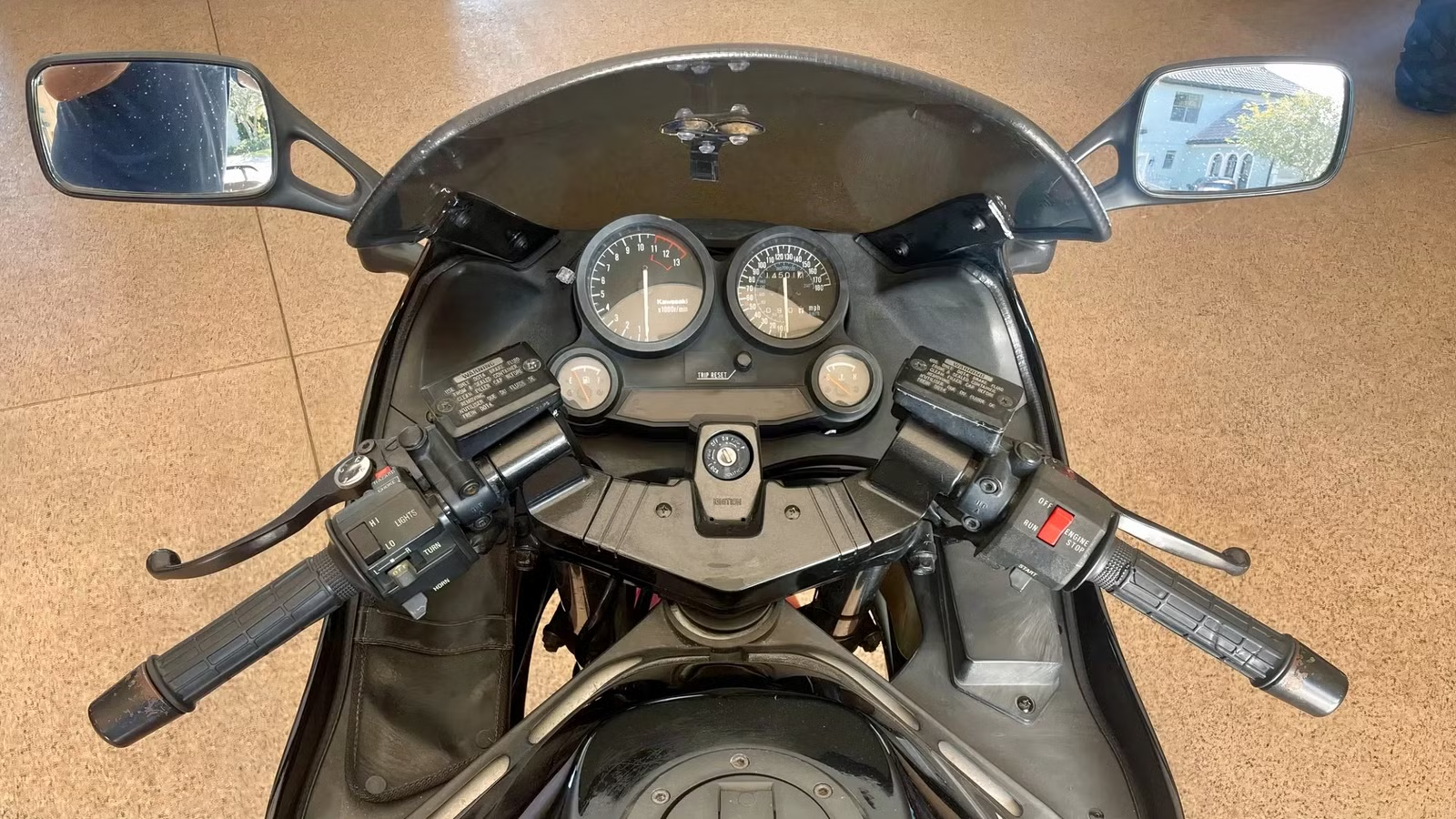
April 1988. Cycle World points a speed gun down an open stretch of road, and Kawasaki’s latest machine clocks 165 mph. That made it the fastest production motorcycle the magazine had tested at the time. The quarter-mile run was just as impressive, taking 10.76 seconds. Absolutely absurd numbers for the late eighties, aren’t they? You’d think a bike capable of that kind of performance would be exactly what a drag racer wanted. But Dave Schultz, one of the biggest names in the sport, had a rather different opinion when it came to the engine he trusted on the strip.
The Motorcycle That Changed The Speed Game

Speed records used to move in tiny baby steps. Back in 1973, Cycle World got a Z1 up to about 120 mph. By 1978, Yamaha’s XS1100 was the first bike they tested that broke into the 11s in the quarter-mile. Then Kawasaki built its own ladder.
Their ’84 Ninja 900 did 151. The GPZ1000RX reached 159. Then the 1988 Ninja 1000, identified by Kawasaki as the ZX-10, tacked on six more. Now, six mph doesn’t sound huge on paper. But once you go past 160, you’re pushing against air that feels like a solid wall, and every extra mile an hour costs way more power. Kawasaki found a way through, and showed everyone else how to do it, setting a benchmark for rivals.
Kawasaki’s 165-MPH Ninja Was A Proper Engineering Leap


Cycle World called it the Ninja 1000, Kawasaki went with ZX-10, and badges changed depending on where you bought it. Just don’t mix it up with the earlier GPZ1000RX. Inside, the 997cc engine was built off the RX block, but scored lighter pistons, bigger valves, hand-polished ports, 11.0:1 compression, and four 36mm carbs. That spawned 135 horses at ten grand and 76 lb-ft of torque at 9,000. That was a clean 10-hp jump over the old RX.
The frame was where things got really interesting. It was Kawasaki’s first use of an aluminum perimeter design, with twin beams wrapped around the engine instead of the RX’s older frame layout. Kawasaki dubbed it the E-box. Dry weight came in at 541 pounds, with factory radials sharpening up the handling even more. And the stopwatch told the whole story: The magazine registered 165 mph against the old RX’s 159, then blasted a 10.76-second quarter-mile. They even pulled off a 107-foot stop from 60 mph during testing, which was the shortest distance anyone had ever seen from that speed back then.
It Was Fast On Paper, But Drag Racers Had Other Ideas

Dave Schultz knew the quarter-mile inside out. He bagged the NHRA Pro Stock Motorcycle title in its inaugural 1987 season, and by late ’88, he was gracing the cover of Cycle World. His bike wasn’t stock anything. Cycle World detailed his machine: an air-cooled monster pumping out over 210 horses, using old 903cc Z1 cases with a GPz1100 top end bored out to 1,134cc.
You’d think he’d want the ZX-10’s newer engine. It was said to have more horsepower potential than the older Kawasaki motors. But Schultz and his engine builder had decided the old ones were considerably stronger, especially the transmission and the crankshaft.
He laid it out plain for the mag: a ten-inch drag slick out back, more than 200 horses on tap, tach pinned at 8,000, clutch dumped. In his book, the modern stuff was what snapped under pressure. “The new engines will break,” he said flat out. Mind you, a stock ZX-10 made around 135 to 137 horsepower, and street riders weren’t launching it like that anyway. Schultz wasn’t picking on a showroom street bike. He was talking about what survives when you push a motor way past its limits, and back in ’88, he put his money on the old iron.
Besides, the motor wasn’t perfect, though. A road test noted a noticeable flat spot between 3,500 and 4,000 rpm, where it struggled to take more than a quarter throttle.
The Ninja That Sat Between Two Different Eras

Take a step back, and you see the ZX-10 sitting right on the hinge between two eras. In the rearview was the ’84 GPZ900R, the original Ninja that set the mold for all of Kawasaki’s modern fours. Just up the road was the 1990 ZX-11, which Cycle World pushed to 176 mph. It held onto that top-speed crown until Honda’s Blackbird came along in the mid-nineties. Then Suzuki dropped the Hayabusa in ’99, tearing off a 194-mph run and driving the final nail into the speed war before the gentlemen’s agreement kicked in.
Line up the numbers: 151, 159, 165, 176, 194. The ZX-10 is the quiet guy sitting right in the middle of that pack. But it gave Kawasaki its very first aluminum perimeter frame: the exact setup that became standard issue on modern superbikes. That is why it deserves more respect. Nobody throws a party for the bike trapped between two legends. But maybe they should.
A Speed King With A Few Cracks In Its Armour

So, hero or flop? Neither. It was a stupid-fast road bike with real engineering, and a few limits. It was also described as being closer to a sports-tourer than a focused superbike.
Even Cycle World had to revisit one of its headline claims. A month after the review, the magazine acknowledged a speedometer error in its braking test: the 107-foot stop had actually started at 56 mph, not 60 mph. When assessed from a true 60 mph, the bike needed 115 feet to come to a stop, losing that record. The brakes were still impressive, but the original measurement was off.
Then you’ve got Dave Schultz’s real-world experience on the strip. Setting a speed gun record is vastly different than holding together in professional drag racing. The ZX-10 was a speed benchmark and a chassis revolution, flaws included, and honestly, that’s what makes it a far better story.

Related posts

Latest Post


No Comments