
GM Is Ditching Recirculating-Ball Steering On HD Trucks For Rack-And-Pinion, And Silverado HD Owners Should Care
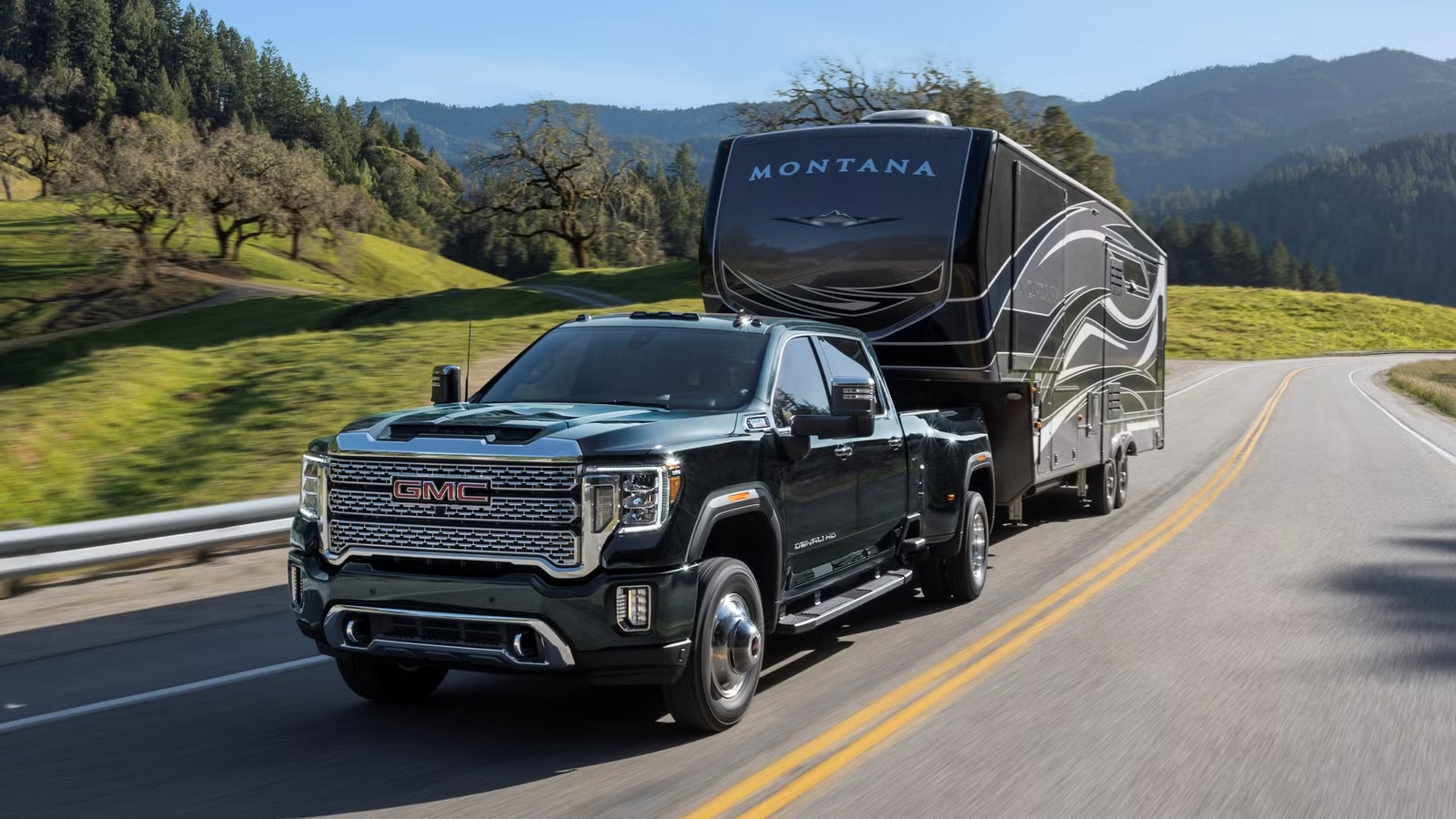
GM confirmed this week that the 2027 Chevy Silverado HD and GMC Sierra HD are swapping out recirculating-ball hydraulic steering for a rack-and-pinion system with electric power assist, a first for the heavy-duty pickup segment. It’s a bigger deal than it sounds. Every HD truck on the market, including the Ford Super Duty and Ram HD, still uses the same steering architecture that’s been standard since the 1950s, and GM is betting that changing it will actually change how these trucks feel to drive.

Ken Morris, GM’s senior vice president of product integration, safety, and motorsports, laid out the reasoning to The Drive: precision under load, consistent steering feel whether the bed is empty or the truck is dragging a 38,000-pound gooseneck trailer, and a system flexible enough to support modern driver-assist features that recirculating-ball simply can’t do. For buyers cross-shopping Silverado HD against Super Duty or Ram HD, this is the first real steering upgrade the segment has seen in decades.
Why GM Says Rack-And-Pinion Changes Everything Under Load
Recirculating-ball steering works through a threaded worm gear and ball bearings housed inside a steering box, a design that’s been prized for decades because it holds up well under heavy front-axle loads. Rack-and-pinion ditches that setup for a more direct gear-and-bar arrangement, the same basic principle used in the Corvette and most passenger cars. It’s inherently more precise, but historically it’s been considered less suited to the tonnage an HD truck deals with.

“I think [rack and pinion] allows you, especially when towing those 38,000-pound trailers, to have the precision of knowing exactly where you are,” Morris said. “It’s a different continuum from a Corvette ZR1 to a heavy-duty truck, but you want the same thing. You want to know exactly where you are.” GM says the new electric system also produces roughly 30% more assist force than the outgoing hydraulic gear, which is what makes it viable for trucks hauling near their 38,000-pound gooseneck max or towing 30,000-plus pounds in dually configurations.
No More Steering Feel That Shifts When You Load The Bed

The bigger everyday change might be consistency. Recirculating-ball systems tend to feel different depending on whether the truck is empty or loaded, since tongue weight and bed cargo change how the steering box behaves. Morris says that inconsistency goes away with the new setup. “The nice thing is when it’s unladen, it really doesn’t change the steering characteristics,” he said. “Whereas in the past, when you have a lot of tongue weight, or you have a load in the bed, it does change the way the steering feels. So I think that robustness of the experience is what we want. And we want the driver to be in 100% control.”
Morris also addressed the durability question head-on, since tie-rod loads on a loaded HD truck are no joke. “People absolutely underestimate [loads] where the tie rod goes into the knuckle, and the tie rod loads can be super high,” he said. Electric power steering, he added, lets engineers tune those loads digitally during development instead of physically grinding new gear profiles for every iteration: “You can just type it in and get what you want.”
The Same Logic Behind The HD’s Independent Front Suspension

The steering swap isn’t happening in isolation. The 2027 Silverado HD and Sierra HD remain the only trucks in the class running independent front suspension instead of a solid front axle, and GM’s rationale is the same one driving the steering change: comfort and precision without sacrificing capability. “Historically, heavy duties are really stiff-legged because they’re highly sprung and built to haul,” Morris said. “This truck, when you drive it unladen, it’s a super comfortable truck to drive that you wouldn’t guess is a heavy-duty if you were blindfolded. Then you load it, and it’s absolutely capable. Rock solid. The thing that immediately jumps out is just how the steering feels. It’s a big change.”
The electric architecture also opens the door to driver-assist features that a hydraulic recirculating-ball box can’t support in the same way, since EPS integrates more directly with lane-centering and automated steering interventions. GM says the improvement is aimed at drivability more than raw towing capacity, and owners should notice it most in low-speed maneuvering, tight parking, and rough-road driving rather than in the max-tow spec sheet.
Ford And Ram Are Still Running 1950s Steering Architecture


For now, Ford Super Duty and Ram HD both still rely on recirculating-ball hydraulic steering, the same basic design GM is abandoning. That makes the 2027 Silverado HD and Sierra HD the first HD trucks with electric rack-and-pinion steering, arriving alongside a segment-first electronic brake-boost system with 14.6-inch front rotors and four-piston front calipers. GM has a reputation among HD buyers for prioritizing ride comfort over outright stiffness, and this looks like the clearest expression of that yet. Whether Ford and Ram follow suit will likely depend on how buyers respond once these trucks start showing up at dealerships in late 2026.

Related posts



Latest Post



No Comments