
The Long-Term Ownership Question Riders Should Ask Before Buying A Rare Motorcycle
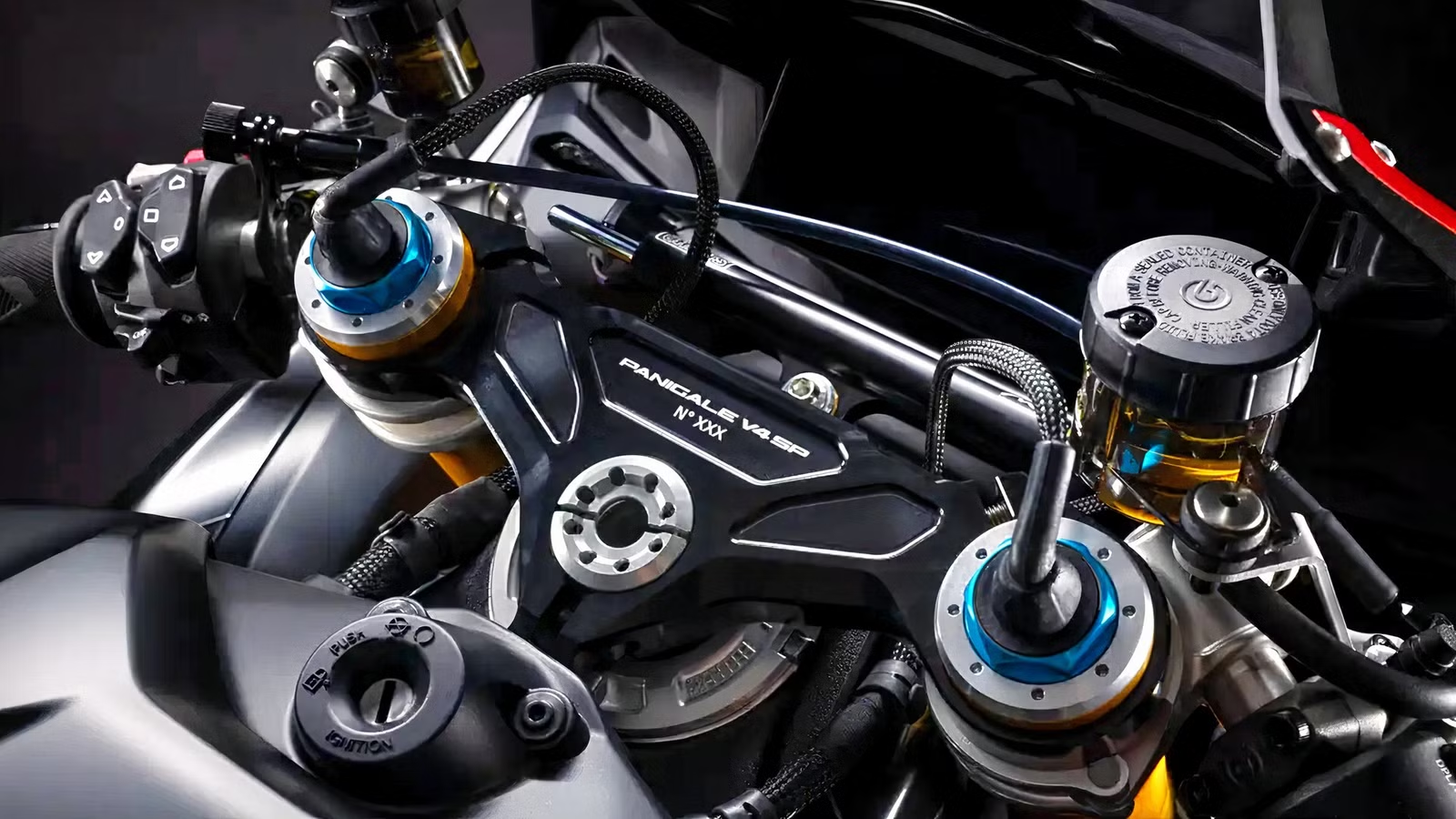
Rare motorcycles come with an emotional pull that is well beyond the charm of ordinary production bikes. Knowing that a particular machine, a genuine feat of engineering, will only ever reach a select few riders makes its ownership feel inherently special. Add low production numbers, unusual engineering, exotic materials, and a backstory nobody else at the café meet can quite match, and the attraction becomes easy to understand.

Eventually, though, the novelty settles and a far less glamorous consideration starts to matter. The bike still has to be maintained. Once it needs more than tires, oil, or brake pads, specialized technicians and scarce parts can turn a simple service into a waiting game spanning weeks. That is when rarity stops being purely desirable and starts becoming an ownership challenge.
The Real Question Is Whether The Rare Parts Can Be Replaced
Most motorcycles are built from a mix of consumable parts and components with a fairly long life. Chains, sprockets, pads, bearings, filters, seals, and tires, with mild usage, can usually be replaced after a year because suppliers make equivalent parts or manufacturers share them across several models. But when components are made specifically for one low-volume motorcycle, that’s when the maintenance turns out to be a pain in the wrong place. A unique headlight, dash, or a structural component may never wear out during normal use, yet one electrical failure or even a tip-over in the garage can suddenly make its availability more important than the condition of the engine.


Ducati’s Superleggera V4 is a good example because much of what makes it desirable is also what makes accident damage expensive. Its frame, swingarm, and wheels use carbon fiber rather than the aluminum as fitted to ordinary Panigales, while the newer Superleggera V4 Centenario has an even more specialized chassis and braking hardware. BMW’s HP4 Race followed a similar path with a carbon-fiber frame and wheels wrapped around race-spec Öhlins and Brembo components. These parts are engineering highlights when they’re in their intended state. Years of use later, the important question isn’t the bike itself, but who can inspect, repair, or replace them.
A Big Badge Does Not Guarantee Easy Service

Honda’s RC213V-S proves just how misleading the badge can be. Honda built the road-going MotoGP derivative in tiny numbers using manufacturing methods, materials, and procedures far removed from those of a normal CBR. Honda specified that essentially all inspection and maintenance beyond basic pre-ride checks had to be carried out by designated dealers using tools developed specifically for the RC213V-S. Owning one, therefore, never meant simply finding the nearest Honda dealership and booking a service.

The same principle applies to any motorcycle built around race-derived hardware, electronics, or materials. Dealer networks are designed around the motorcycles they service every day, not necessarily the homologation special that appeared briefly, a whole decade ago. Before buying something rare, it is worth finding out which shops can actually work on it, whether factory diagnostic equipment is required, and how far the motorcycle would have to travel for major work. If the answer involves shipping the bike across several states every time a warning light appears, the purchase deserves more thought.
Shared Engines Can Make Some Exotics Easier To Keep Alive

Rarity, however, does not automatically mean that every component is rare. Bimota’s Tesi H2 was limited to 250 units, yet its 998cc supercharged inline-four came from Kawasaki’s Ninja H2 family. That gives owners a much more widespread mechanical foundation because the engine architecture, components, and much of the knowledge surrounding the powertrain exist outside Bimota.
The Tesi H2 also shows the limit of this advantage. Its hub-center steering, machined alloy structure, carbon-fiber pieces, and associated chassis hardware are pure Bimota, so familiarity with the engine has nothing to do with when one of those components needs attention. This is why it’s wise to divide and consider a rare motorcycle into common parts and model-specific parts.
Low Mileage Does Not Protect A Rare Motorcycle From Age

Collectors often preserve motorcycles by riding them sparingly, which protects cosmetic condition and keeps odometer readings worth a “wow!” It does not stop brake fluid from absorbing moisture, seals from aging and cracking, fuel lines from degrading, batteries from failing, or corrosion from developing where it can’t be seen. The RC213V-S is particularly interesting here because Honda specified controlled indoor storage for the motorcycle due to some of its race-derived materials and finishes.
Documented History Is Vital
Service invoices, recall work, software updates, spare keys, factory accessories, original parts, and evidence of correct storage aren’t just great information for a prospective buyer, but tell a future technician what has happened to the bike before it arrived at the workshop. They also help separate a well-preserved motorcycle from one that simply sat unused. Trouble with anything rare is that every unknown increases the cost of finding the answer.
Buy The Support Network Along With The Motorcycle

The ownership plan for a rare motorcycle should begin well before the purchase. Speak to the specialist who will actually service it, find out which jobs require factory tools, and identify the parts that are already becoming difficult to source. For genuinely scarce machines, buying certain model-specific spares while they still exist can make more sense than assuming they will always be available. A spare sensor, and even a set of unobtainable trim pieces, may eventually matter at the time of resale, let alone regular use.
Some owners will happily accept long waiting periods and the expensive parts because preserving something unusual is part of the appeal. Others may discover that the same rarity they paid extra for makes them reluctant to ride it at all. So before putting down money on a unique piece of engineering, the real long-term question is whether you want to own the motorcycle itself, or everything required to keep such an uncommon machine alive.
Source: OEMs

Related posts




Latest Post


No Comments