
The Inline-Four Sport Bike That Refuses To Feel Outdated
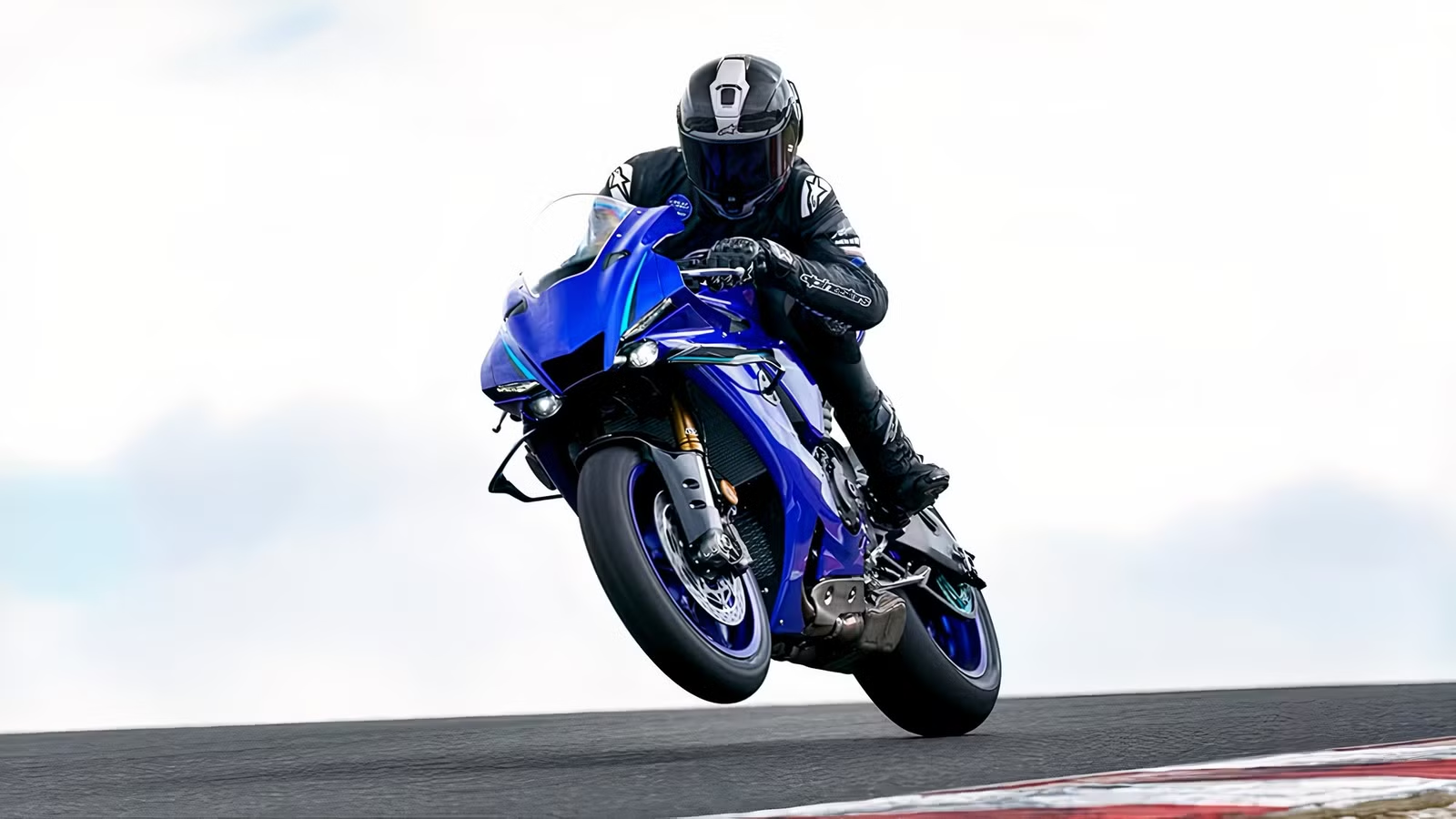
Every time a rival is introduced, it raises the bar, forcing other liter-class superbikes to earn their place. A long-standing history of success and a familiar name are cards that some OEMs often play to stay relevant, but they can only carry it so far. The real test of a worthy motorcycle is whether it still delivers where it matters. One very well-established inline-four is about to make that case.
What Helps A Sports Bike Remain Relevant For Years

The superbike class has a short lifespan; we continuously see new models showcasing more power, smarter electronics, and improved aerodynamics, turning each year’s headline act into an absurd mystery that is in dire need of some context. This can result in well-established motorcycles feeling out of the equation, despite having the ingredients that riders care about.
For a superbike, it’s not just about posting impressive numbers. It needs to deliver serious performance, the chassis has to be capable enough to handle that performance, and its brakes and electronics should offer the rider the confidence to rein it in. And the new features need to do more than just give the marketing team tools for promotion.
This is the very challenge that this iconic Yamaha faces today. For decades, it hasn’t seen a ground-up redesign, retaining its basic platform. Despite this, its power, equipment levels, and engineering prowess make it a strong proposition among newer European superbikes.

The Yamaha R1 Still Has A Place In The Superbike Fight

The last major redesign that the Yamaha R1 received was in 2015, adopting a crossplane inline-four and a more extensive electronics package. Later on, Yamaha updated the platform for 2020, with more hardware changes done in 2025. These included a revised KYB fork, Brembo front brakes, and MotoGP-inspired winglets. The 2026 Yamaha R1 carries that package forward, tending to details that matter.
Its Sub-$20,000 Price Keeps It In Serious Company

The 2026 Yamaha R1 starts at $19,199, along with a destination charge of $775, keeping it under the price tag of the BMW S 1000 RR, which is priced at $19,975, and the Aprilia RSV4 at $19,699. The Ducati Panigale V4 starts at $27,795. While the pricing and equipment vary, the R1 is positioned on par with current premium superbikes, not as a lower-cost alternative.
The price comparison also sets up a fair question of whether Yamaha can justify its place among newer rivals that either offer higher output or more recent engineering. And the answer begins with the engine, a serious piece of engineering prowess.
R1’s Crossplane Inline-Four Still Delivers The Goods

The crossplane format of the R1’s 998cc inline-four motor comes with a distinctive firing order, which gives it a unique beat when compared to conventional inline-four powerhouses. Yamaha’s claimed output of 197 horsepower is less than the BMW S 1000 RR’s 205 horsepower, Aprilia RSV4’s 220 horsepower, and Ducati Panigale V4’s 209 horsepower.
On paper, the R1 doesn’t win the horsepower race, but it manages to stay strong in the performance bracket. Peak output illustrates only some of the story. Riders tend to recognize the engine character via the crossplane layout, which is also one of the reasons the R1 gets its distinguished identity in a segment where the numbers start to blur together.
Premium Hardware From KYB Backs Up The Engine

Another strong pairing of kit that binds the R1’s engine with its aluminum Deltabox frame is a fully adjustable 43mm KYB inverted fork and an adjustable KYB rear shock. The revisions that followed in 2025 gave the fork more precise adjustment upfront, while Brembo front brakes gave the standard R1 strong braking hardware that holds its own even under repeated hard braking. Winglets also made their way to the platform, providing more front-end stability at high speeds.
The rival superbikes pack some impressive equipment as well. The BMW S 1000 RR gets M winglets and an M chassis kit. The Aprilia RSV4 220-horsepower V4 motor is paired with equally potent Brembo Hypure calipers and aerodynamic bodywork. Ducati’s Panigale V4 is built around its own extensively developed chassis and racing-derived equipment. So, the Yamaha R1 doesn’t surpass every rival; the point it’s trying to make is that the hardware on offer, like the suspension, brakes, and aerodynamics, is still relevant and belongs in this lineup.
The Electronics Still Feel Ready For Modern Riding

The Yamaha R1 offers an array of electronics, which include lean-sensitive traction and slide control, lift control, launch control, selectable power delivery, a quick-shifter, and cornering ABS. These tools help riders tailor and manage their Yamaha’s behavior. Rather than stacking up unnecessary features, the equipment on this motorcycle is intentionally chosen to provide meaningful control over its high performance.
Turning to its rivals, the BMW S 1000 RR adds Dynamic Traction Control, ABS Pro, riding modes, and engine-brake control. Aprilia’s a-PRC suite includes adaptive rider aids, while Ducati offers an extensive package of cornering controls and launch assistance. The systems vary in their approach, but they make the same point. The R1 has the gadgetry expected from a modern-day superbike, but its age is evident from the platform’s long history, not from the absence of contemporary features.
There’s Also The YZF-R1M For More Serious Buyers

Riders in search of exclusivity can look at stepping up to the R1M version. In addition to the standard R1, it gets carbon-fiber bodywork and Öhlins electronic suspension, giving this liter-class bike more track-focused equipment and tuning capability. The 2026 YZF-R1M starts at $27,899, compared with $19,199 for the standard R1. That’s $8,700 more before destination charges, so it will only prove relevant to riders who thoroughly plan to put those upgrades to use.
The R1M also displays Yamaha’s capability to develop the platform. The standard Yamaha R1 may lag behind some of its European rivals in peak power output, and its design cues are no longer as new or relevant as those of the competition. But the crossplane powerhouse, capable chassis, Brembo brakes, winglets, and contemporary rider aids keep it pertinent. In the end, it doesn’t have to be the latest model offering to make the cut and earn a place in the final selection.
Sources: Yamaha

Related posts



Latest Post



No Comments