
Yamaha’s R6 Is Dead And The 2027 YZF-R9 Is Its Replacement—What Riders Are Actually Getting
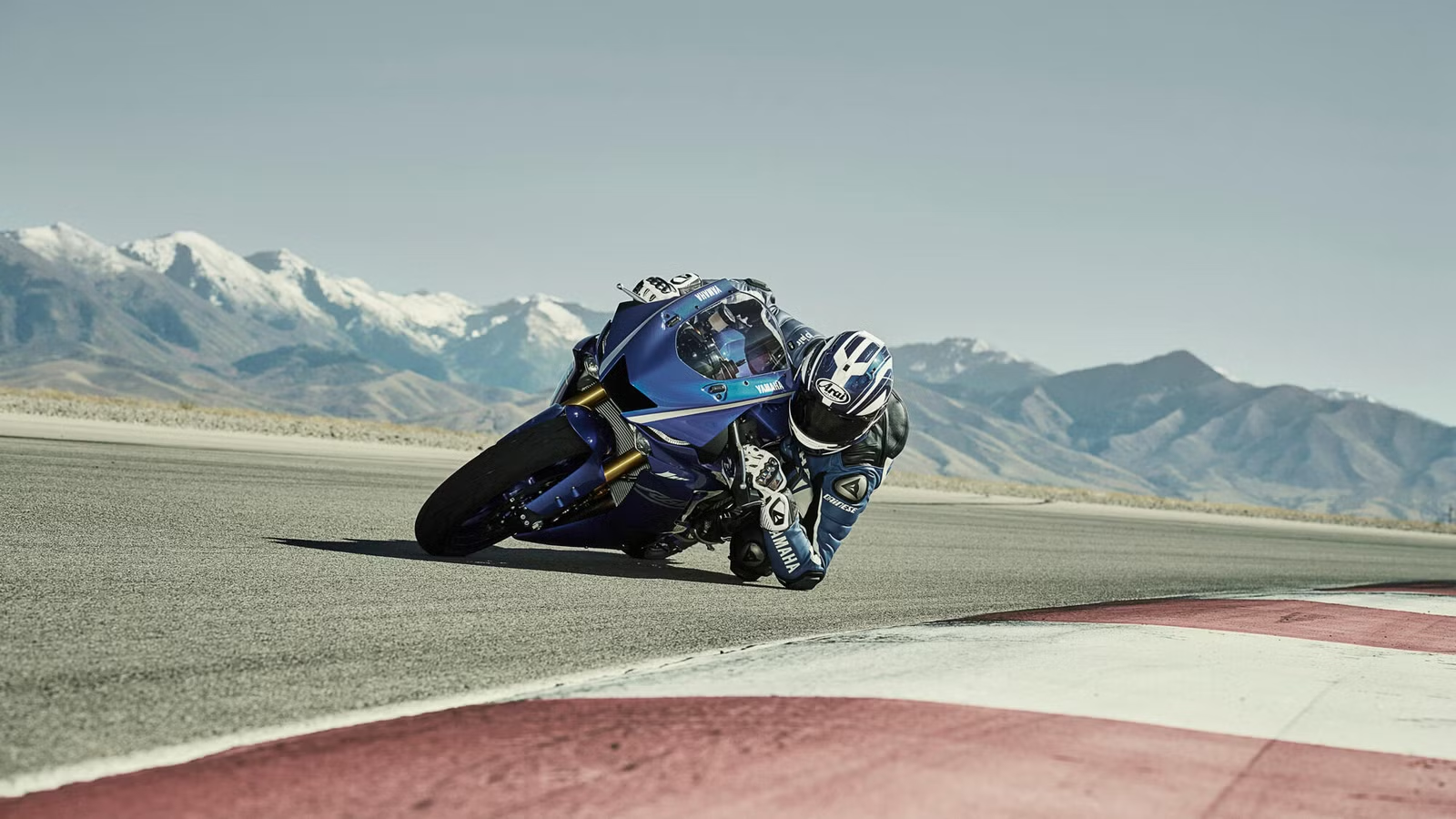
Yamaha has officially pulled the plug on the R6, ending one of the longest-running and most influential middleweight supersport stories in motorcycling. The YZF-R6 defined a generation of sportbike riders—track-day regulars, club racers, and street enthusiasts who measured every competitor against its 600cc inline-four benchmark. Now, for 2027, Yamaha is moving forward with the YZF-R9 and a premium R9 SP variant as the direct successors.

The R6’s exit from the European market—where it had survived as a track-only machine after leaving U.S. showrooms—marks a genuine end to an era. The 2027 R9 and R9 SP represent Yamaha’s answer to a middleweight segment that has been reshaped by emissions regulations, evolving rider expectations, and stiffer competition from the Kawasaki Ninja ZX-6R and Suzuki GSX-R600.
The R6’s Final Chapter And What Led Here
The R6 had already been discontinued for U.S. street sales before this announcement, surviving in Europe strictly as a track-use machine. That carve-out gave the bike a second life on circuit, but it was always a holding pattern. Emissions standards that made the high-revving 600cc formula increasingly difficult to certify for road use were the primary driver—the same regulatory pressure that reshaped the entire middleweight supersport segment across manufacturers.

Yamaha’s decision to retire the R6 entirely rather than update it signals that the company sees the 600cc class as a closed chapter. The 2027 YZF-R9 is not a revised R6—it represents a repositioning of Yamaha’s middleweight sportbike lineup around a new displacement and platform.
What The 2027 YZF-R9 And R9 SP Bring To The Segment

Full confirmed specifications for the 2027 YZF-R9 and R9 SP—including displacement, peak horsepower, torque figures, electronics suite, weight, and pricing—were not available in the sources at the time of publication. Yamaha’s official announcement confirmed the models exist and that they replace the R6, but the detailed spec sheet requires verification against Yamaha’s primary press materials before those numbers can be reported accurately.
What is clear is that Yamaha is offering two distinct tiers: the standard R9 aimed at the broad sportbike market and the R9 SP positioned as a higher-specification variant with upgraded componentry—expected to include premium suspension and braking hardware consistent with how Yamaha has differentiated SP trims across the R-series lineup historically. Riders shopping against the ZX-6R and GSX-R600 will want to compare those confirmed figures directly once Yamaha’s full spec release is available.
Where The R9 Sits Against Middleweight Rivals

The middleweight supersport segment has narrowed considerably over the past decade. The Kawasaki Ninja ZX-6R remains the most direct comparison point—it has stayed in production and received updates while the R6 faded from street availability. The Suzuki GSX-R600 has also persisted, though both bikes face the same regulatory headwinds that ultimately ended the R6’s run.
The R9’s displacement step beyond 600cc—the “R9” naming convention strongly implies a 900cc-class engine, though this requires confirmation from Yamaha’s official materials—would mark a genuine category shift rather than a like-for-like replacement. If that displacement is confirmed, the R9 wouldn’t be competing directly with the ZX-6R on cubic centimeters; it would be carving out a new middleweight position between the traditional 600 class and the liter-bike tier.
The R6’s retirement is the kind of milestone that lands differently than a simple model-year discontinuation. It closes out a platform that shaped how an entire generation learned to ride fast. Whether the R9 earns the same loyalty will depend on the specs Yamaha is ready to stand behind—and riders will want to see those numbers before making any comparisons to the bike it replaces.

Related posts


Latest Post


No Comments