
The Ford Gran Torino Makes A Modern Comeback
Apart from its semi-recent appearance in the Clint Eastwood film Gran Torino, the classic car from the golden age of muscle cars perhaps unfairly loses out to its more coveted pony car sibling, the Ford Mustang.

It was an intermediate-sized car that went through some interesting changes over its short life, arguably culminating in the awesome Cobra version that really made it into the muscle car it always wanted to – and looked like – it should be.
Nowadays, the Torino lives on as a classic and sometimes-drag racer, in the shadow of more famous machinery like the Ford Mustang, Chevy Chevelle, Camaro, and many others. But if it made a comeback today, it would likely be an awesome sight to behold.
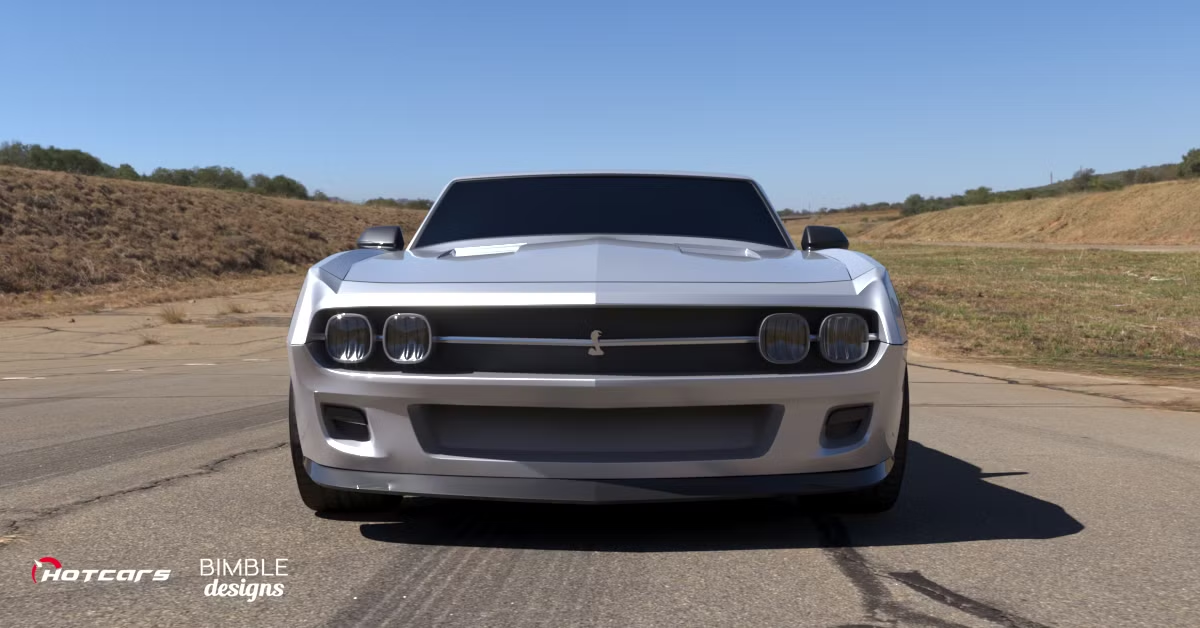
We look at a speculative render courtesy of digital artist Bimble Designs that showcases how the Torino might make a comeback as a 2023 Gran Torino.

The Modern Ford Torino Brings Back Clint Eastwood’s Ride
Nowadays, you could make an argument that the Ford Torino is all but forgotten by anyone lacking an interest in or a little knowledge of car history. But it was and still is a much-loved piece of American history and a handsome car too, especially from the second generation. In any case, the model lived from around 1968 to 1976 over three generations.
In an age where marketing necessitates a little inspiration from profitable past times, cars like the Ford Mustang are getting new life in the form of EVs and crossovers. The Ford Torino could likely become an EV then, but before we assume it would be a shiny nameplate on a crossover or SUV. Consider this, it could be a strikingly-handsome electric coupe.
Here, the car presents itself in plain silver looking understated and elegant, but one of the key idiosyncrasies of the Torino design ethos is here – the round, quad headlights.
Building A Custom Ford Torino For The Digital World
Also called the ‘Gran Torino’, this Ford Gran Torino coming back for 2022 in EV form doesn’t need exhaust tips, a grille, or a hood scoop. The render features similarities to the modern Ford Mustang – but the front is pure Torino – albeit with many modifications.
Red brake calipers, huge black wheels, and a low-slung, chunky coupe body are secondary to the front theme, while the discreet rear spoiler and ‘Cobra’ badges hint at the inspiration behind this model.
Back in the day, Cobra versions of the Ford Torino used different types of the ‘429’ 7.0-liter V8 engine; Thunder Jet, Cobra Jet, and Super Cobra Jet engines topping out at around 375 hp or so.
This new Gran Torino would get an electric powertrain to take on the Dodge Charger Daytona SRT – it would be heavy as all EVs are thanks to the battery pack but would likely make a lot more power and torque.
Although highly unlikely, we’d still love to see Ford stuff their 7.3-liter Godzilla engine or perhaps the Shelby GT500 engine to match the Cobra badges. Heck, we’d even settle for a 5.0-liter Coyote V8 engine.
Ford should bring back the Gran Torino name – and with it the same unapologetic style and power associated with the awesome Cobra models. Move over Mustang, there’s a new pony car in town.
The 2023 Ford Gran Torino Concept: Looking At The Inspiration

Is Ford bringing back the Gran Torino – no, for now it’s a pipe dream, although we can’t rule it out as stranger things happen including Ford Mach-E electric crossover where the name got repurposed for a new model.
Most Gran Torinos weren’t muscle cars although the 7-liter V8s and Cobra models were certainly more impressive and had ‘muscle car’ status compared to the smaller V8s and 3.3-liter and 4.1-liter I6 engines.
Close to 400 hp for the top models means that 6-second 0-60 mph times were within reach, but even so the Torino model name would eventually disappear due to the car getting replaced by the Ford LTD range; another large luxury car.
The reason why the Ford Torino faded away was down to a few factors – the increasing safety regulations meant that the car would get heavier and larger and the engines would need to also pollute less to satisfy emissions laws and got less powerful.
This combination of a heavier, uneconomical car and competition from more compact, economical cars meant that it didn’t make sense in its niche between other large luxury cars and sporty and relatively-efficient alternatives.

Related posts


Latest Post


No Comments