
The Muscle Car TikTok Hasn’t Discovered Yet
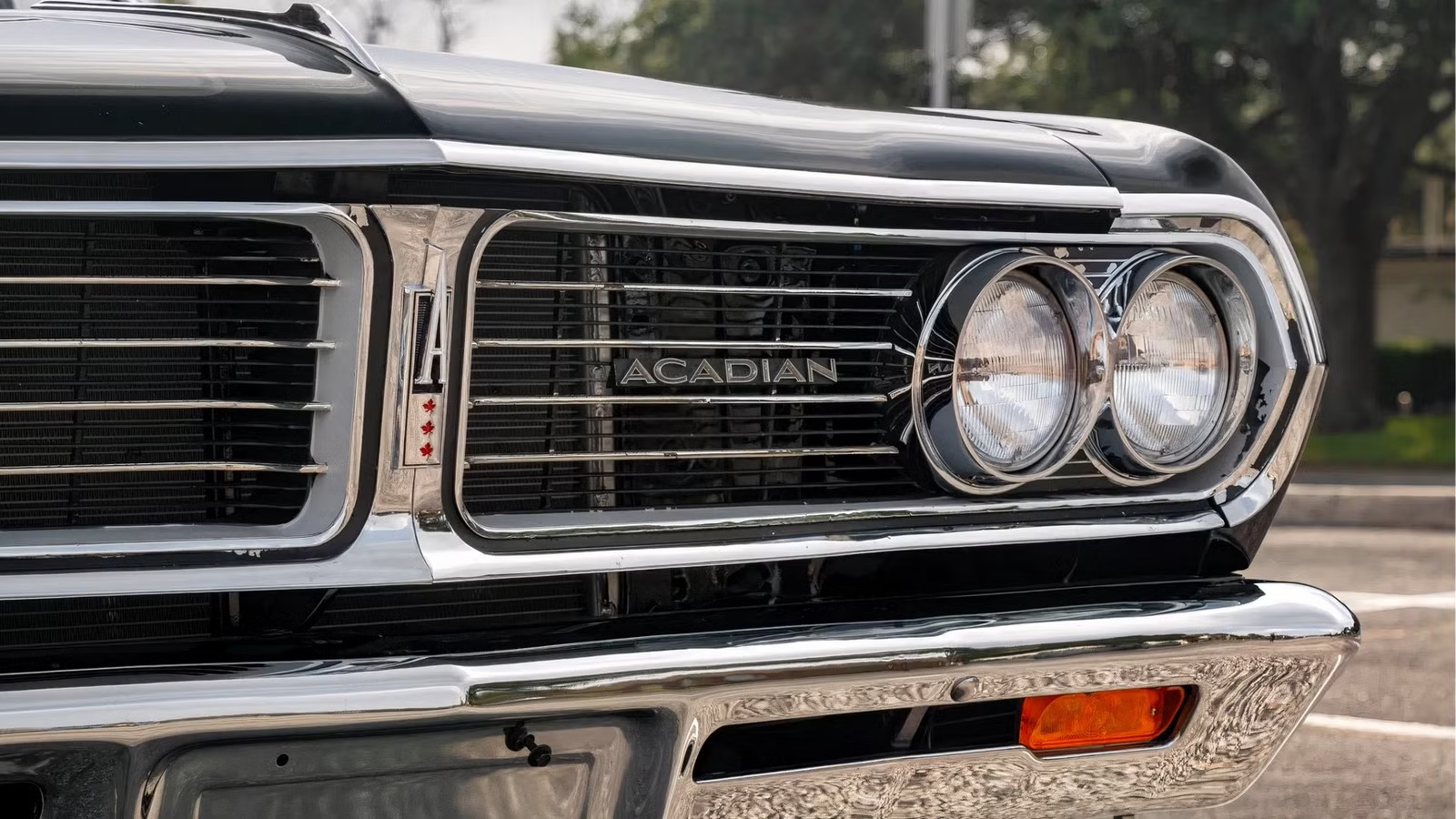
Every muscle car story starts in America. Big block, back roads, a flag snapping somewhere in the background. But one of the wildest muscle cars of the golden era never crossed that border, never got a US brochure, and still hasn’t shown up on anybody’s TikTok feed. It wasn’t hiding by accident. A trade law built it on purpose, for a country most muscle car fans have never thought to check. Then another trade law killed it four years later. Nobody in America ever got the memo either way.
How Did The Golden Age Of Muscle Cars Look Outside The States?

Before 1965, you couldn’t just load cars onto a trailer and drive them across the Canadian border. Tariffs and Canadian-content rules meant American automakers had to build cars there instead of shipping them in. The Big Three all found workarounds. Ford ran Meteor up north. GM had McLaughlin-Buick. Dodge trucks wore Fargo badges. These weren’t just cosmetic rebadges. Some had genuinely different sheetmetal and running gear from their American twins, built specifically for a country that wouldn’t just take Detroit’s leftovers.
The Legal Quirk That Forced GM’s Hand

The financial math behind this split identity was brutal. Canada levied a strict 17.5% tariff on imported, fully assembled vehicles. To make any business sense, American brands had to achieve high “Canadian Content Value” by using local manufacturing facilities, Canadian labor, and regional parts suppliers. This legal firewall transformed Canadian assembly plants like GM’s Oshawa, Ontario, facility into fascinating laboratories of automotive adaptation, producing cars that looked like one brand but ran like another.
GM’s answer was to stop exporting Chevys and Pontiacs altogether and build something entirely new instead—something Canadian enough on paper to dodge the tariffs completely. That gamble is the reason the muscle car beyond America exists at all. It broke cover in 1962 on a compact platform. It spent the rest of the decade climbing the ladder, first into a mid-size performance line, then into one of the rarest muscle cars Canada ever got its hands on.

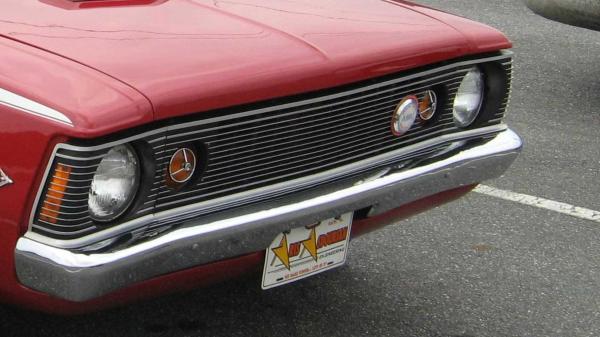
The Economy Compact Smuggling A Big V8 Underneath
This compact muscle car hid big-block power to avoid higher insurance premiums while secretly outperforming rivals.
The Car Was Made To Disappear As Soon As Things Got Straight

The whole point of the car was dodging taxes and import charges. Once the two countries actually sorted out free trade, that job was finished, and so was the car. It lasted four years before GM pulled the plug in 1969. The Auto Pact, officially the Canada-United States Automotive Products Agreement, had just made an entire Canadian-only lineup pointless to keep building.
The Muscle Car From The 1960s That Didn’t Have A Passport

This was a genuine muscle car, built with a big block V8 on a Chevrolet chassis, wearing styling lifted straight from Pontiac. Nearly everything mechanical came straight off the Chevelle SS, the chassis, the big block, most of the running gear. The differences were all cosmetic, but they were real. A bespoke grille, unique tail lamp lenses, wheel cover emblems almost nobody south of the border ever laid eyes on. Even the interior skipped its Chevrolet roots entirely and borrowed from Pontiac’s playbook instead.
This layout created an incredibly unique assembly line workflow. A line worker at the Oshawa plant would lower a body shell that shared its basic profile, roofline, and quarter panels with a Chevy Chevelle directly onto a standard GM A-body frame. But instead of bolting on a Malibu grille, they affixed a heavily sculpted, dual-port split grille that looked like it belonged in a Pontiac showroom. Out back, the taillights were set into a completely unique rear deck lid panel that didn’t share a single stamped piece of steel with its American cousin.
The Canadian Chevelle SS Americans Never Got To Drive

This is the Beaumont Sport Deluxe, or simply the “SD” to Canadian enthusiasts. While “SD-396” became the common street shorthand for the car, the 396 was technically an option box checked on a standalone marque. If you knew what to look for, the discreet “SD” trim emblems and the rumbling big block under the hood were the immediate giveaways. A 396 cubic inch big block under the hood. It started life in 1962 as a trim level on the Chevy II-based Acadian, became its own Chevelle-based line in 1964, then split into a standalone marque in 1966. Built exclusively by General Motors of Canada, sold only through Pontiac-Buick dealers, and never marketed or sold anywhere in the United States.
It Wasn’t Just A Badge Job, It Was A Genuine Muscle Car From Canada

This wasn’t a rebadge job. The 396 cubic-inch Mark IV big block was branded Econo-Jet on Canadian build sheets, the same physical block Chevrolet called Turbo-Jet back home. Standard output was 325 horsepower, coded L35. An optional 350 horsepower L34 sat above it. Here’s the real difference: the 375 horsepower solid-lifter L78 that topped the Chevelle SS order sheet was never offered on the Canadian car. That wasn’t a marketing choice, it was a factory limitation. The total exclusion of the mechanical-lifter L78 big block came down to tooling and production complexity at the Oshawa facility.
|
Engine Type |
Big-block V8 (396 cubic inches / 6.5L) |
|
Power Output |
325 to 350 horsepower (standard models) |
|
Torque |
Over 410 lb-ft |
|
Drive Setup |
Rear-wheel drive with a heavy-duty 12-bolt rear end |
|
Gearbox |
3 or 4-speed manual, or a 3-speed automatic |
|
Body Style |
2-door coupe or convertible |
High-revving, solid-lifter engines required meticulous manual valve adjustments right on the assembly line floor, something the Canadian plant wasn’t scaled to handle efficiently for a low-volume domestic specialty run. Furthermore, GM of Canada’s corporate positioning prioritized hassle-free reliability and easier cold-weather maintenance for its premium buyers, steering them toward the low-maintenance hydraulic lifters found in the L35 and L34 setups. The badge got its own treatment too, a maple leaf worked into the Pontiac arrowhead. It heavily mirrored Pontiac’s design language, but uniquely integrated a red maple leaf crest right at its center to solidify its northern identity. Even the dashboard came from somewhere else entirely, lifted from the Pontiac GTO rather than the Chevelle this car was actually built on.
The Numbers Behind Canada’s Best Kept Muscle Car Secret

No period press or media outlet in the US ever got behind the wheel of a Beaumont SD-396 for a road test—it was never sold there to test. But the shared drivetrain tells most of the story. Same 396 big block, same A-body chassis, same transmission choices as the Chevelle SS396 it was built alongside. Standard 325 horsepower L35, an optional 350 horsepower L34, backed by a heavy-duty 3-speed manual, an optional 4-speed manual, or a 3-speed automatic.
How Secretive Was The Secret?

GM Canada never published an official production total, so every number floating around is an estimate. The one figure that traces back to an actual source is 1968, 767 hardtops, according to GM Canada’s own Vintage Vehicle Services invoice records. Everything else is murkier. 1967 production is commonly cited at 451, though that number traces to dealer and enthusiast records rather than an audited GM count. Hardest of all to find are the early execution models, only 41 units of the 1966 SD 396 were built with a four-speed manual transmission. Beaumont specialists generally place total SD-396 production for the entire run under 2,000 units, but nobody has ever confirmed an exact number.
This lack of an official, aggregate production total has driven collectors crazy for decades, but it highlights the absolute crown jewel of Canadian classic car ownership, documentation. Unlike GM in the United States, whose early performance build records were largely lost to fires, corporate purges, and decentralized filing systems, GM of Canada kept meticulous microfilmed archives. Through their active Vintage Vehicle Services division, an enthusiast can still provide a vehicle’s serial number and receive an official, factory-certified packet detailing every single production option, paint code, and exact delivery date.
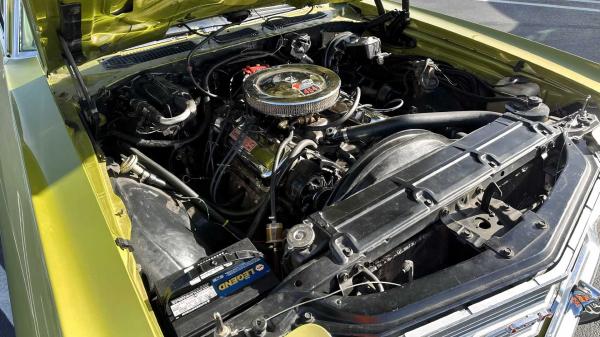
GMC Once Made A Muscle Car And Nobody Remembers It
GMC quietly sold a big-block muscle machine in 1971, but almost nobody bought it.
Why The Muscle Car Never Left Canada?

GM pulled the Beaumont from production in 1969, cutting short an already short run. The Americanized Chevelle and Pontiac LeMans took its place. The Beaumont existed because of the Auto Pact’s absence. Once that agreement existed, shipping an actual American muscle car north cost nothing extra, so keeping a separate Canadian-only line made no sense. Add in a car that was never advertised or sold in the States, and Americans had little reason to ever notice a genuine muscle car had been building an entire history next door.
Why Is The Beaumont Now Collector’s Best Friend?

Collector interest in the Beaumont has climbed hard. Across the whole Beaumont line, average second condition value now sits around $24,200 USD, roughly $33,000 CAD. The cheapest documented V8 car, a base 307 sedan, goes for around $9,600. The rarest variant, the 396/350 horsepower L34 convertible, is valued at $81,800 in flawless “Concours” condition, more than three times the average. Real auction results back this up. Standard SD-396 hardtops have sold for the mid-$30,000s in recent years. A car built to dodge a tax problem outlived the tax problem by decades and spent nearly all of that time in near-total obscurity south of the border.
Sources: Mecum, Bring A Trailer, Classic, Hagerty

Related posts





Latest Post


No Comments