
Ford’s Most Hated V8 Might Actually Be The Good One
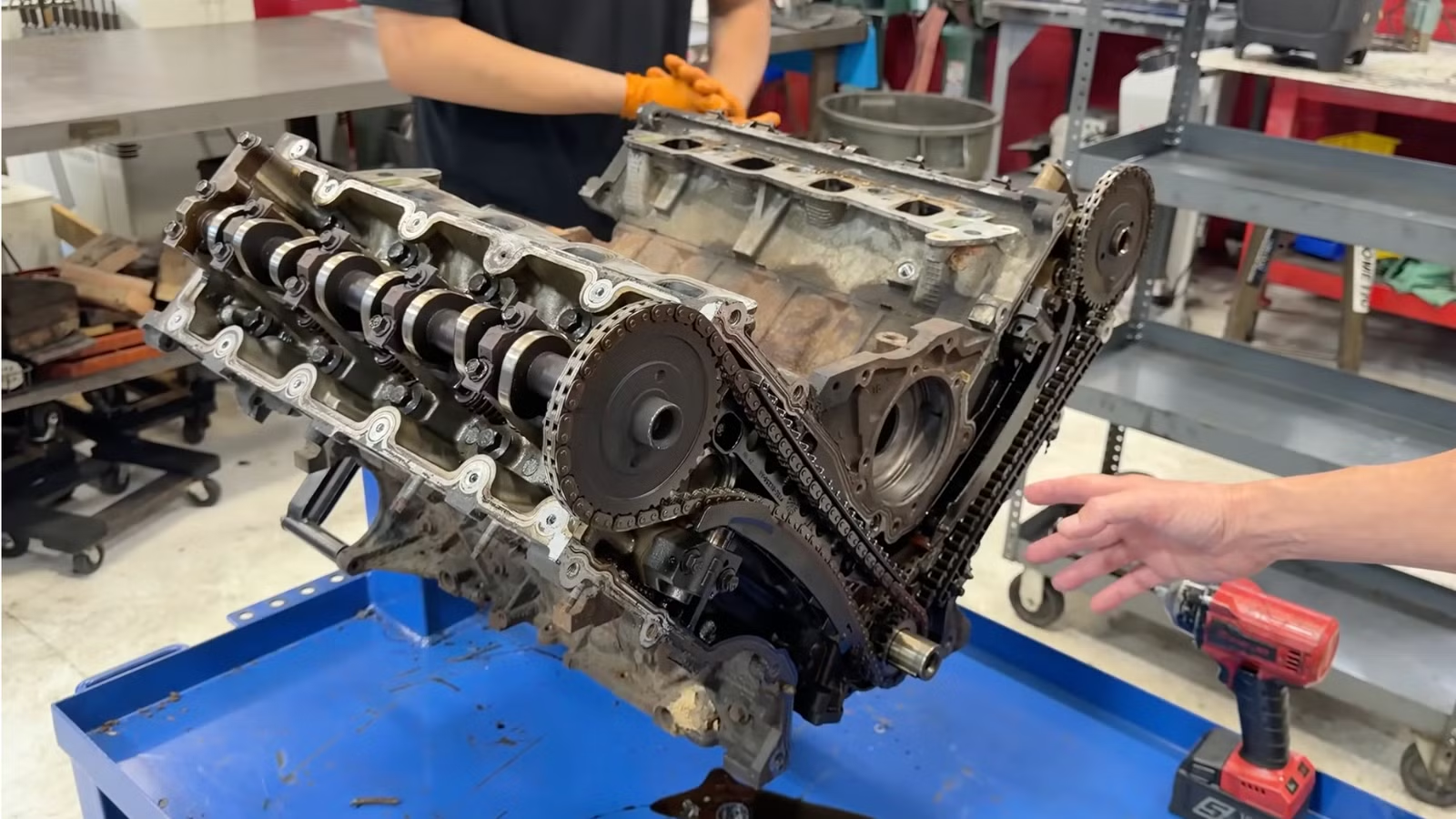
Ford’s 5.4-liter Triton V8 has developed quite the reputation over the years, and not always for the right reasons. Mention the Triton name around a group of mechanics, and someone will probably start telling horror stories involving spark plugs, timing chains, cam phasers, or repair bills large enough to ruin a perfectly good weekend. However, Dave’s Auto Center recently tore down a 5.4-liter Triton 2-Valve and argued that Ford’s old truck V8 deserves another look. While this particular engine was completely worn out, the teardown revealed something surprising. The basic design was not the disaster many people believe it was. In fact, Dave considers the 2-Valve version a genuinely good truck engine. The later 3-Valve is where things became much more complicated.
The Ford 5.4-Liter Triton 2-Valve Has A Tough Bottom End

Ford offered the 5.4-liter Triton 2-Valve in trucks beginning in the late 1990s before transitioning to the 3-Valve design during the 2000s. Both versions share a durable basic foundation, including a stout block, crankshaft, connecting rods, and pistons.
According to Dave, neither engine is particularly known for serious bottom-end failures. The 2-Valve also benefits from being the simpler of the two designs. It uses one intake valve and one exhaust valve per cylinder, a single overhead camshaft for each bank, and two timing chains. There is no variable valve timing system trying to perform mechanical gymnastics behind the timing cover.

The torn-down engine still showed remnants of crosshatching on its cylinder walls, despite being badly worn. Its thrust bearing also appeared to have survived reasonably well. Dave ultimately concluded that the engine needed a fairly straightforward rebuild rather than being condemned as an unsalvageable lump of aluminum and iron.

Once the crankshaft is machined, oversized pistons are installed, and the cylinder heads are correctly repaired, Dave believes the customer should have a dependable truck engine again.
Neglected Oil Changes Slowly Destroyed This Triton V8

The engine itself may have been tough, but its previous maintenance history certainly did it no favors. As the team pulled it apart, they discovered heavy varnish, sludge, debris, scored components, and oil-control rings that were practically frozen inside the pistons. Those rings should move freely, but the buildup had packed their grooves with hardened crud.
Dave explained that the oil-control rings help regulate lubrication on the cylinder walls. Small passages inside the pistons allow oil to move through the assembly, but sludge had blocked those openings. That reduced lubrication and contributed to visible scuffing on the pistons, crankshaft, bearings, and cylinder walls.
The cylinder heads brought another familiar Triton problem. Several spark plug holes had previously received threaded inserts, but the repairs had not been performed correctly. Another cylinder head had only four factory threads holding each spark plug in place. With so little material gripping the plug, it is easy to understand why some Tritons became famous for launching spark plugs out of their heads.
This engine had even received a replacement or repaired cylinder head at some point, suggesting somebody had fixed only half the problem before sending it back onto the road.
The 3-Valve 5.4-liter Triton gained approximately 50 horsepower through improved airflow and variable valve timing, but that extra complexity introduced its most notorious problems.
Its cam phasers rely on steady oil pressure to adjust camshaft timing. Dave explained that the original oil pump’s rear plate can flex at higher engine speeds, allowing oil pressure to bleed away before it reaches the top of the engine. Insufficient lubrication then wears the camshaft journals and creates excessive clearance.
Once that happens, replacing only the timing chains, sensors, or phasers may not eliminate the rattling or camshaft-correlation codes. The damaged cylinder heads can continue leaking oil pressure internally, preventing the new phasers from working correctly. Dave recommends inspecting the front cam caps before throwing parts at a troubled 3-Valve. If they are badly scored, the engine may need replacement cylinder heads, new phasers, a complete timing set, and an upgraded oil pump with a steel rear plate.
The teardown ultimately supports Dave’s larger point. No engine is perfect, but knowing its weaknesses changes everything. Maintain a 2-Valve Triton properly, repair its spark plug threads correctly, and keep clean oil flowing through it, and this supposedly terrible Ford V8 can still be one seriously dependable truck motor.

Related posts




Latest Post


No Comments