
Yamaha’s 250cc Two-Stroke Sold 50,000 A Year And Nobody Talks About It
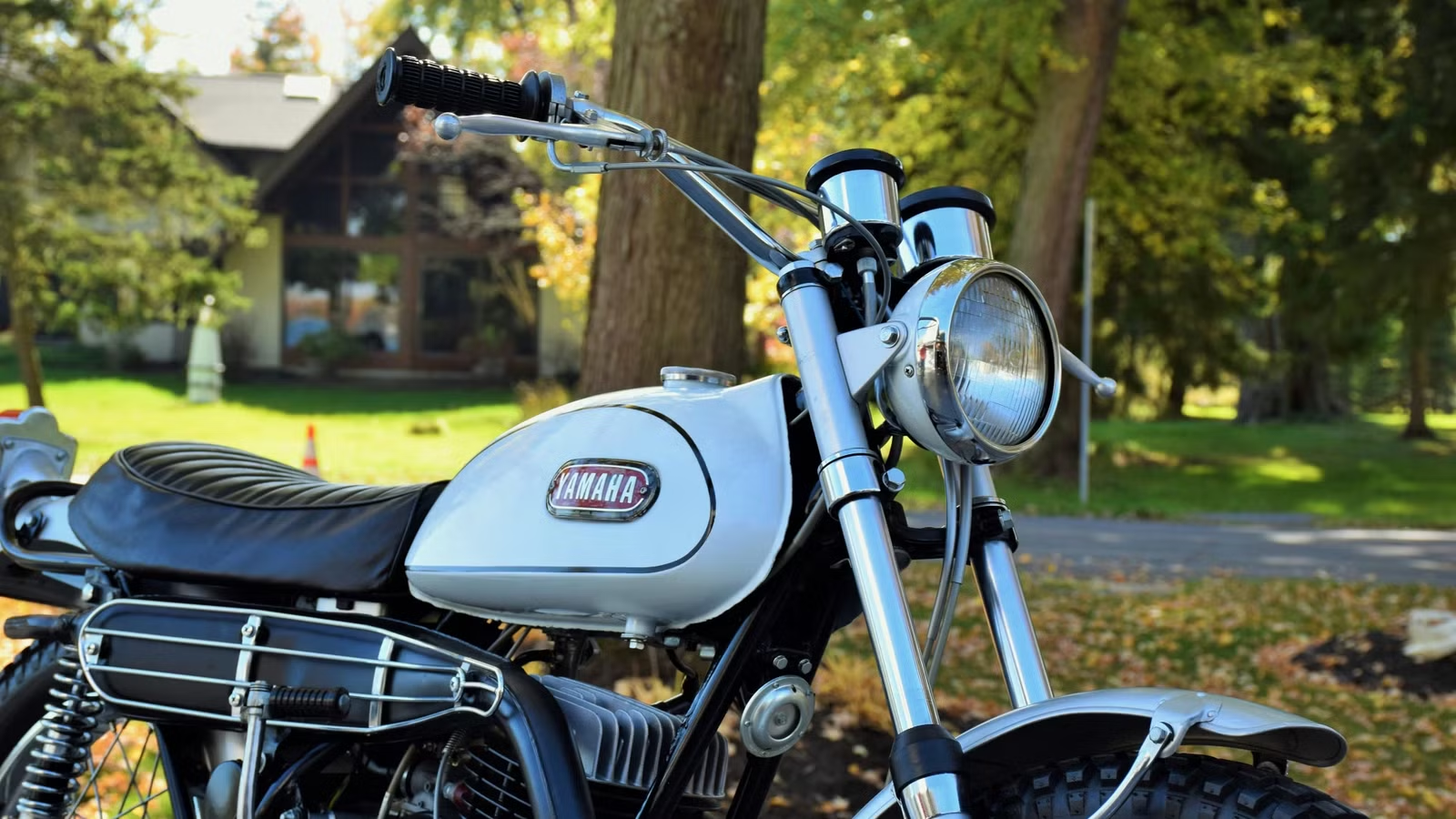
Trail riding in the US was taking off by the late 1960s, but there was a problem — there were no dedicated bikes for riders who wanted to ride both on and off the road on the same day. Yamaha dirt bikes decided to fill this growing gap in the market, with some help from their US dealers, and, in doing so, created an entirely new market.
Before Adventure Bikes Existed, Americans Were Already Chasing Dirt

Long before adventure bikes existed, American riders were already searching for ways to leave the pavement behind. Motorcycles opened up America’s highways, but there were few machines capable of comfortably venturing beyond the pavement into the country’s deserts, forests, and mountain trails.
The increase in lightweight motorcycles in the 1950s and 1960s offered adventurous riders the chance to modify existing bikes to handle the country’s deserts, forests, and trails, and with that, grass tracking and enduro racing became more popular. But for all the burgeoning popularity of off-roading, by the late 1960s there still wasn’t a bike that offered people both road-going reliability and the ability to take on mixed terrain comfortably. It was an underserved market ripe for the taking, and one which Yamaha spotted before anyone else could seize.
Yamaha Saw A Market That Everyone Else Overlooked

With off-roading becoming less niche and more mainstream, especially in places like California, riders were having to do more to make their bikes suitable. Exhausts were moved up to clear rocks, skid plates were added to protect the engine, and tires became knobbier to provide more grip. This happened regardless of where the bike came from as, without a purpose-built bike, every option offered a compromise.
British scramblers were made for tough terrain, but were heavy and required parts to be removed to make them more agile. Harley-Davidsons were lighter, but needed parts raised to clear rocks. There were specialized offerings from European brands like Husqvarna and Bultaco, but these were expensive imports that were often not road-legal.
Meanwhile, Japanese brands had largely misunderstood what the American market wanted. Thinking that everyone in the US wanted heavy street bikes, they offered bikes like the Honda CL77 Scrambler, which was a 305 cc bike that weighed 352 pounds dry, or the Yamaha YG-1 Big Bear Scrambler that was closer, but was still a heavy street bike adapted to off-roading.
But that is where Yamaha’s US distributor stepped in. Recognizing the growing popularity of trail riding and listening to customers, Yamaha’s American distributor identified a gap in the market for a lightweight motorcycle that could be ridden to the trail, used to tackle off-road all day, and then comfortably ridden home again. Fortunately, Yamaha’s headquarters in Japan were willing to back the idea.
The 1968 Yamaha DT-1 Changed Everything

|
Engine |
Power |
Torque |
Weight |
|
250 cc single-cylinder, air-cooled two stroke |
21 hp |
17 lb-ft |
247 lbs |
With the feedback from the US, Yamaha set to work creating what would become one of the most influential motorcycles ever. The process took an astonishingly short 15 months to complete, during which Yamaha studied America’s trail riding culture and designed a bike that merged the light weight of a motocross bike, the control of a trials bike, and the reliability of a road-going bike.
As Japan didn’t have a history of trail riding at the time, they sent engineers to the US to understand what the people really needed. Talking to riders and dealers, and even riding the trails themselves, they determined that this new machine would need to perform as a trail bike, climb like a trials bike, handle motocross terrain, and still be road-legal. To help with this, Yamaha turned to its YX26 prototype motocross racer.
The bike had competed in the 125 cc and 250 cc All Japan Motocross Grand Prix, winning both, and was the lightweight, capable 250 cc bike that Yamaha wanted. Given that it was a racer never intended for public sale, some changes needed to be made. The crankshaft was made stronger, the frame was—ironically—made heavier to help with durability, autolube oil injection was added so riders didn’t need to premix fuel, and the lights and running gear required for road legality were added.

What this led to was the Yamaha DT-1. Custom-designed for the trails of the West Coast, the DT-1 was the first bike tailored specifically to this previously underserved market without being the worst of both worlds, achieving this by not trying to be the best at either of its two purposes, but by being good at both simultaneously.
For a start, the DT-1 was street-legal, which meant that riders didn’t need two bikes (and a trailer). It was also designed with an upright riding position, meaning the rider would not be aching by the time they reached the trails. Dedicated motocross bikes would have had better suspension, but the DT-1’s was more than capable for both trails and roads, and its travel was longer than that of road bikes of the day, making it more suited to off-roading. Other tweaks like engine protection, wider bars, and a 247-lb wet weight also helped the bike to provide everything that riders wanted in one neat package.
The DT-1 Became One Of Yamaha’s Biggest Hits Almost Overnight

Perhaps unsurprisingly, the bike was an immediate success. It arrived at a time when road bike sales were slowing and trail riding was increasing, helping to satisfy riders who wanted the best of both. Yamaha had also made a huge gamble on the bike, setting a first-year sales target of 12,000 units despite having sold only 4,000 units in the US the previous year. And, luckily, this paid off.
The Yamaha DT-1 flew off showroom floors to the point where dealers could not keep them in stock. That 12,000 target was quickly eclipsed as the bike sold nearly 50,000 units in its first year, going on to last until 1971 when it was replaced by the DT250.
Every Modern Dual-Sport Owes Something To The DT-1

Yamaha could not have anticipated the incredible response to the DT-1. It was a bike that took just 15 months to create, that was aimed at a market that Yamaha didn’t know existed, and which cost just $580 new (the equivalent of $5,585 today). But there is a reason Yamaha took the risk: it knew there was a chance it could pay off.
The DT-1’s greatest achievement was not just its sales success, but the idea it introduced: that a motorcycle could be practical, affordable, and capable of taking riders beyond the pavement. Every modern dual-sport carries that same spirit of exploration and versatility, from today’s lightweight trail machines to advanced adventure motorcycles. The DT-1 embodied the same ideals it was built for: practicality, freedom, and adventure.
Sources: Yamaha, Motocross Action Mag, Motorcyclist Online

Related posts

Latest Post


No Comments