
How A Lower, Farther-Back V12 Turned A Ferrari Into A Three-Time GT Champion
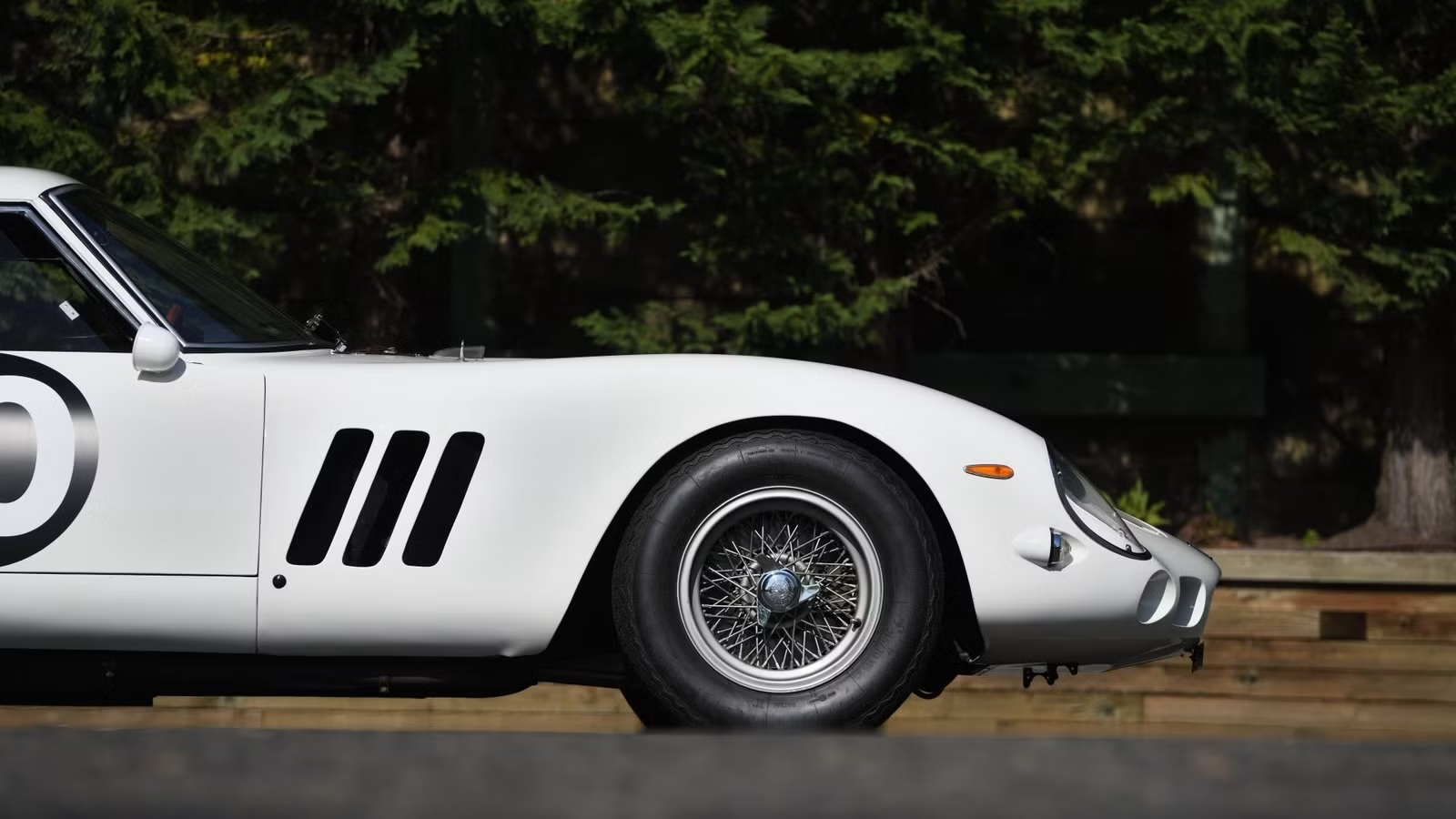
Ferrari knew how to build fast V12-powered racing cars, but by the early 1960s, horsepower alone could no longer guarantee victory. Rivals were getting faster, aerodynamics mattered more than ever, and poor handling could wipe out any advantage on the straights. Ferrari needed a GT racer that could carry more speed through corners without sacrificing its trademark performance.
Ferrari Had A Problem Its Famous V12 Couldn’t Solve

By 1961, Ferrari’s 250 GT Short Wheelbase (SWB) had already established itself as a formidable GT racer. Its lightweight construction, compact chassis, and powerful Colombo V12 made it a serious contender. But trouble arrived in March 1961, when Jaguar unveiled the E-Type at Geneva. With sleek bodywork, a 265-horsepower straight-six, and a claimed 150-mph top speed, the British newcomer threatened Ferrari’s established formula.
Simply adding horsepower wouldn’t solve the problem. Air resistance increased dramatically at high speeds, while poor weight distribution punished drivers through corners. The SWB’s traditional front-engine layout also limited further improvements. Ferrari needed better aerodynamics, stability, and balance without abandoning a proven chassis. That required more than tuning the V12.
An Unpainted Monster Was Hiding A Radical Experiment

Engineer Giotto Bizzarrini began experimenting with a 250 GT SWB-based development car, generally identified in Ferrari’s factory records as chassis 1791 GT. Bizzarrini later recalled using a different chassis, creating some disagreement over the prototype’s origins. Whatever its exact identity, the car served as a rolling laboratory. Its crude, unpainted aluminum body featured an exaggerated nose and unfinished details. The unusual appearance earned it the nickname Il Mostro, or “The Monster.” Nobody would mistake it for a showroom special.
Ferrari secretly tested the prototype at Monza, concentrating on aerodynamic efficiency and handling rather than looks. One frequently repeated story credits Stirling Moss with a 1-minute, 45.4-second lap, although reliable evidence for that precise time remains elusive. Then came Ferrari’s November 1961 Palace Revolt, which saw Bizzarrini, Carlo Chiti, and several senior employees leave the company. The experimental machine remained unfinished, and Ferrari suddenly needed someone else to complete its transformation.
The Ferrari 250 GTO’s Secret Was A V12 Mounted Lower And Farther Back

That unfinished experiment became the legendary Ferrari 250 GTO. Its name stood for Gran Turismo Omologato, and its 3.0-liter Colombo V12 produced approximately 300 horsepower through six twin-choke Weber carburetors. A five-speed manual transmission sent that power to the rear wheels. Those figures were impressive for 1962, but the GTO’s biggest advantage came from something less obvious. Bizzarrini had focused on positioning the V12 lower and farther back within the front-engine chassis.
Dry-sump lubrication helped make the lower engine position possible. Instead of storing oil in a deep pan beneath the crankshaft, the system used a separate reservoir and pumps, allowing a shallower sump. Lowering the V12 reduced the car’s center of gravity, improving stability and handling through corners. Shifting its mass rearward improved weight distribution, making the car more balanced under braking and during changes of direction. The engine remained ahead of the driver, so this wasn’t a mid-engine conversion. Ferrari simply made its existing layout work considerably better.

The lower engine also complemented the GTO’s streamlined aluminum body, helping Ferrari combine mechanical balance with aerodynamic efficiency. The complete design involved more than dry-sump lubrication, however. After Bizzarrini’s dismissal, 26-year-old Mauro Forghieri continued development alongside coachbuilder Sergio Scaglietti. They refined the bodywork, suspension, and rear-end stability, including the addition of a small rear spoiler. The finished machine combined a proven V12 with clever packaging and a body designed to cut through the air. The Monster had cleaned up nicely.
Its First Race Proved The Engineers Had Been Right

The Ferrari 250 GTO made its competitive debut at the 12 Hours of Sebring in March 1962. Phil Hill and Olivier Gendebien drove chassis 3387 GT to second place overall and first in the GT class, finishing behind only a Ferrari sports-racing prototype. That was an exceptional result for a grand tourer competing against more specialized machinery. Its V12 delivered impressive straight-line speed, while the lower center of gravity and improved weight distribution helped maintain momentum through corners. The streamlined body also reduced drag during sustained high-speed running.
Sebring marked the beginning of an extraordinary racing career. The GTO went on to secure major class victories at events including Le Mans, the Nürburgring 1000 Kilometers, and the Tourist Trophy. Its speed, predictable handling, and endurance made it a favorite among Ferrari’s private racing teams. Those results helped Ferrari win three consecutive International Championship for GT Manufacturers titles in 1962, 1963, and 1964. Specifically, Ferrari dominated Division III, reserved for GT cars with engines larger than 2.0 liters. These were class-based manufacturers’ titles, an important distinction in an era when different engine-capacity divisions had separate championships.
Three Championships Later, Ferrari’s Monster Had Nothing Left To Prove

Ferrari’s dominance eventually faced a determined American challenge. Carroll Shelby’s Cobra offered tremendous V8 performance, but its roadster body struggled with aerodynamic drag on faster circuits. The streamlined Cobra Daytona Coupe addressed that weakness, turning Shelby’s program into a serious threat. Ferrari still secured the over-2.0-liter GT manufacturers’ title in 1964, but the Daytona Coupe helped Shelby claim the corresponding championship in 1965. The GTO’s reign was ending as racing technology moved forward and mid-engine designs increasingly shaped international sports-car competition.

Today, the 250 GTO ranks among the world’s most valuable collector cars, helped by its extraordinary rarity. Ferrari built 36 conventional 3.0-liter examples, although some accounts quote 39 by including three related 4.0-liter GTO-bodied machines, also classified separately as 330 GTO or 330 LM variants. Yet the GTO’s appeal goes far beyond its scarcity or auction value—its three championship seasons demonstrated how much Ferrari could achieve by improving a proven design rather than replacing it. By mounting the V12 lower and farther back, refining the aerodynamics, and improving chassis balance, Ferrari turned an already capable GT into a racing legend. Sometimes, the smartest way forward starts by moving something backward.
Source: Ferrari, Shelby

Related posts




Latest Post


No Comments