
The Cruiser Owners Keep Long After It’s Paid Off
Most vehicles are built to be replaced. A newer model lands, the payments finish, the resale window opens, and the sensible move is to move on. Riders do it constantly, trading up the moment something faster or cheaper shows up in a showroom. It is the rational thing to do, and it is what the market quietly expects of everyone.

Yet a small group of riders never sell. They keep the same machine for a decade or two, long after the loan clears and long after newer metal has come and gone. That kind of loyalty is rare in almost every corner of the vehicle world, but there is one category where it runs deep, and one motorcycle in it that riders seem physically unable to let go of.
Why Cruiser Owners Rarely Trade Their Bikes In
Cruisers are not a niche in the United States. They are the default shape most people picture when they picture a motorcycle, and they still make up roughly 38 percent of the bikes on American roads. The appeal is emotional before it is rational. The low seat, the lazy torque of a big V-twin, and styling built for presence rather than lap times pull riders in and keep them there. Cruisers also change slowly on purpose, so the silhouette a buyer falls for at 35 still looks right at 65. There is rarely an itch to replace what has not gone out of style.

That stability matters more than ever, because the segment is under quiet pressure. The rider base is aging, with the median American motorcyclist now in his late 40s, and fewer young riders are buying in while adventure and entry-level bikes soak up the newcomers who do. The result is a smaller, older, and far more committed core. The people who own cruisers today are not casual buyers cycling through machines. They are holding on harder than any other group of riders on the road.
Harley-Davidson Enjoys The Deepest Owner Loyalty

No brand embodies that commitment like Harley-Davidson. Marketing textbooks reach for one of two companies when they need a case study in loyalty, Apple or Harley, and Harley owners tend to behave less like customers and more like members of a club with its own customs. Survey data backs the reputation up. Comparably found that 82 percent of Harley customers describe themselves as loyal, and the brand carries a Net Promoter Score of 36, first among its direct rivals. Those figures come from a self-reported survey rather than registration records, so treat them as a read on sentiment, but the sentiment is remarkably consistent. Harley riders do not just buy the bike. They buy in.
The Harley-Davidson Fat Boy Is The One Owners Never Sell

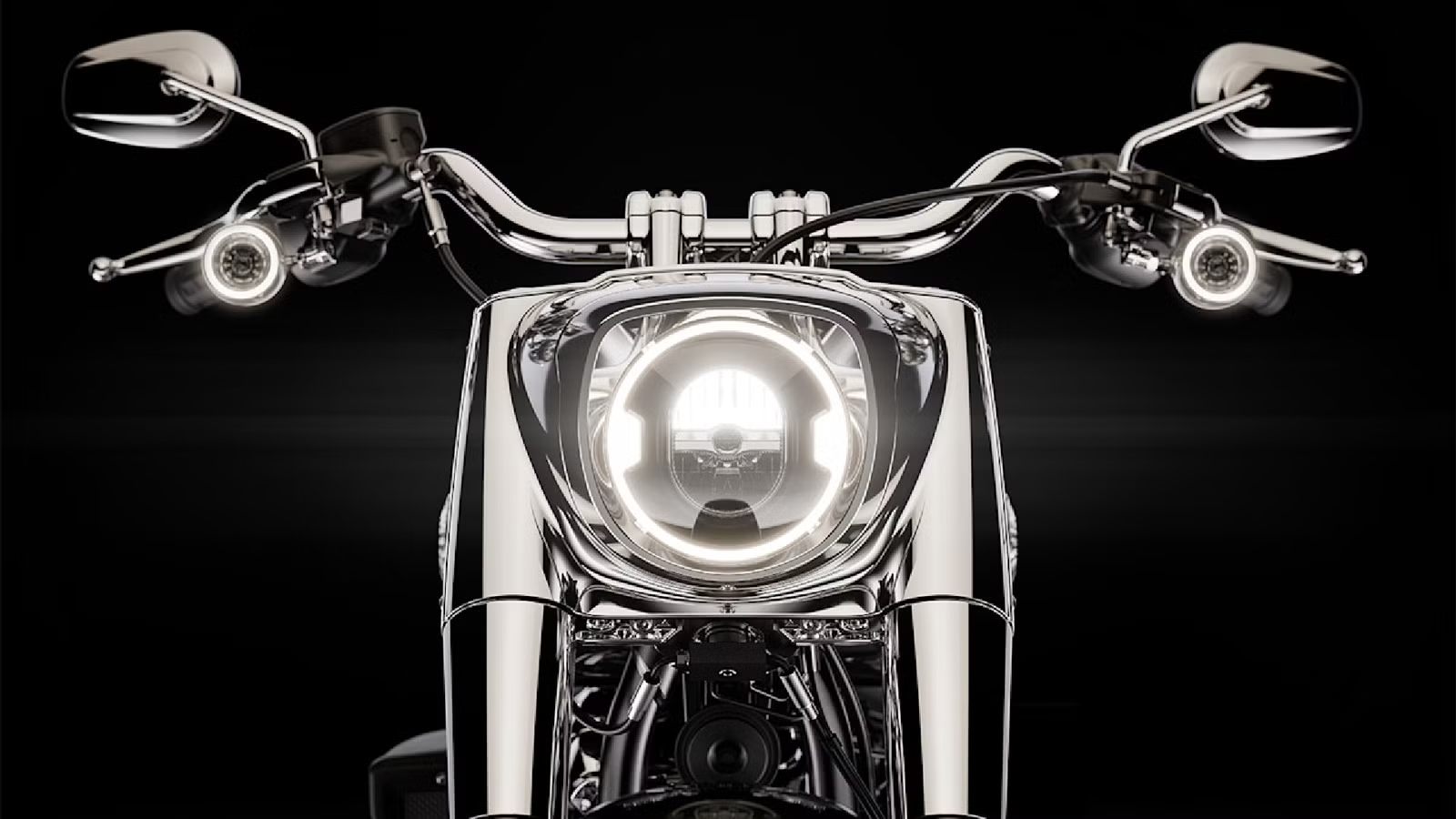
Plenty of Harleys inspire that kind of devotion, but one stands apart as the ultimate keeper. The Fat Boy has been an American icon since its 1990 debut, and it cemented itself in the culture a year later when it rolled across the screen in Terminator 2. The unmistakable steamroller stance, the solid Lakester cast-aluminum wheels, and the chrome headlight nacelle make it one of the most recognizable motorcycles Harley has ever built. It was chosen for this piece because no other cruiser blends that level of visual fame with that depth of owner attachment. People do not simply ride a Fat Boy. They keep it.
It is not a cheap bike to buy. The 2026 Fat Boy starts at $22,599, which places it well above the Japanese cruisers that undercut it on paper. But the sticker tells only half the ownership story, because a Fat Boy holds onto its value in a way most vehicles cannot. That is the quiet math that keeps owners from ever visiting the trade-in desk.
Resale Value And Brand Loyalty That Outlast The Payments

Harleys depreciate more slowly than almost anything else on two wheels. Where many motorcycles shed 25 to 30 percent of their value in the first three years, Harleys average closer to 15 to 20 percent, and well-kept examples still hold 60 to 70 percent after five years while rival brands slip below half. Push out to a decade and a cared-for Harley can still be worth 50 percent or more of what it cost new.
The Fat Boy and its Softail siblings sit at the strong end of that curve, prized on the used market precisely because so few owners are willing to part with them. Combine that slow depreciation with the brand loyalty behind it, and selling starts to feel like a loss in every sense. The bike is paid off, it is still worth real money, and it still turns heads. The financial case for keeping it is clear — but the 2026 Fat Boy also has to earn its keep as a machine, not just as a ledger entry. And on that front, something significant changed.
The Fat Boy Is Better Than Ever In 2026

Reputation alone does not keep a bike in the garage for 20 years. The current Fat Boy earns its keep as a machine, not just as a memory. For 2026, it rides on the largest engine the model has ever carried, wrapped in a chassis Harley has spent decades refining, and backed by a modern safety net that did not exist on the bikes these owners fell for in the first place. It is the most capable version of a very old idea.
A Milwaukee-Eight 117 Brings The Firepower

At the center sits the Milwaukee-Eight 117, a 1,923cc air- and oil-cooled V-twin that pumps out around 126 pound-feet of torque low in the rev range. This is not a bike that chases peak horsepower or top-speed bragging rights. It makes its case with roll-on grunt, the kind that turns a highway merge or an overtake into an effortless surge without a downshift. The 2-into-2 exhaust and touring intake give it real presence, and the low-rpm thump is a sensory signature owners never seem to tire of. It is genuinely quick for something this heavy, yet it delivers that speed with the planted, unhurried feel that defines the whole Fat Boy experience.
Trusted Underpinnings Honed Over The Years
The Milwaukee-Eight family had a rocky start. Early 2017 to 2019 examples suffered an oil sumping issue tied to an undersized oil pump, and Harley addressed it through a factory service bulletin and a revised pump design that later engines carry from the factory. Owners of newer 117-powered bikes report the kind of drama-free mileage that builds long-term trust, with many clearing 15,000 to 20,000 miles on nothing more than routine servicing and tires.
The rest of the package is deliberately simple: a proven Softail frame, dual-bending valve forks, and a hidden rear monoshock with easy hydraulic preload adjustment. That mechanical straightforwardness, combined with one of the deepest aftermarket and parts networks in all of motorcycling, is exactly what makes a Fat Boy easy to live with for the long haul. Nothing on it feels engineered to be disposable.
Why 55 Percent Of Owners Customize Theirs — And Why That Means They’ll Never Sell

A Fat Boy is rarely left the way it left the factory. Roughly 55 percent of Harley owners personalize their bikes, and that ongoing investment of money, time, and taste is a big part of why the attachment runs so deep. A bike you have slowly made your own is not something you flip. These machines get ridden for 20 to 25 years, handed down to kids, and restored rather than replaced when age catches up with them. For 2026, Harley leans into that permanence with a Fat Boy-specific tank medallion, full LED lighting, selectable ride modes, and a standard suite of rider safety aids including cornering ABS and traction control. It is a bike built to be kept, and finally equipped to be kept safely.
The Harley-Davidson Fat Boy Was Never Meant To Make Financial Sense

Judged by the spreadsheet, the Fat Boy is hard to defend. It is heavy at 694 pounds, it drinks more fuel than a leaner cruiser, and its service and parts costs run well above the Japanese competition. You can buy something faster, cheaper, and more practical without trying very hard. On paper, no rational buyer keeps one for two decades.
But nobody buys a Fat Boy to win an argument with a calculator. They buy it for the way it looks parked in the driveway, the way the 117 thumps at low revs, the way it becomes a fixed point in a life measured in road trips and repaint jobs. The value that keeps it in the garage long after the loan clears is not the kind you can total up, and that was always the point. The Fat Boy was never meant to make financial sense. It was meant to make you want to keep it, and on that measure it has never lost an owner it did not choose to.
Sources: Harley-Davidson, Jalopnik

Related posts

Latest Post


No Comments