
Mazda Spirit Racing 3: 300 HP AWD Hot Hatch Explained
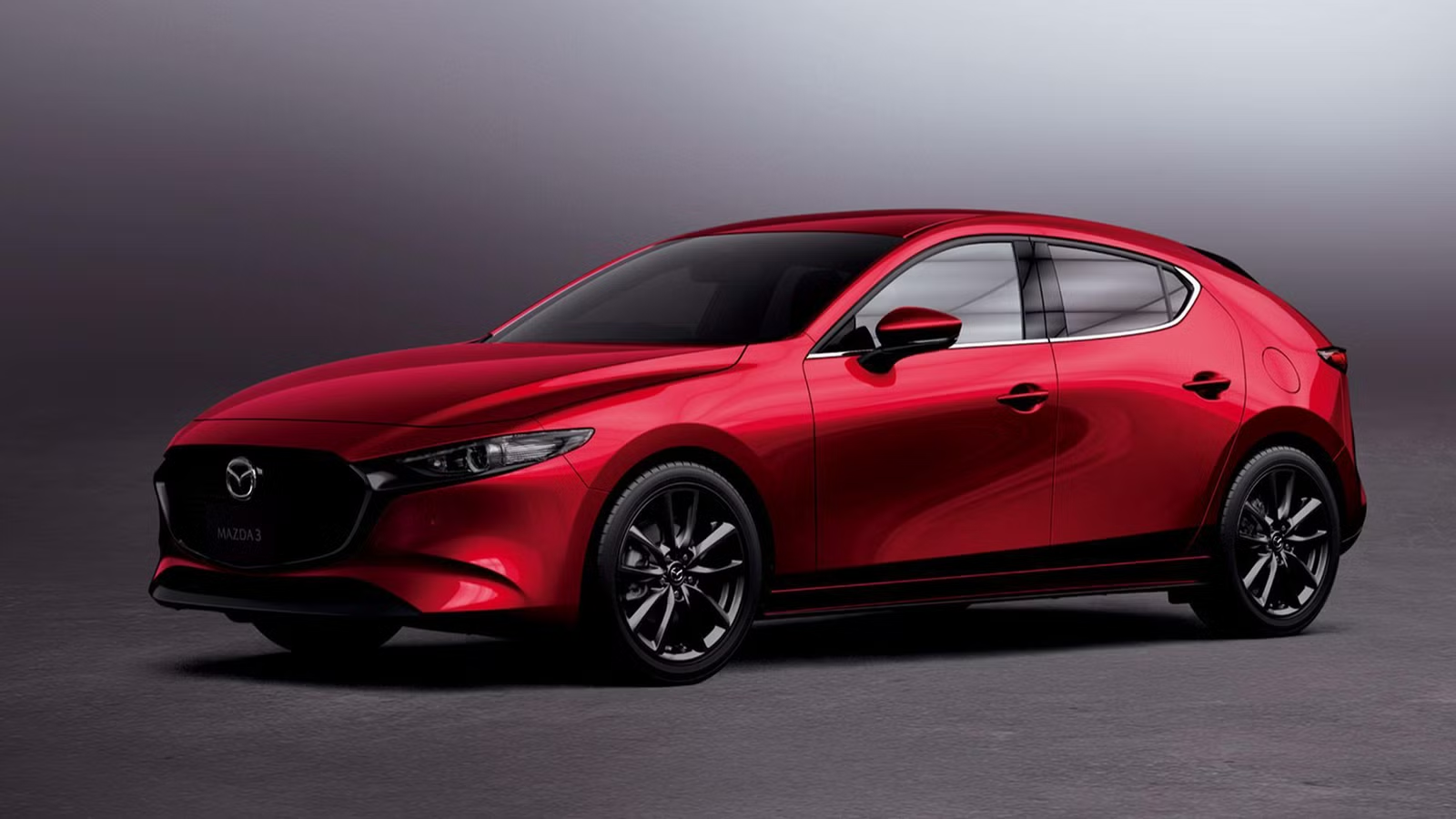
A new hot hatchback is taking shape inside Mazda‘s factory performance division, and it isn’t built around the usual formula of cramming maximum horsepower into a small engine. The Mazda Spirit Racing 3 — effectively the spiritual successor to the Mazdaspeed3 that last sold in 2013 — is reportedly targeting 300 horsepower and AWD, with a reveal potentially coming in the first half of 2027. But the number that matters most here isn’t the horsepower figure. It’s where that engineering philosophy comes from.

Mazda Spirit Racing, the factory motorsport outfit that replaced the MazdaSpeed brand, competes in Japan’s Super Taikyu endurance racing series. That’s a very different proving ground than the one Toyota used to develop the GR Corolla. Endurance racing rewards chassis balance, thermal management, and mechanical durability over sprint-tuned peak power — and that distinction is exactly what could make the Spirit Racing 3 something genuinely different from its rivals.
A 2.5-Liter Turbo Built for Distance, Not Just Dyno Sheets
The engine at the center of this build is the 2.5-liter Skyactiv-G turbocharged four-cylinder already found in the Mazda3 2.5 Turbo. In its current road-going form, that engine produces 250 horsepower and 320 lb-ft of torque on premium fuel — torque figures that already lead the hot-hatch class. Mazda Spirit Racing is reportedly targeting 300 horsepower from the same block, which would require meaningful tuning work but starts from a strong foundation.

Compare that to the GR Corolla’s approach: Toyota extracted 300 horsepower from a 1.6-liter turbocharged three-cylinder, an engine architecture tuned for explosive, short-burst power delivery. That setup is impressively engineered, but it’s built around a different performance philosophy. A 2.5-liter four-cylinder making the same output is working at a lower specific output — meaning less stress per combustion cycle, broader torque availability across the rev range, and thermal characteristics that suit sustained hard driving. Endurance racing teaches engineers to care about exactly those qualities.
What Super Taikyu Racing Actually Teaches an Engineering Team

Mazda has been running the Spirit Racing 3 concept in the Super Taikyu endurance series, where the car runs on renewable diesel and serves as a testbed for the brand’s onboard carbon-dioxide capture system. That’s a specific technical mission, but the racing environment itself imposes broader lessons. Suspension geometry that survives lap after lap of sustained cornering loads gets tuned differently than a setup optimized for a single hot lap. Weight distribution that keeps a car balanced through long stints rewards different engineering trade-offs than a setup chasing 0–60 times.
The original Mazdaspeed3 — front-wheel drive, 263 horsepower, torque steer and all — was a product of a different era and a different engineering brief. The Spirit Racing 3 will be AWD, which already addresses the most fundamental limitation of that car. If Mazda’s endurance-racing program has genuinely shaped how the team thinks about chassis tuning and weight distribution, the result could be a hot hatch that feels more planted and composed at the limit than its peak power figure suggests.
The Manual Question and the US Availability Problem

Two clouds hang over this otherwise promising picture. First, the Spirit Racing 3 concept shown at the Tokyo Auto Salon in January 2024 was an automatic — paired to Mazda’s six-speed unit. The 2.5-liter Skyactiv-G has never been offered with a manual transmission in any market, which makes a rowing-your-own option unlikely, though nothing is confirmed either way. Every major rival in the segment — the GR Corolla, the Civic Type R, the incoming Subaru WRX STI hatchback — offers a manual. That’s a real gap if Mazda can’t close it.
Second, Mazda Spirit Racing’s track record with US availability is not encouraging. The MSR Miata, the division’s only concept-to-production graduate so far, is a Japan-only model. When asked about US availability for that car, Mazda cited the cost of homologating a low-volume model as a near-prohibitive barrier. The same logic could apply to the Spirit Racing 3. Mazda3 hatchback sales in the US are growing sharply — up 70% through August of this year — which at least gives the business case some footing. But enthusiasts who remember waiting for a Mazdaspeed revival should temper expectations about a domestic launch until Mazda says otherwise.
The hot-hatch segment is getting crowded fast, with the GR Corolla, Civic Type R HRC, and a resurrected Subaru STI all competing for the same buyers. What Mazda is attempting with the Spirit Racing 3 is harder to quantify than a horsepower number — it’s a bet that chassis balance and endurance-tuned engineering will matter to the people who actually drive these cars hard. If the racing DNA translates to the road version the way it should, gearheads will have a very compelling reason to pay attention when 2027 arrives.

Related posts




Latest Post


No Comments