
The 710-Pound Kawasaki Flagship That Got Fuel Injection And 130 HP In 1984
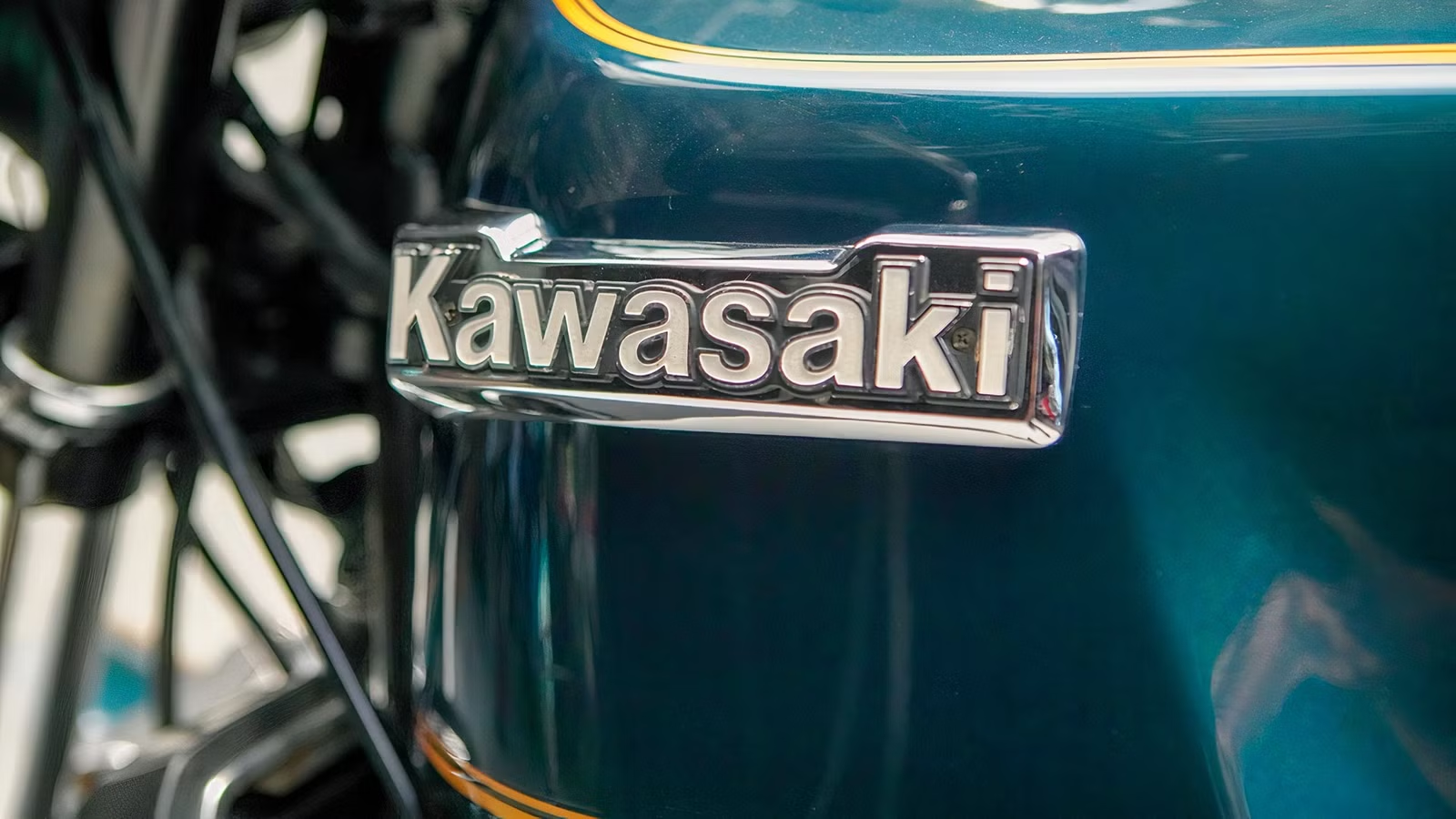
The 1970s were a time of motorcycling excess, as manufacturers competed to build bigger engines with more power and higher top speeds. While four cylinders had been the largest that most would experiment with, six-cylinder layouts were looking increasingly promising as a way to add more displacement and access that power that they wanted, but they came with a few catches: complexity, practicality, and, most of all, weight.
The 1970s Motorcycle World Was Obsessed With Building Bigger, Faster Engines

The launch of the Honda CB750 launched motorcycle engineering into a new era of excess, as manufacturers competed to build machines that could offer more power and more refinement than the bikes that came before. Each new bike then raised the bar further, but one thing was becoming apparent: four cylinders were no longer the only answer. Benelli had released the six-cylinder 750 Sei in 1973, proving that adding more cylinders could be its own selling point, while Honda’s CBX came in 1978 and reshaped how Japanese bikes were seen.
It made sense why. More cylinders can mean smoother power and greater performance as they spread out the vibrations and reduce the number of combustion events, but that does mean more weight, more complexity, and more things to go wrong. Both the CBX and the Sei were no strangers to this, as both struggled with reliability issues. And it was just one of the issues with six cylinders.
The Six-Cylinder Arms Race Came With A Serious Engineering Price


Bike frames, largely, aren’t designed for six-cylinder engines. There’s a lot of extra hardware to cram into a compact chassis without making it unduly wide or unwieldy and, while a straight-six offered plenty of smoothness, it also created a considerable packaging issue. More cylinders mean more pistons, more valves, more cooling requirements, more components. All of this adds weight and complexity — neither of which are usually welcome on a bike. But Kawasaki had a plan. Instead of focusing on creating the fastest or the lightest bike, it aimed at long-distance comfort instead. But achieving that would be far more difficult than expected.
The Kawasaki KZ1300 Was A 710-Pound Luxury Superbike With 120 HP

When Kawasaki’s six-cylinder offering finally broke cover in 1978, having been in the works since 1973, it was considerably heftier than the average superbike. Its 1,286 cc engine was larger than what most competitors were offering, and produced an impressive 120 HP to boot. But while that displacement helped Kawasaki to achieve the power it had wanted, it came at a cost: an astonishing 710-lb wet weight, making it one of the heaviest production bikes of its era.
Of course, adding more cylinders is always going to add more weight and make a bike less agile, but it does have some benefits. For instance, power delivery — more cylinders means more power strokes and fewer vibrations, and the six-cylinder engine offered a level of smoothness that four-cylinder contemporaries struggled to match. Couple this with 85 lb-ft of torque for a strong pull across the rev range, and you’ve got all the ingredients of a very capable cruiser. That’s not to say that it was slow in a straight line either, though, as period testing by Cycle World put its standing quarter mile time at 11.93 seconds, firmly among the series performance bikes of the time, though crucially slower than the smaller-engined CBX (which did the distance in 11.06 seconds or 11.36 seconds, depending on the tester). A long wheelbase (62.2 inches compared to the CBX’s 58.9 inches) also meant that it felt planted at higher speeds.
So the weight wasn’t an issue in a straight line. That’s good. But try to do anything other than travel straight, and that weight becomes an issue.

That long wheelbase made for a bike that wasn’t as agile as other superbikes of the time, making tight corners a considerable effort and more like sailing a ship. Low-speed maneuvers could also be cumbersome, given you were trying to move something that weighed as much as a grand piano.
Still, the KZ1300 wasn’t necessarily meant to be the most agile bike in the world. It was designed to be smooth, effortlessly powerful, and with high speed comfort in mind. Long distances were its forte. A grand tourer rather than a frenetic superbike. Weight was an unavoidable compromise in the pursuit of this, but one that helped to make the KZ1300 exactly what it was.
Kawasaki Kept Developing Its Six-Cylinder Flagship When Others Might Have Walked Away

While the bike was an undeniable heifer, its exceptionally smooth power delivery was strong enough that Kawasaki persevered, continuing to develop it into the 1980s. One of the biggest changes came in 1984, when the KZ1300’s carburetors were replaced with Digital Fuel Injection to help bump the power to 130 HP while improving fuel delivery, economy, and helping it to meet the ever-tightening emissions requirements.
Kawasaki’s commitment to the six-cylinder format led to a limited-run Voyager variant, which was a full-blown touring version with a fairing, windscreen, luggage, an LCD instrument display, an audio/cassette system, and a barely-believable 900-lb+ wet weight. Kawasaki had essentially turned its superbike into a long-distance luxury machine.
The Kawasaki KZ1300’s Legacy Is Bigger Than Its Sales Figures

The KZ1300 never became the sales phenomenon that Kawasaki might have hoped for, but that’s not to say its legacy is tainted. It remains one of the most audacious attempts at a powerful 1970s superbike, as Kawasaki dared to experiment with both power and weight to achieve what it wanted. It, alongside the CBX and Sei, helped to define the era’s fascination with six cylinders, and while its considerable weight saw it receive the unfortunate name of “Incredible Hulk”, its smoothness and power gave it a different one: the Legendary Six.
Sources: Cycle World, Motorcycle Specs

Related posts

Latest Post


No Comments