
Porsche 718 Boxster and Cayman at Risk in VW Lineup Purge
Volkswagen Group’s Supervisory Board unanimously approved a sweeping restructuring plan today — called Future Plan 2030 — that targets a 50% reduction in the group’s model portfolio by 2035. The cuts are designed to slash model complexity by roughly 75%, trim excess European production capacity, and bring the group down to nine million vehicles annually. For most observers, it reads as corporate triage. For Porsche enthusiasts, it lands as something more personal.

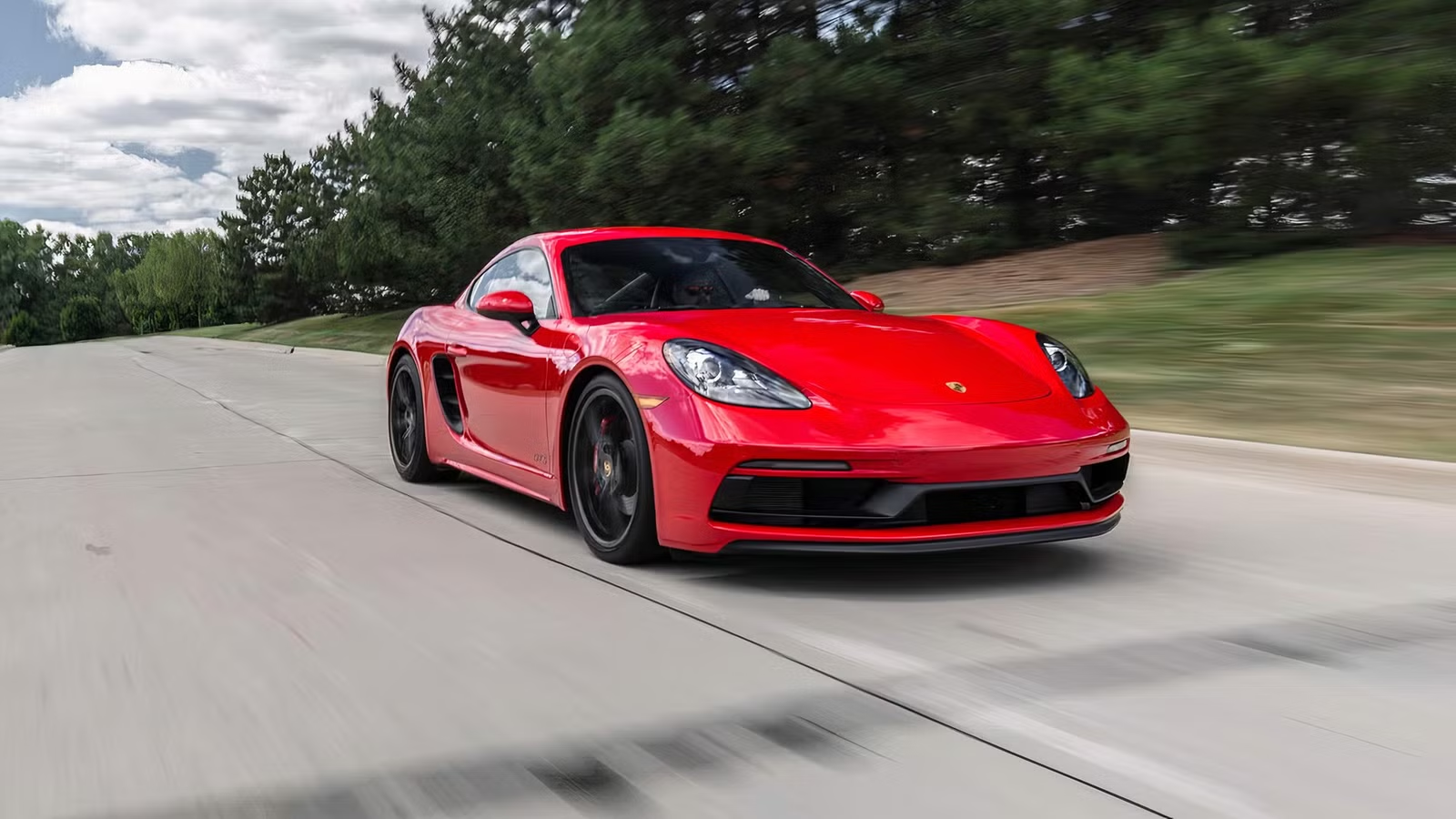
Among the models rumored to be on the chopping block, according to Carscoops, are the Porsche 718 Boxster and Cayman — the only Porsches you can buy today for under $100,000. Volkswagen Group hasn’t officially confirmed the full hit list, but the 718 twins, the Taycan, and ICE-powered versions of the next-generation 718 are all reportedly vulnerable. Lose the 718, and the most accessible door into Porsche ownership closes. What’s left on the other side is a 911.
What the 718 Actually Represents for Enthusiasts
The Boxster and Cayman aren’t just entry-level models in the accounting sense. They are, for a huge portion of Porsche’s customer base, the car that makes the brand reachable. A base 718 Cayman starts below $70,000. A 718 Boxster is in the same neighborhood. Neither is cheap, but both sit well below the six-figure threshold that the 911 cleared years ago and hasn’t looked back from.

More importantly, the 718 twins drive like Porsches. Mid-engine balance, rear-wheel drive, a chassis tuned with the same obsessive precision that defines Stuttgart’s road cars. For a generation of enthusiasts who grew up dreaming about the 911 but couldn’t swing it, the Cayman GTS or a well-optioned Boxster S was the realistic path in. Axing them doesn’t just trim a spreadsheet — it removes the on-ramp entirely.
The Restructuring Behind the Rumor

Future Plan 2030 is the largest internal transformation in Volkswagen Group’s history, by the company’s own description. The plan targets a 9% operating margin by 2030, acknowledges over 500,000 units of excess European production capacity, and puts plants in Emden, Zwickau, Hanover, and Neckarsulm under review for the 2031–2034 window. Around 50,000 jobs are targeted for elimination worldwide.
The restructuring has been months in the making and deeply contentious. VW CEO Oliver Blume toured German assembly plants this week, addressing over 10,000 workers in Wolfsburg — many of them booing and carrying banners reading “Our jobs are not your balance sheet adjustments.” Labor unions have been vocal in their opposition, with VW labor leader Daniela Cavallo saying trust in the executive board has been “damaged.” The Supervisory Board’s unanimous approval today moves the plan into implementation, but individual brand negotiations with employee representatives are still to come.
The 718 isn’t the only casualty being whispered about. Audi crossover coupes, the VW Jetta and Taos, the Cupra Raval, and Skoda’s Fabia are all reportedly living on borrowed time. The Taycan — Porsche’s electric flagship — is also named in the rumor pool, which raises a broader question about what Porsche’s lineup even looks like by the mid-2030s.
If the 718 Dies, What Fills the Gap?

Porsche hasn’t announced an electric replacement for the 718 that’s confirmed for production, and the ICE-powered next-generation model is itself reportedly at risk under the restructuring. That’s a meaningful gap. The 911 starts well north of $110,000 in base trim and climbs steeply from there. There is no obvious Porsche product waiting in the wings to catch the buyers the 718 currently serves.
The broader sports car segment offers alternatives — the Toyota GR86, Mazda MX-5 Miata, and BMW Z4 all occupy adjacent space — but none of them are Porsches, and that distinction matters to the buyers who were saving toward a Cayman. A used 718 market will persist, but the new-car entry point would simply disappear.
It’s worth noting that Porsche just introduced the 911 Challenge, a $275,000 customer racing car positioned as the new entry point into its motorsport ladder — replacing the 718 Cayman GT4 RS Clubsport. The road car and the race car programs appear to be moving in the same direction: away from the 718 platform entirely.
Nothing Is Confirmed Yet, But the Direction Is Clear

Volkswagen Group has not published an official list of models being discontinued. The 718’s vulnerability is based on reporting from Carscoops and the broader logic of a plan that targets 75% complexity reduction — a number that simply cannot be achieved without cutting beloved nameplates alongside slow-selling ones. The implementation timeline runs to 2035, meaning nothing disappears overnight.
But enthusiasts have seen this movie before. Restructuring plans that spare beloved models are the exception, not the rule. The 718 Boxster and Cayman are relatively low-volume, relatively low-margin compared to Porsche’s SUVs, and they share a platform that may not survive the group’s pivot toward fewer, higher-volume architectures. Hope for an official reprieve — but don’t count on one.
The 718 deserves better than a quiet exit in a corporate slide deck. Gearheads who’ve been working toward that first Porsche purchase deserve to know whether the target is still there. VW Group owes the enthusiast community a straight answer on what Future Plan 2030 actually means for Stuttgart’s sports cars — and sooner rather than later.

Related posts

Latest Post


No Comments