
Audi CEO: Wealthy Buyers Want Gas Engines, Not EVs
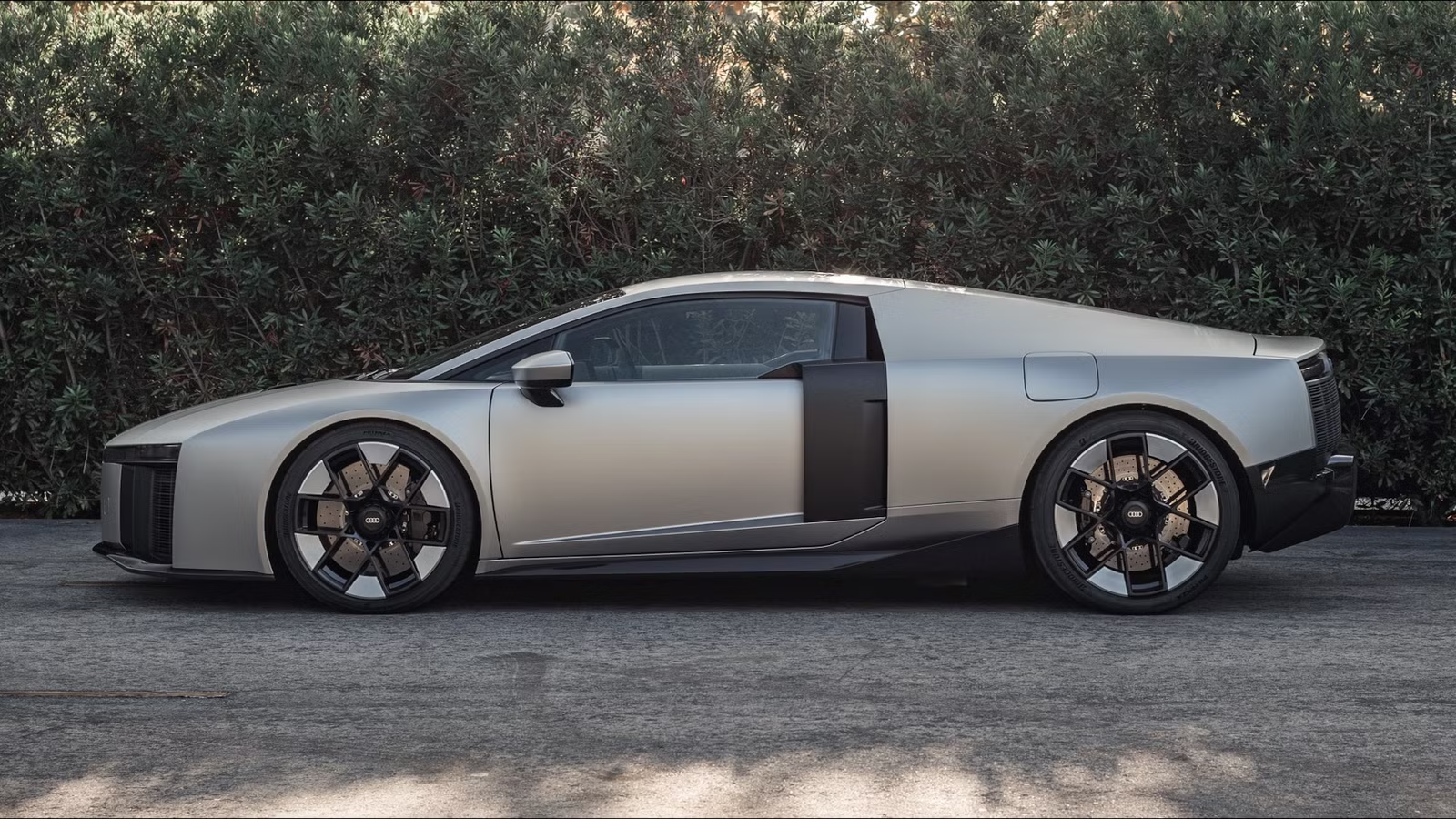
Two luxury brands. Same quarter. Same conclusion. Audi CEO Gernot Döllner sat down with Bloomberg in Monterey this week and said out loud what a lot of gearheads already suspected: the wealthier the buyer, the less interested they are in plugging in. “We find that the higher the segment is, the more the enthusiast still loves the combustion engine,” Döllner told Bloomberg. “The lower the segment is, the more battery electric is accepted.” That’s not a hedge. That’s a strategy.

What makes this more than just one executive’s opinion is the timing. Cadillac made essentially the same call earlier this year when it reversed course on an EV-only future, brought the XT6 back with a gas powertrain, and watched the Escalade IQ struggle to move metal the way a Duramax-powered Escalade does. Now Audi is arriving at identical conclusions from the other side of the Atlantic. When two premium brands independently reach the same verdict about buyer psychology, that’s a pattern worth paying attention to.
The Nuvolari Makes the Argument Better Than Any Press Release Could
Döllner’s comments didn’t come out of nowhere. They came wrapped around a $700,000, 987-horsepower supercar called the Nuvolari — a mid-engine hybrid that Audi developed in a reported 405 days and limited to just 499 examples. The car shares its powertrain with the Lamborghini Temerario, pairing a V8 with three electric motors. The electric hardware handles torque fill and low-speed composure. The V8 handles everything that actually matters to the buyer writing that check: the sound, the vibration, the mechanical drama.

That last part is the point Döllner keeps coming back to. People spending $700,000 on a car aren’t doing a cost-per-mile calculation. They’re buying an experience that a silent electric motor simply cannot replicate. As Bloomberg reported, Döllner frames combustion engines the way collectors frame mechanical watches — not as outdated technology, but as the analog soul of the thing. Efficiency is beside the point. Emotion is the product.
Audi’s Lineup Is Now Sorted by Powertrain Segment

The Nuvolari is the headline, but Döllner’s comments are reshaping the broader Audi lineup in quieter ways too. At the top, the V8 stays. The RS5 and the upcoming RS6 sedan and wagon will retain their V6 engines, though packaged as plug-in hybrids to satisfy emissions regulations — the alternative being downsized engines or killing the nameplates entirely. At the bottom, Audi is bringing back the A2 as a fully electric compact, effectively replacing the discontinued A1 hatchback and Q2 crossover. The message is deliberate: EVs for the entry level, combustion and hybrid drama for the buyers who can afford to demand it.
The one wrinkle in this otherwise clean narrative is the Concept C. The two-seater targa-roof sports car will arrive as a production vehicle next year as a pure EV, with no gas option confirmed. It’s a minor contradiction — a performance car that arguably begs for something like the RS3’s inline-five — but it doesn’t undercut the broader strategy Döllner is articulating.
Cadillac Got Here First, and the Market Rewarded It

Audi isn’t pioneering this thinking — Cadillac already ran the experiment and got the answer. The Escalade IQ launched with considerable fanfare, but it was the return of gas-powered variants and the XT6’s combustion revival that resonated with buyers and drove the kind of traffic that made it one of HotCars’ top stories of the year. Luxury SUV buyers, it turns out, weren’t waiting for an electric Escalade. They wanted the one that sounds like a Cadillac.
The broader luxury EV market is telling the same story. The Mercedes EQE and EQS posted disappointing sales despite strong specs. The Lotus Eletre is a genuine driver’s machine that almost nobody seems to be buying. Even the Volvo EX90 has struggled. These aren’t cheap cars with range anxiety problems — they’re six-figure vehicles that buyers are simply passing on in favor of combustion alternatives. Döllner is reading that market clearly, and so was Cadillac before him.
The industry spent the better part of five years telling wealthy buyers that electric was the future and they’d come around eventually. Two major luxury brands have now publicly concluded that the timeline was wrong and the psychology was misread. Enthusiasts at this level aren’t buying transportation — they’re buying the drama of a V8, the growl of a supercar, the feeling of something mechanical doing something extraordinary. Audi and Cadillac are both betting that honoring that instinct is smarter than fighting it. Hard to argue with them.

Related posts

Latest Post


No Comments