
The Forgotten Lexus V8 That Made German Rivals Work Harder
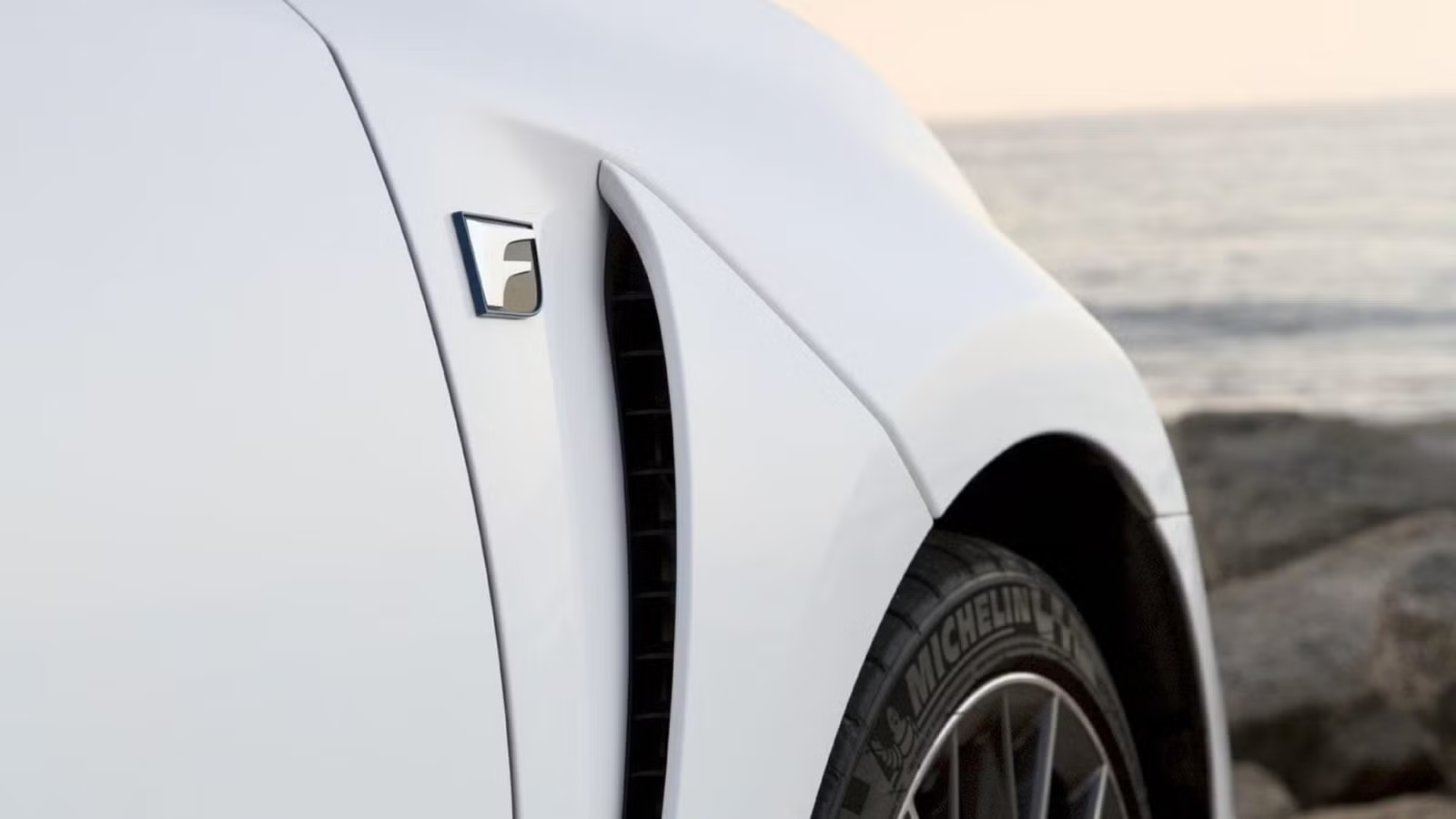
Somewhere between the turbo boom and the electric rush, a Japanese sedan showed up with an engine its German rivals had already abandoned. It revved to 7,300 rpm, breathed without forced induction, and sounded like a race car idling outside a boardroom. It never sold in mass numbers, never swept a comparison test with top honors, and its maker never marketed it with much swagger. Yet drivers kept asking the same mildly irritated question. Why did nobody make more noise about this? Now that the performance sedan class has changed so completely, that question has become a lot more interesting.
A Naturally Aspirated V8 Gave The GS F A Character German Rivals Were Losing

By the time the Lexus GS F arrived for the 2016 model year, the German establishment had already made its choice. BMW’s 5.0-liter V10 left the M5 after 2010, replaced by a twin-turbocharged 4.4-liter V8. Mercedes-AMG retired its wailing 6.3-liter V8 from the E63 and swapped in a 5.5-liter biturbo.
On paper, both moves were obvious. Turbos delivered more torque, better fuel economy numbers, and quicker acceleration. What they took away was the direct connection between your right foot and the engine. Forced induction smooths out the delivery, flattens the soundtrack, and moves the thrill from the top of the rev range to the middle. The Germans traded some theater for on-paper numbers.

Lexus went the other way. It kept a naturally aspirated V8 and built the sedan around it. That wasn’t nostalgia for its own sake. It was a company that had never played the Nürburgring lap-time game deciding to offer something different. The result felt like a deliberate throwback the moment you pressed the start button.

Lexus Built A Performance Sedan Around The High-Revving 5.0-Liter V8

The 2UR-GSE is a 5.0-liter V8 developed with Yamaha, making 467 horsepower at 7,100 rpm and 389 pound-feet of torque between 4,800 and 5,600 rpm. The redline sits at 7,300 rpm, which is serious territory for a V8 of this size. Titanium intake valves help it spin freely, and the engine can switch to Atkinson-cycle operation at light loads to save fuel.
Even so, the headline trait is how hungrily it climbs through the revs. Power goes to the rear wheels through an eight-speed automatic with a Torsen limited-slip differential. Lexus claimed a 0-to-60-mph time of about 4.5 seconds and a top speed of 168 mph. Those are strong numbers, though not class-leading.
The soundtrack deserves its own special mention. Lexus piped induction noise into the cabin and tuned the exhaust for a hard-edged bark on the way up the rev range. Take a run down the Pacific Coast Highway, for instance, with the windows down. Here the V8 pulls cleanly through the gears, the engine note sharpens past 5,000 rpm, and the canyon wall throws it back at you. It feels engaging rather than merely quick, and that’s a distinction spec sheets rarely capture when it comes to a naturally aspirated V8.
The BMW M5 And Mercedes-AMG E63 Had More Power, But The GS F Had Its Own Strengths

The F10-generation BMW M5 made a stout 560 horsepower and 502 pound-feet, rising to 575 horsepower with the Competition Package. The E63 AMG S 4MATIC produced a mammoth 577 horsepower and 590 pound-feet. Both ran zero to 60 mph in under four seconds, comfortably ahead of the Lexus, and the all-wheel-drive Mercedes could put its power down far more easily in the wet. When the next-generation M5 and E63 arrived around 2018, the gap grew wider still. On outright pace and technology, the Germans win with their turbocharged grunt.

The Lexus GS F’s case rests elsewhere when compared to its period rivals. First, there’s the throttle response. With no turbos to spool, the V8 reacts the instant you ask. Second, the rev ceiling. An engine that happily spins to 7,300 rpm rewards being driven hard in a way a torque-rich turbo motor rarely does. Third, there is the ownership confidence. The Lexus has no turbochargers, no charge-air plumbing, and none of the heat management that comes with them, which should mean fewer expensive surprises as the miles pile up.
The value argument shows up on the used market too. A clean GS F generally costs far less than a comparable M5 or E63 of the same era, and its running costs should be lower too. That isn’t a claim of outright superiority; however, it’s a claim about what you get per dollar and the peace of mind that comes with the Lexus reputation for reliability.
A Rare Blend Of Lexus Reliability, Everyday Comfort And Performance

Lexus built its reputation on cars that simply keep working, and the GS F inherits that. The cabin is solidly assembled, the seats are supportive without being punishing, and the ride, while firm, stays livable on broken pavement. A freeway commute is perfectly civilized, with the V8 settling into a hushed murmur at 70 mph.
It isn’t a flawless package though. The infotainment system and its touchpad-style controller have aged poorly. The automatic gearbox is smooth but lacks the sharp reflexes of a dual-clutch unit. At roughly 4,000 pounds, the car carries real weight, and fuel economy drops fast when you use the top of the rev range.
The EPA rates it at 16 mpg city, 24 mpg highway, and 19 mpg combined. Still, the pitch is clear. You get a genuine performance car with a long-term reliability reputation, plus the mechanical simplicity that makes an older example feel less risky than a similarly aged turbocharged rival. For many buyers, that blend is rarer than raw horsepower.
Why The GS F Is Becoming An Increasingly Interesting Used Buy
Production was small compared with the M5 and E63, and the GS F left the US market after the 2020 model year. That’s the foundation of any collectibility argument. Naturally aspirated V8 sedans are close to extinct, and the market is starting to notice. Examples with full service histories and unmodified specs are the ones to chase.
Several things count in its favor as a used purchase: the engine is shared with other Lexus performance models, including the LC 500, which supports long-term parts availability. The ownership experience is also less likely to involve costly turbo-related repairs, and depreciation has largely run its course, so values look steadier than those of comparable German rivals.
When shopping, look for service records from an authorized Lexus dealer, tire condition (the car is hard on rear rubber), brake wear, and any signs of track abuse. Insurance and fuel costs will still sting, so budget accordingly. The GS F is not the fastest car in its class, and it never pretended to be. It’s a charismatic, durable, and increasingly scarce alternative, and the Germans, who spent years making their V8s cleverer rather than more characterful, never quite answered it. Buy one now, and you’re getting the last of a kind at a price that probably won’t last.
Sources: Lexus U.S., Motortrend, The EPA

Related posts






Latest Post


No Comments