This SUV Is Becoming Hyundai’s Biggest Success Story
9 minutes reading
Friday, 7 Aug 2026 21:00 0 74 autotech
Success in today’s SUV market isn’t determined by one standout feature anymore. Buyers are looking for vehicles that strike the right balance between comfort, technology, efficiency, safety, and long-term value, all without stretching the family budget. The models rising to the top aren’t necessarily the fastest, the most luxurious, or even the most recognizable; they’re the ones that consistently deliver across nearly every category. As expectations have evolved, one automaker has quietly refined its formula, transforming a once-overlooked compact crossover into the vehicle that has become the backbone of its lineup and one of the brand’s most important success stories.
It’s been a decade since SUVs took over as the top-selling vehicle class, leaving sedans behind. Many buyers turn toward SUVs as their default family vehicles for many reasons, including additional family-friendly passenger space, larger cargo areas, easier ingress and egress, and many more options. SUVs have grown to the point of taking up much of the market and now offer nearly as good, or even better, fuel mileage than previous-generation sedans, especially with the increase in hybrid powertrains.
The biggest winners among compact SUVs aren’t always the fastest, most prestigious, or most luxurious, but they often strike a practical balance of safety, passenger space, and satisfying driving manners. Hyundai’s biggest winner follows the brand’s shift from being entirely price-focused to one that emphasizes improved refinement, upgraded technology, better fuel economy, attractive design, and long-term warranty protection.
The Formula Behind Today’s Biggest Automotive Success Stories
2026 Hyundai Tucson Hybrid front wheelHyundai
The most successful SUVs bring features once reserved for luxury models to the mainstream market and offer them in entry-level vehicles. This has created a winning, widely expected formula among the most frequently chosen SUVs. This formula includes a competitive starting price, several powertrain options, large digital displays, an impressive standard driver-assistance system, strong warranty coverage, a comfortable ride, and usable interior space.
Hyundai set a third consecutive annual U.S. sales record in 2025, and a large part of that success belongs to one nameplate, which attracts buyers looking for gas, traditional hybrid, and plug-in hybrid powertrains alike. This SUV has become the company’s highest-volume nameplate and has earned its spot as the brand’s biggest success story.
Meet Hyundai’s Biggest Success Story
The 2026 Hyundai Tucson Reaches More Buyers Than Almost Any Hyundai
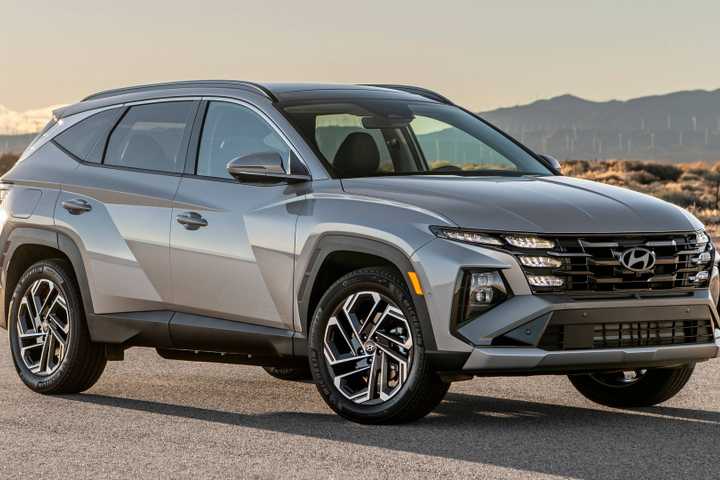
2026 Hyundai Tucson Hybrid front 3/4 shotHyundai
The Hyundai Tucson is the best-selling Hyundai vehicle in the U.S. In 2025, 234,240 models were sold in America, and that number is expected to continue to increase with the 2026 model. The Tucson can be had with a traditional gas engine, a hybrid powertrain, or a plug-in hybrid system. This gives shoppers several desired options across the Tucson lineup.
The 2026 version is largely a carryover from 2025, which received a substantial refresh. Changes to the 2026 model year include renaming some trims, dropping the Hybrid N Line model, increasing gas-model towing to 2,750 pounds, and adding trailer braking. This already enticing and attractive SUV remains desirable, giving drivers what they have been searching for.
Premium Features Without Premium-SUV Pricing
Shot of 2026 Hyundai Tucson Hybrid seatsHyundai
Across the Hyundai Tucson trims, you’ll find a wide price range. The base, gas-powered SE model starts at $29,450, while the top-trim plug-in hybrid Limited model costs $48,550. As expected, the hybrid and plug-in hybrid models cost a little more than the gas-only version, but that’s pretty consistent throughout the automotive market.
The Tucson can be had with a variety of premium features without entering premium or luxury pricing levels. Some of these features include two 12.3-inch screens in a panoramic display, standard wireless connectivity across every trim, heated front seats, a hands-free smart liftgate, leather upholstery, a Surround View Monitor, a Blind-Spot View Monitor, and Remote Smart Parking Assist. The Tucson offers a comfortable ride and ample room for four adults across two rows, with 38.7 cubic feet of cargo space behind the rear seats that expands to 74.8 cubic feet when the seats are folded.
Why Buyers Keep Choosing The Tucson Over The Competition
Strong Warranty Value And A Wide Range Of Trims
Front 3/4 shot of 2026 Hyundai Tucson HybridHyundai
The Tucson isn’t automatically the most affordable vehicle in its class, but it undercuts the Honda CR-V, which starts at $30,920. It also comes close to the starting price of the Toyota RAV4, which has a hybrid-only lineup and begins at $31,900. The base Tucson Hybrid SE starts at $30,950.
The Hyundai Tucson is offered in six gas-only trims, four traditional hybrid trims, and two plug-in hybrid models. This should give nearly every shopper plenty of choices. The SEL and Limited names appear for all three powertrains.
2026 Hyundai Tucson Hybrid door sillHyundai
One of the greatest values of the 2026 Hyundai Tucson is the warranty advantage offered. That peace of mind could be worth a few more dollars to some drivers since Hyundai covers the Tucson with a five-year/60,000-mile bumper-to-bumper warranty, a ten-year/100,000-mile powertrain warranty, and a ten-year/100,000-mile hybrid battery and hybrid-system component warranty. Only Toyota has a better hybrid battery warranty, which extends to 150,000 miles.
The Tucson Hybrid Can Save Money—But The Numbers Need Context
Rear 3/4 shot of 2026 Hyundai Tucson Hybrid driving on roadHyundai
Hybrid vehicles are more expensive to purchase, but the benefits should arise in the fuel savings over time. Starting with the SE hybrid, which has an MSRP of $30,950, the average annual fuel costs are $1,600. Compared with the gas-only FWD SE model, the fuel costs are $2,200 annually. The $600-per-year difference would take five years to offset the higher MSRP, but after five years, the regular hybrid saves money.
Putting the MSRP figures aside, the plug-in hybrid model offers 32 miles of electric-only driving and returns 35 mpg combined with the gas engine. This could be the right Tucson for a driver with a relatively short commute or for running errands. The Blue models deliver 38 city/38 highway mpg, while higher trims of the traditional hybrid lineup offer 36 city/37 highway mpg. If you choose to stick with the gas-only FWD Tucson, you’ll experience 25 city/33 highway mpg, while AWD versions deliver 24 city/30 highway mpg.
Hyundai Didn’t Build A Perfect SUV—Just A More Complete One
Strong Safety Results Are Complicated By Three Software-Related Recalls
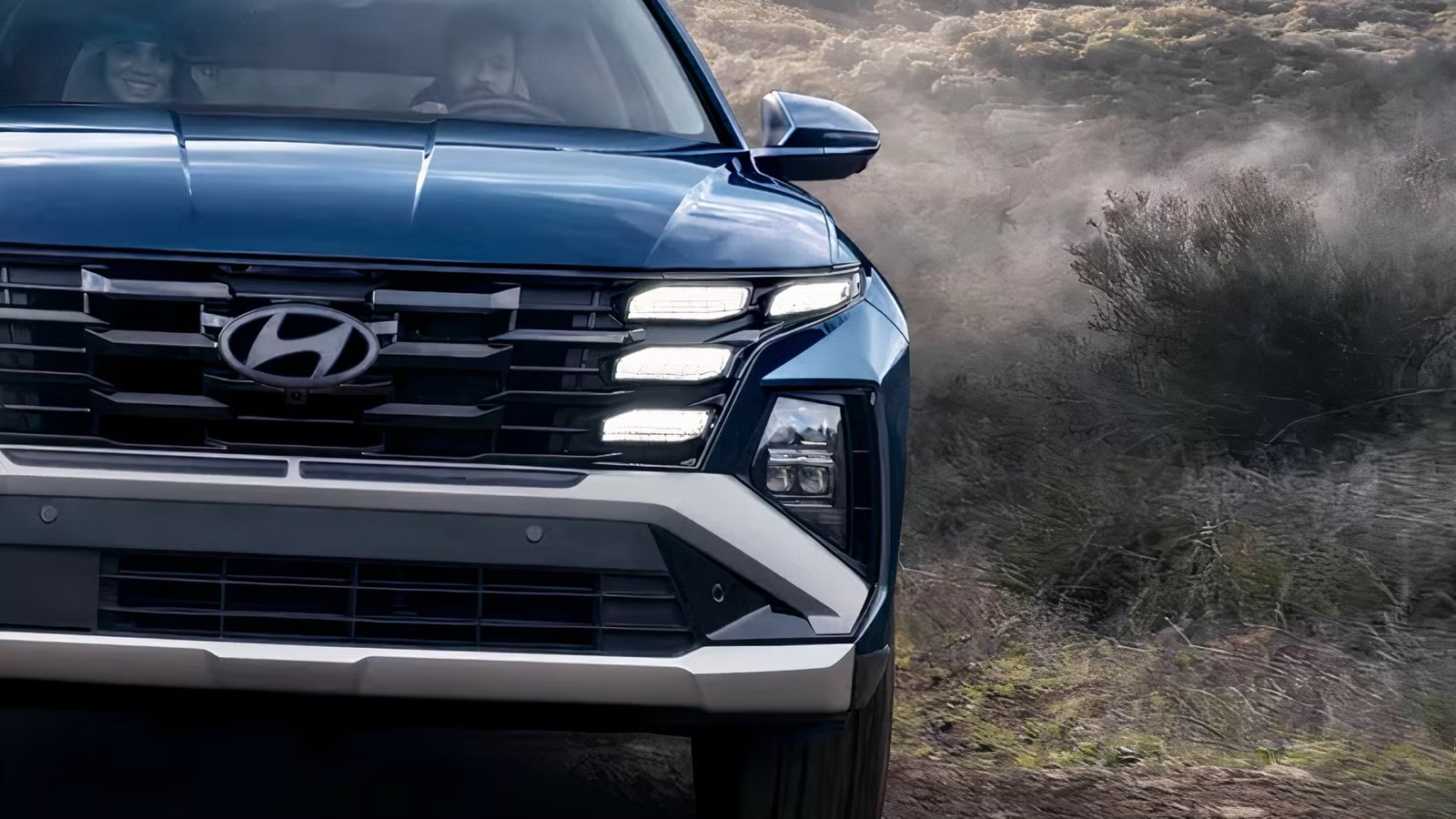
Front 3/4 action shot of 2026 Hyundai Tucson HybridHyundai
The 2026 Hyundai Tucson earned an IIHS Top Safety Pick+ award, which puts it among the safest vehicles you can choose. It received “Good” ratings in crash tests and for its crash-prevention software. The only concern is the “Poor” rating for the updated whiplash-prevention test.
Despite being the latest model year, there are three recalls to be aware of for the Tucson. The first affects the instrument-cluster PMIC software. An electrical noise within the PMIC can cause the instrument display to reboot and temporarily go blank. The second recall involves unexpected forward-collision-avoidance braking caused by overly sensitive camera software that can trigger sudden braking. This is the most serious of the three recalls, with four reported rear-end crashes and injuries caused by this issue. The third recall involves the instrument cluster software, which may cause the instrument cluster to reboot when a communication fault occurs with the head-up display. Hyundai has issued notices for all three recalls and has remedies available for affected vehicles.
Rivals Still Beat The Tucson In Several Important Areas
Side shot of 2026 Hyundai Tucson Hybrid front cabinHyundai
The Tucson is a successful SUV for the brand because of its balanced nature. In common parlance, it is a “jack of all trades, master of none.” It’s not the most efficient hybrid SUV, especially considering the Honda CR-V Hybrid reaches 40 mpg combined in FWD models and 37 mpg combined in AWD versions. The hybrid-only RAV4 also exceeds the Tucson Hybrid’s fuel economy numbers, offering 43 mpg combined in FWD models and 42 mpg combined for AWD models.
Car and Driver describes the Tucson as roomy and refined but wishes it were a bit more entertaining to drive. For those looking for driver engagement, the Mazda CX-50 remains one of the top choices in the class and is certainly much more entertaining than the Tucson.
Should The 2026 Hyundai Tucson Be Your Next SUV?
The Buyers Who Will Get The Most From It
2026 Hyundai Tucson Hybrid low front action shotHyundai
The 2026 Hyundai Tucson makes the most sense for growing families, daily commuters, first-time SUV buyers, and anyone downsizing from a larger vehicle. Families will appreciate its roomy rear seat, generous cargo capacity, and strong safety credentials, while commuters can benefit from the Hybrid’s 38-mpg rating and added power. First-time buyers gain modern technology, easy drivability, and the reassurance of Hyundai’s lengthy warranty. Empty nesters and downsizers should also find its comfortable ride, manageable size, and available premium features appealing. Buyers seeking maximum efficiency, sharper handling, or a third row, however, may be better served elsewhere.
Final Verdict—Why The Tucson Has Become Hyundai’s Biggest Success Story
The 2026 Hyundai Tucson didn’t become Hyundai’s biggest success story by dominating every category. Instead, it earned that distinction by consistently delivering the combination of comfort, technology, efficiency, safety, and everyday practicality that today’s buyers value most. While competitors still hold advantages in areas like driving dynamics or outright fuel economy, few compact SUVs offer such a well-rounded ownership experience across such a broad range of buyers. That balance is what transformed the Tucson from a solid contender into the vehicle that now defines Hyundai’s success in one of the industry’s most competitive segments.
Base Trim Engine
2.5L Smartstream I4 ICE
Base Trim Transmission
8-speed automatic
Base Trim Drivetrain
Front-Wheel Drive
Base Trim Horsepower
187 HP @6100 RPM
Base Trim Torque
178 lb.-ft. @ 4000 RPM
Base Trim Fuel Economy (city/highway/combined)
25/33/28 MPG
Make
Hyundai
Model
Tucson
Segment
Compact SUV
Sources: Hyundai, Edmunds, Kelley Blue Book, Fueleconomy.gov, IIHS










No Comments