
Life after China: Can the US save Europe’s luxury car makers?
As Chinese gold rush ends, JLR, Audi, Volvo et al go after wealthy Americans with massive SUVs and local factories

The streets of America are paved with gold, according to the traditional émigré’s wishful thinking.
Europe’s premium car makers have done pretty well to fill those streets with their products, but the US market has now taken on a greater significance as their extended gold rush in China looks to be ending.
Audi announced in October that it would spend $4 billion (£3bn) on building a new plant in Georgia, with production of SUVs slated to start in the early 2030s, belatedly following its German rivals BMW and Mercedes-Benz.

Meanwhile Britain’s JLR is expanding sales in the US with the promise that this market will eventually match the size of its entire global business today.
JLR has already lit a fire under its ambitions, with a 52% increase in wholesales (sales to dealers) in the US and Canada across the three months ending September.
Led by sales of Range Rover and Defender models, North America now accounts for a third of all JLR sales, while its once-large market of China is down at just 7% after sales collapsed by 46% in the quarter.
Mercedes too is growing in the US, promising to invest $7bn in its American operations, including $4bn into its SUV-focused plant in Alabama.
Mercedes so far has mainly focused on larger models for US production but recently announced that it will also build the smaller GLC there.
Sweden’s Volvo has also said that it will start building its GLC rival, the XC60, at its plant in South Carolina.
The push to localise in the US is partly to avoid tariffs slapped on imports by president Donald Trump in 2025, which add 15% to the cost of EU-built cars and 10% to the cost of UK-built cars.
But the bigger reason is that the US is a safe haven full of wealthy car buyers who genuinely appreciate European luxury and are prepared to pay for it.
They are becoming crucial to premium car makers after this year’s mass abandonment by Chinese buyers, who turned out to care very little about the heritage behind the propeller, three-pointed star or four rings when presented with objectively better electrified models from home-grown brands.
“The US is one of the most profitable markets and the most promising markets,” Arno Antlitz, CFO of Audi parent company the Volkswagen Group, told investors on its third-quarter earnings call.
In addition to localising production, premium car makers are developing models specifically targeted at US customers and their love of massive SUVs.
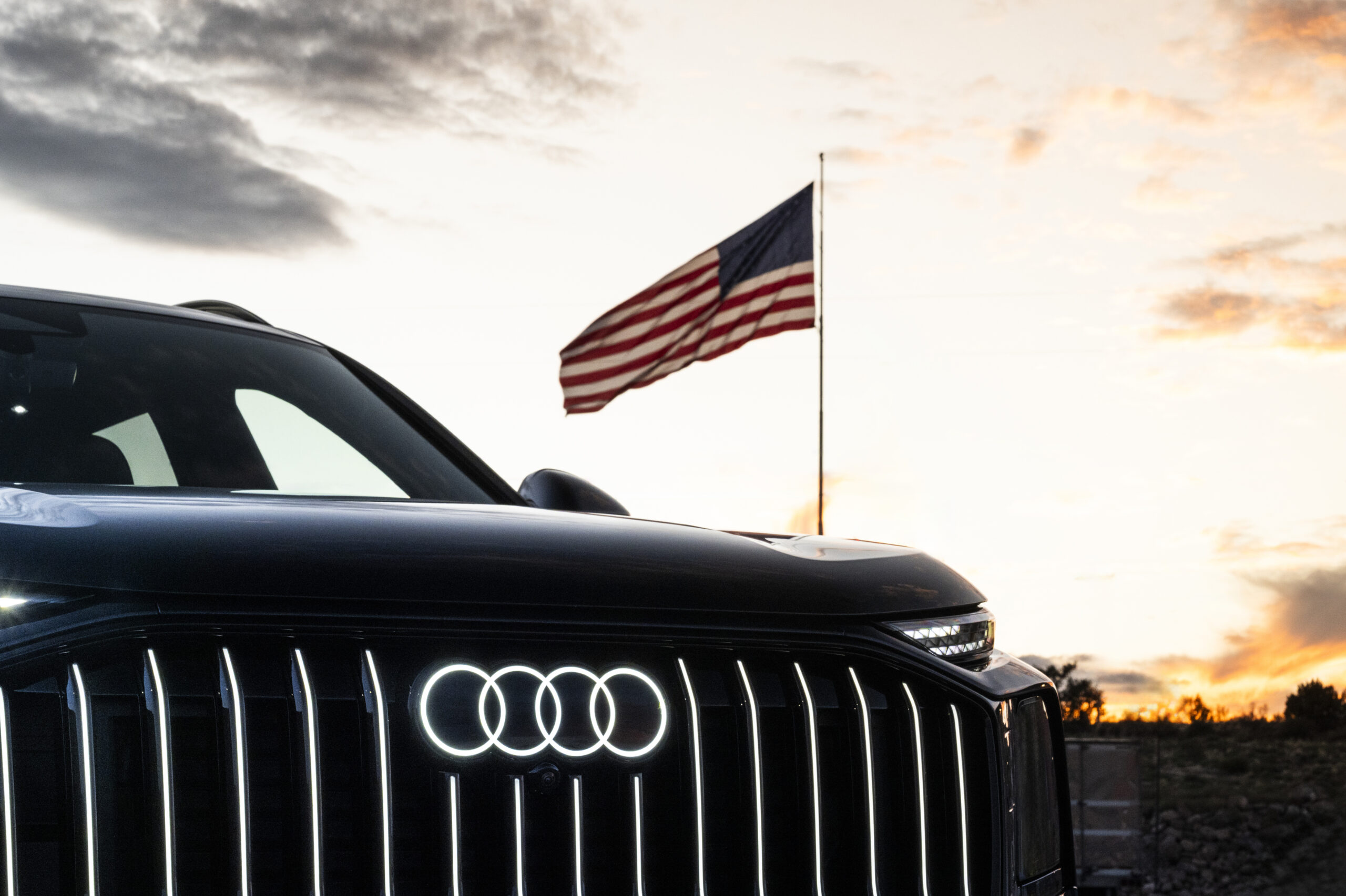
Audi will start sales next year of its 5.3m-long Q9, which will look to pick off Range Rover, Mercedes GLS and BMW X7 buyers.
BMW is going one step higher with a new model above the X7 “tailor-made for the US market”, CEO Milan Nedeljković said on the company’s third-quarter earnings call.
Porsche and Volvo are also planning range-topping SUVs, with the latter’s CEO, Håkan Samuelsson, saying: “Our cars should not look small when they park beside a Range Rover [in the US].”
JLR is planning a new US-built Defender model developed with Stellantis, reported to be a pick-up and expected to hit a more retro note than the existing SUV.
These behemoths could have also worked in China, given that market’s headlong rush to buy 5m-plus SUVs, but that looks increasingly unlikely, given the collapse in demand for European premium models there this year.
Sales in Europe won’t be nothing for these halo models, but mainly they’re designed to grab the attention of Americans and tempt them out of their Cadillac Escalades.
“A one-size-fits-all [approach] will not work in the future; we need much more regional approach,” said Samuelsson on Volvo’s third-quarter earnings call.
The US is a rich seam of gold for car makers that get it right. For example, the average selling price of Mercedes cars in the North America in the first nine months this year stood at €64,323, which was 58% higher than it achieved in Asia.
In his pitch to investors earlier this year, JLR CEO PB Balaji told them that the US was already the most profitable market for the company.
JLR plans to “pivot its entire organisation towards the US”, revealed Balaji, explaining that buyers were only going to get richer.
“The sheer number of millionaires and billionaires, the sheer amount of wealth transfer [inheritances] that’s going happen in the next few years, the pedigree of our brands, the [low] level of delivery in that market over the last few years – everything gives us the right to win in the US,” he said.
The market also offers protection against increasingly confident Chinese premium brands, which have been have been effectively banned through tariffs and other barriers.
But the car makers shouldn’t expect to smoothly pivot from China to the US.
“You can’t just take these volumes and just move them into North America as a release-valve market,” said Patrick Hummel, autos analyst for investment bank UBS. “There is not that much growth.”
While JLR, Mercedes and BMW posted increases this year in the US, Audi, Volvo and Porsche sales in the country were all down in the nine months to the end of September.
“The US is very challenging. It has proven to be a difficult market to find profitability in,” said Samuelsson. “The consumer sentiment in the US right now is at a 50-year low. And on top of that you have tariffs. On top of that you also have changes in regulations and electrification.”
Volvo was perhaps hit hardest by Trump’s decision to roll back electrification targets and slash EV purchase incentives. The company wrote off the equivalent of £84m in the third quarter because it would no longer receive credits paid by rival companies that weren’t as far along the electrification journey as it was.
Trump’s sudden U-turn on electrification has hurt all European car makers selling in the US, widening the gulf between model strategies there and in their core European market.
Volvo, for example, is well on the path to going fully electric in Europe but has to develop plug-in hybrid and even ‘self-charging’ hybrid drivetrains for the US market.
“The US is electrifying slower than the rest of the world, so we need to have a new car that is also flexible,” said Samuelsson.
The huge swing towards Democrats in the mid-term elections further complicates future planning for the premium car makers, given the party could reverse the Republicans’ anti-EV stance.
The likes of Volvo, BMW and JLR are realising that electrification could present them with a chance to grow sales in the US by being more canny in terms of regional targeting, especially given their Europe-honed advantage over the few home-grown premium incumbents, like General Motors’ Cadillac.
Volvo, for example, has split its US organisation into four regions, said Samuelsson: “For example, [we have a] boost plan around California which is actually quite highly electrified and fits very well to our electrification strategy.”
JLR too is confident its new EV products such as the Range Rover, Range Rover GT and Jaguar Type 01 can help it grow its American share by unlocking new markets.
“In Los Angeles you’ll find a lot of our products, but just go a little bit up north into San Francisco and you will not find us; we are not there in Seattle,” said Balaji. “The reason they don’t want us is that there’s no electric vehicles.”
However, the idea that American growth can balance sales lost in China is fanciful, especially given that everyone will be chasing the same limited pool of customers.
“It has been a nice couple of decades, where the growth in China has basically allowed you to grow everything from the R&D department to other nice-to-have things,” said Hummel.
“Now is the crunch time where you just have to right-size the entire organisation, including the overheads in Germany, to [cope with] the new realities. You can’t rely on the US market to really offset that weakness in China.”

Related posts




Latest Post


No Comments