
55 autotech
- Model
-
Cayenne
- Starting Price (MSRP)
-
$79,200-$95,700
- Engine/Motor
-
3.0-liter turbo V6, 4.0-liter twin-turbo V8
- Horsepower
-
348-468 HP @ 5,400-6,400

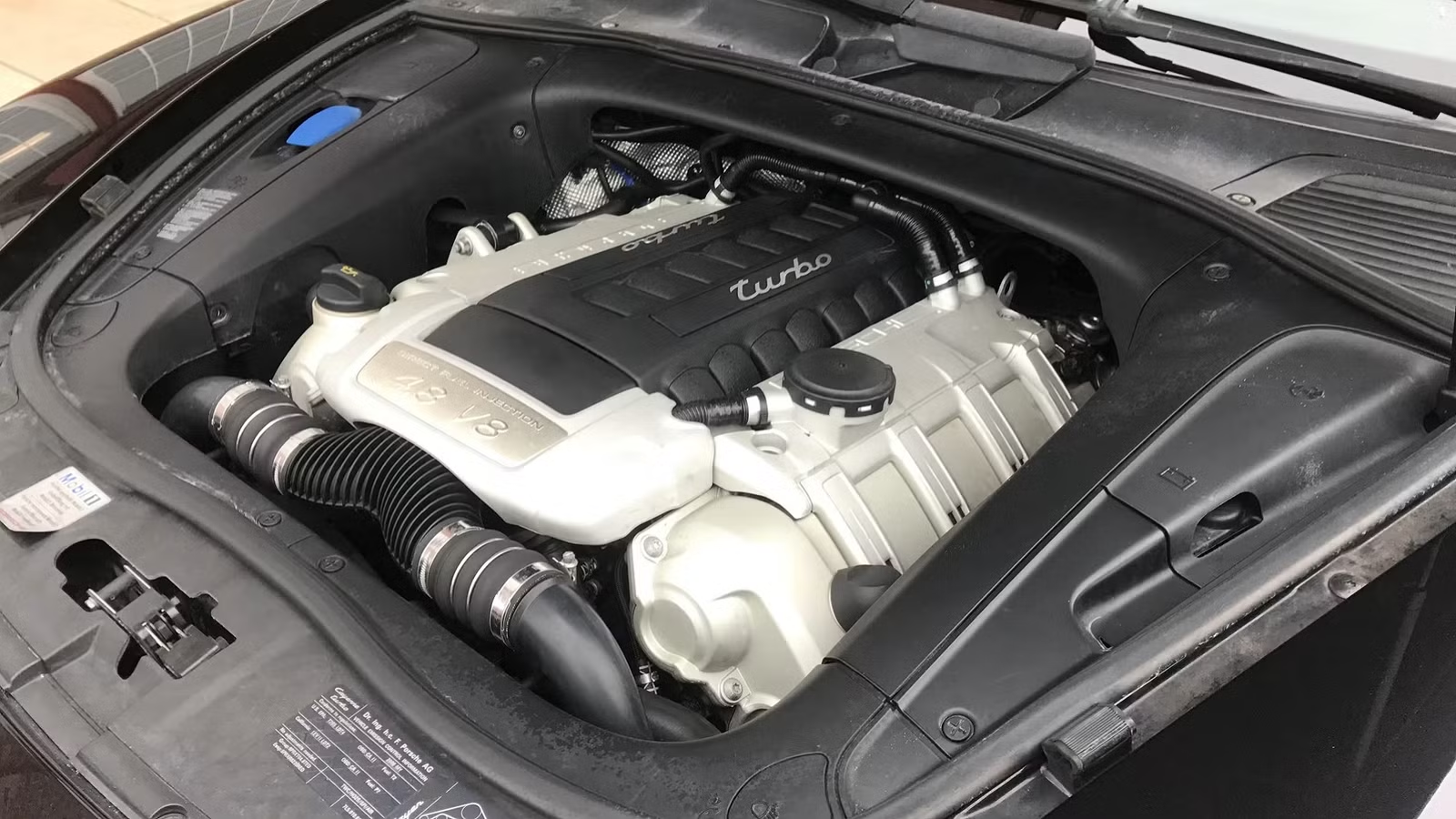
Twin-turbo engines occupy a fascinating corner of automotive engineering — celebrated for the performance they unlock, yet quietly feared for what happens when the miles start stacking up. Automakers use them to squeeze more power out of smaller engines, giving cars quicker acceleration and higher top speeds. But they come with a catch: heat, pressure, and complexity. These engines tend to wear out faster than their naturally aspirated siblings. Once the miles add up, turbos often fail, seals crack, and repairs get expensive. That’s why most twin-turbo vehicles never make it past 200,000 miles.

Yet every so often, a car defies the script entirely. Some machines beat the odds through a mix of solid engineering, careful maintenance, and perhaps a little luck, racking up mileage far beyond what anyone would expect. We’ve tracked down one of those rare survivors — a twin-turbo V8 SUV that has logged over 230,000 miles and still runs strong. What makes it truly remarkable is that it has done so without an engine rebuild and on its original turbos.
The car is a 2004 Porsche Cayenne Turbo, a vehicle not typically known for going the distance. It was Porsche’s first SUV and also its first turbocharged V8 road car. At launch, it was praised for its balance of luxury and performance but criticized for complexity, weight, and long-term maintenance costs.
Cayenne
$79,200-$95,700
3.0-liter turbo V6, 4.0-liter twin-turbo V8
348-468 HP @ 5,400-6,400
This specific Cayenne Turbo was found through online enthusiast forums (Mileage Impossible group on Facebook), where owners regularly share photos, mileage updates, and service logs. One user posted a photo of their odometer reading over 230,000 miles — still running on the original engine and twin turbos. Even more surprising? No major engine rebuilds. Just consistent, disciplined care.
The owner, based in the U.S., outlined a history of regular oil changes, cooling system overhauls, and a proactive approach to repairs. Coolant pipes were upgraded to aluminum. Suspension components were replaced as needed. Transmission fluid was changed more frequently than Porsche recommends. It wasn’t a miracle car — it was a well-maintained workhorse.
Stories like this reshape how enthusiasts view the Cayenne Turbo. Once written off as a high-maintenance luxury SUV, it’s proving itself a durable performer when given proper attention. Even the Tiptronic transmission held up remarkably well.

|
Engine |
4.5-liter twin-turbo V8 |
|
Power |
450 hp |
|
Torque |
457 lb/ft |
|
0-60 mph |
5.2 seconds |
|
Top speed |
165 mph |
Source: Porsche
Under the hood, the 2004 Cayenne Turbo packs a 4.5-liter twin-turbocharged V8 engine producing 450 horsepower and 457 lb-ft of torque — serious performance by any era’s standards. The engine is all-aluminum, with DOHC architecture and variable valve timing, helping it maintain torque throughout the rev range.
That power feeds through a 6-speed Tiptronic automatic transmission, which allows both full auto mode and manual gear selection. Drive goes to all four wheels via a permanent all-wheel-drive system featuring a center-locking differential and a low-range gearbox — a genuine rarity in the performance SUV segment.
Another standout feature is the air suspension system, which lets drivers raise or lower the vehicle based on road conditions. It also offers adjustable firmness, striking a balance between ride comfort and handling. In its firmest setting, the Cayenne handles more like a performance wagon than an SUV. In its softest mode, it glides over rough pavement with ease.
Braking comes from six-piston calipers up front and four-piston units at the rear, with large ventilated discs at all four corners. Combined with a curb weight of nearly 5,000 pounds, the setup delivers secure, confidence-inspiring stops. Steering is hydraulic, providing a relatively direct and communicative feel.

While this Cayenne is an outlier, understanding how the average 2004 model performs over time adds important context to its story. Here’s what data from RepairPal, Carsurvey, and other owner-driven platforms reveal:
Still, some owners have had better experiences. On Carsurvey.org, owners report a mixed bag. Some love the car’s performance, calling it the best SUV they’ve ever driven. Others warn about air suspension leaks, driveshaft failures, and electrical quirks. About 60% say they would buy the same vehicle again — a respectable figure for a two-decade-old twin-turbo V8 SUV.
Common weak points include the plastic coolant pipes, which should be replaced with aluminum versions, and the cardan shaft bearing, which often fails around 100,000 miles. Once these areas are addressed, however, many owners report few ongoing problems.

Porsche’s first SUV is no longer the pricey exotic it once was. Thanks to depreciation and aging luxury components, the first-gen Cayenne — especially the Turbo — is now an accessible entry point into Porsche performance. Prices vary widely based on condition and service history.
Other trims, such as the base V6 or the S model (which uses a naturally aspirated V8), tend to be cheaper. Running V6 models can be found for as little as $4,000, though they don’t offer the same driving experience or enthusiast appeal as the Turbo.
Mileage matters — but service history matters more. A Cayenne Turbo with 180,000 miles and full records can be a better buy than a 90,000-mile example with deferred maintenance. Key things to check before buying include:
In the broader market, earlier base models with the naturally aspirated V6 are available for as little as $4,000–$6,000, but they don’t offer the same performance or desirability as the Turbo trim. Meanwhile, first-gen Cayenne Turbos with under 100,000 miles and a clean history are becoming harder to find, and enthusiasts are beginning to recognize their value. As modern SUVs grow ever more digital and software-dependent, the raw, analog character of the early Cayenne is attracting a new wave of collectors and DIY mechanics.
|
Condition rating |
Price |
|
Fair |
$7,000 |
|
Good |
$10,000 |
|
Excellent |
$13,000 |
|
Concours |
$16,000 |
Source: Hagerty
Those interested in buying a high-mileage example — like the one featured here — should focus on vehicles with documented service history. Common trouble spots such as coolant pipes, driveshaft support bearings, and air suspension components can quickly turn a bargain into a money pit. Still, if properly maintained, a first-gen Cayenne Turbo can deliver a genuinely engaging and dependable experience well past 200,000 miles.
Source: Porsche, RepairPal, CarSurvey.






No Comments