
Honda’s Next-Gen Hybrids Are Getting E-AWD, And Toyota Might Want To Take Notice
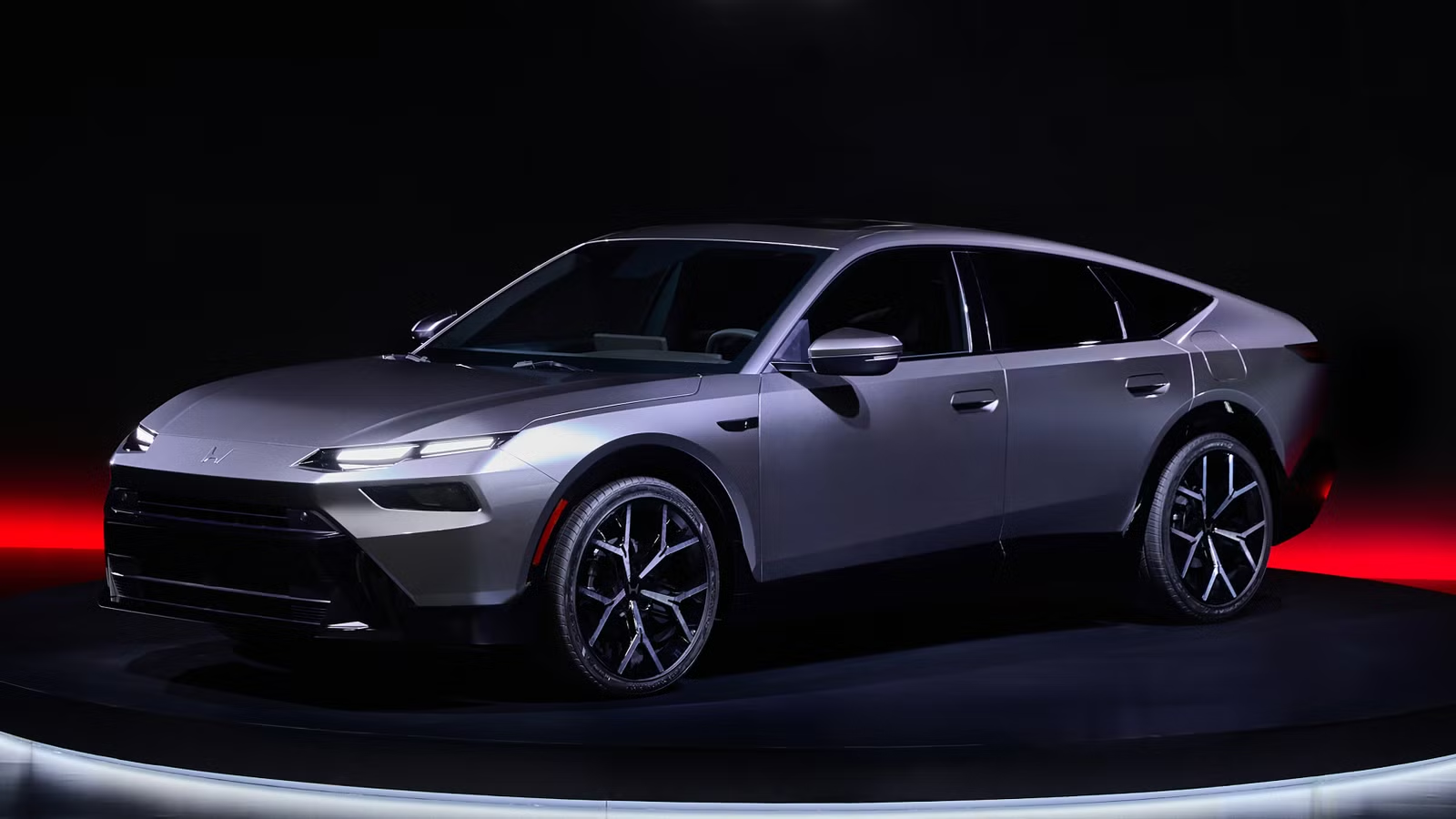
Honda has officially named its next-generation hybrid system “Honda Hybrid,” and the headline feature is one Toyota buyers have taken for granted for years: electric all-wheel drive. Honda confirmed the system will roll out across roughly 15 models globally by the end of March 2030, with most of them landing in North America. The timing matters because Toyota’s hybrid AWD setup, which uses a rear electric motor to send power to the back wheels without a mechanical driveshaft, has quietly been one of the compact crossover segment’s biggest selling points.

Now Honda is building the same basic idea into its own hybrid lineup. The new e-AWD system pairs a rear electric motor that runs independently of the front engine and transmission, improving traction in snow and rain while cutting the mechanical losses that come with a traditional AWD driveshaft. For anyone cross-shopping a hybrid CR-V or Civic against a RAV4 or Camry, this is the clearest signal yet that Honda wants hybrid AWD parity with Toyota, not just competitive fuel economy numbers.
How Honda’s E-AWD System Actually Works
Honda hasn’t released hard numbers on motor output or how the system decides when to send power rearward, but the basic layout follows a pattern other automakers already use: a rear electric motor that isn’t physically connected to the front engine and gearbox. Volvo’s plug-in hybrids work this way, and it lets them drive on electric power alone without routing that energy through a mechanical driveshaft.

Honda’s version is built around a much smaller battery than a plug-in hybrid, so don’t expect meaningful electric-only range. The point isn’t silent commuting, it’s smoother power delivery and better grip when the front tires start to slip. Honda has paired this with a new platform the company says is lighter and stiffer than its current hybrid architecture, plus a Motion Management System handling the integration between the gas engine, electric motors, and the AWD hardware.
Which Models Are Getting It, And When

Honda says the rollout starts in 2027, with 15 Honda Hybrid models launching globally by the fiscal year ending March 2030, and most of those earmarked for North America, Japan, and India. The Civic and CR-V are the strongest candidates, since Honda has already shown a next-generation Civic Hybrid prototype running a new 2.0-liter engine paired with two electric motors. The Accord is widely expected to follow given how central it is to Honda’s U.S. hybrid sales.
Honda has also discussed a V-6 hybrid setup for larger vehicles, adding a third electric motor on the rear axle specifically for AWD variants. That points toward three-row models like the Pilot, Passport, and Ridgeline eventually getting the same treatment, alongside Acura’s MDX and a new RDX Hybrid. On full-size SUVs, Honda claims the new system delivers 30% better fuel efficiency compared to its current non-hybrid models, a number the company has repeated since first teasing this platform last year.
Why This Puts Pressure On Toyota
Toyota’s hybrid AWD system has been a quiet advantage in the RAV4 and CR-V-class segment for years. It’s one of the reasons Toyota hybrids tend to hold their value and win repeat buyers: all-weather confidence without the fuel economy penalty of a traditional gas AWD system. Honda closing that gap doesn’t flip the competitive balance overnight, since Toyota still has a head start in deployment and real-world reliability data, but it does remove one of the clearer reasons to pick a RAV4 Hybrid over a CR-V Hybrid.
The move also comes against the backdrop of Honda’s retreat from electric vehicles. The automaker posted its first annual loss in May after writing down roughly $9 billion tied to its canceled 0 Series EV program, and it’s ending Prologue sales after the 2026 model year. Honda Hybrid is effectively the company’s reinvestment plan, and e-AWD is the feature meant to make that reinvestment competitive rather than merely adequate.

Related posts




Latest Post


No Comments