The Japanese Hybrid SUV That Barely Needs Refueling
10 minutes reading
Monday, 7 Sep 2026 23:30 0 31 autotech
In an era marked by fluctuating fuel prices, shifting environmental mandates, and unprecedented automotive technological transformation, the average commuter faces a profound dilemma at the dealership. For decades, the suburban family vehicle was defined by full-sized, multi-row gas-guzzlers that prioritized footprint and horsepower over thermal efficiency. Today, however, drivers are demanding an uncompromising compromise: a spacious, all-weather vehicle that offers high seating, cargo flexibility, and modern safety technology without requiring weekly trips to the filling station or long, uncertain pauses at public charging plazas.
Enter the modern Japanese hybrid crossover—a segment engineered not merely to meet tightening fuel economy regulations, but to completely redefine consumer expectations of long-distance mobility. Standing at the apex of this market evolution is the Toyota RAV4 Hybrid, a vehicle that has quietly evolved from an experimental niche variant into one of the best-selling crossovers on the planet. By pairing a robust naturally aspirated gasoline engine with sophisticated electric motor assistance, this Japanese engineering marvel delivers full-size utility alongside fuel consumption figures that were once reserved exclusively for compact hatchbacks.
Front 3/4 view of 2012 Honda CR-V in black parkedHonda
The crossover utility vehicle (CUV) landscape has undergone a radical transformation over the past two decades. What began as a lightweight alternative to body-on-frame SUVs has now completely eclipsed traditional sedans as the default choice for modern families. However, early iterations of the modern crossover struggled with a fundamental engineering trade-off: their taller profiles, heavier curb weights, and boxier aerodynamics resulted in significant fuel economy penalties compared to their low-slung sedan counterparts. Addressing this gap required a complete rethinking of vehicle propulsion, shifting automotive design from raw displacement to intelligent energy management.
How Commuters Outgrew The V8 SUV — And What They Demanded Instead
Front 3/4 shot of 2017 Chevrolet Tahoe in purple parked on grassChevrolet
For generations, suburban driveways were dominated by V6 and V8 body-on-frame SUVs that consumed fuel at alarmingly high rates. While these traditional vehicles provided unmatched towing capability and rugged off-road hardware, their daily operating expenses became increasingly difficult for drivers to justify. As urbanization accelerated and daily commute distances expanded, consumers began demanding vehicles with higher seating positions and command-of-the-road visibility, but without the crippling fuel bills. Early three-row and midsize crossovers offered temporary relief, yet many still struggled to achieve better than 20 miles per gallon in congested urban stop-and-go traffic.
This persistent inefficiency created a strong market pull for a new breed of family transport. Manufacturers quickly realized that simply downsizing engine displacement and adding turbochargers offered limited real-world gains, particularly in heavy traffic where idling and constant acceleration cycles waste enormous amounts of energy. The solution lay in fundamentally altering how power was delivered, setting the stage for electrified powertrains to step in and capture mainstream market share.
Why Hybrids Outshine Pure EVs For Long-Distance Drivers
Front 3/4 action shot of 2020 Acura MDX Sport Hybrid driving on roadAcura
While battery-electric vehicles (BEVs) have dominated recent headlines with promises of zero tailpipe emissions, self-contained hybrid powertrains continue to present a more practical, flexible solution for millions of everyday motorists. The current landscape of public charging infrastructure remains fragmented, plagued by non-functional hardware, congested charging hubs, and unpredictable fast-charging rates during extreme weather. For drivers who frequently travel across state lines or reside in regions with sparse charging networks, the range anxiety associated with electric vehicles remains a genuine operational barrier.
Hybrids eliminate this friction entirely by relying on existing gasoline distribution channels while capturing the core thermodynamic benefits of electrification. There is no requirement to install expensive Level 2 home charging units, no need to pre-plan cross-country routes around high-speed charging stations, and zero downtime spent waiting in charging queues. By combining high-efficiency internal combustion with self-charging regenerative braking, hybrids offer an ideal balance of low emissions, exceptional fuel economy, and total operational freedom.
Unveiling The Leader: The Toyota RAV4
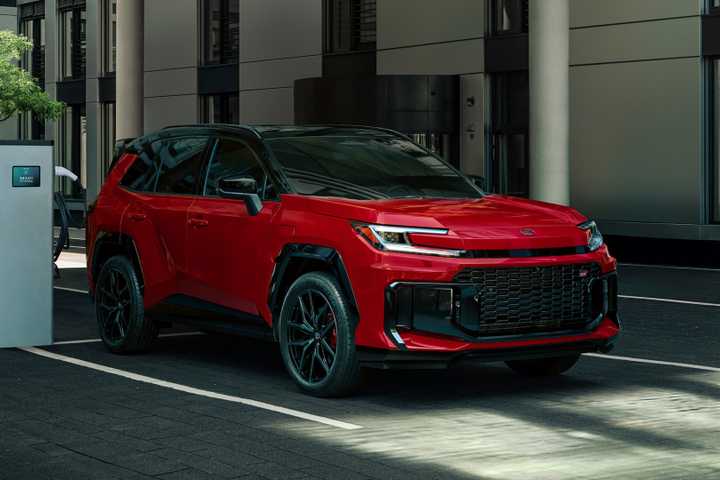
Static front 3/4 shot of 2026 Toyota RAV4 HybridToyota
While several automakers have introduced compelling hybrid offerings, Toyota has established a dominant position in the electrified crossover space. The Toyota RAV4 represents the culmination of nearly three decades of continuous refinement, taking high-efficiency technology out of eco-niche commuter cars and placing it directly into a rugged, highly practical family package. It is a vehicle designed specifically to eliminate traditional hybrid compromises, offering superior power, standard all-wheel drive, and impressive range without sacrificing interior space or utility.
Static shot of 2026 Toyota RAV4 Hybrid AWD engine bayToyota
At the mechanical heart of the RAV4 lies Toyota’s celebrated Hybrid Synergy Drive (HSD) system. The powertrain pairs a highly efficient 2.5-liter Dynamic Force naturally aspirated four-cylinder engine with electric motor-generators and an electronically controlled continuously variable transmission (eCVT). Operating on the Atkinson combustion cycle, the gasoline engine features an ultra-high compression ratio and advanced direct and port fuel injection, achieving a thermal efficiency rating of 41 percent, among the highest in production automobiles worldwide.
Rather than relying on traditional mechanical driveshafts to send power to the rear wheels, the RAV4 utilizes an intelligent Electronic On-Demand All-Wheel Drive system (Electronic AWD). A dedicated, independent electric motor is mounted directly to the rear axle, instantly delivering torque to the rear wheels when sensors detect front-wheel slippage or heavy acceleration. This setup eliminates heavy mechanical driveshafts, reduces internal friction losses, and provides seamless all-weather traction while optimizing overall system efficiency.
Breaking Down The Numbers: 40+ MPG And 600+ Mile Range
Dynamic front 3/4 shot of 2026 Toyota RAV4 HybridToyota
The headline attraction of the RAV4 is its extraordinary efficiency metrics, anchored by official EPA ratings that set the benchmark for its vehicle class. In front-wheel drive configurations offered in select international markets, the powertrain easily achieves an EPA-estimated 47 mpg city and 40 mpg highway, yielding a combined rating of 43 mpg. For the standard North American trim equipped with Electronic AWD, the vehicle delivers an impressive EPA rating of 41 mpg city, 38 mpg highway, and 39 mpg combined. These figures demonstrate that adding all-weather traction imposes virtually no penalty on fuel consumption.
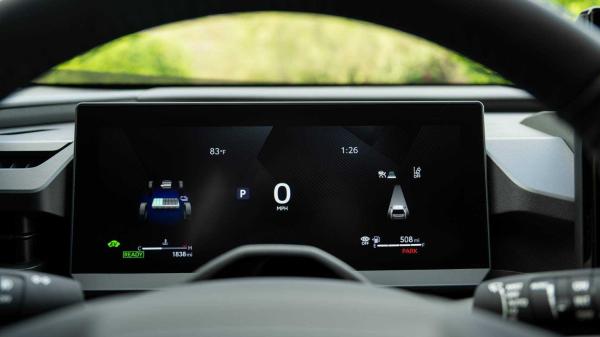
Equally impressive is the RAV4’s continuous cruising range, a feature that directly fulfills the promise of a crossover that rarely needs refueling. FWD models offer a range of 624 miles, while AWD variants offer 566.
How The RAV4 Hybrid Gets More Efficient The Worse Traffic Gets
Dynamic 3/4 shot of 2026 Toyota RAV4 Hybrid AWD drivingToyota
Paper specs and lab ratings mean little if a vehicle fails to deliver a practical, pleasant experience during daily life. The 2026 RAV4 excels precisely because its advanced engineering enhances, rather than hampers, its usability. From navigating tight city streets to hauling gear across mountain passes, the vehicle seamlessly integrates its high-tech powertrain into a package that feels natural, intuitive, and capable across all driving scenarios.
Urban Commuting Vs. Highway Cruising Performance
Front 3/4 action shot of 2026 Toyota RAV4 PHEV GR Sport driving on roadToyota
In dense urban environments, the RAV4 operates with quiet refinement. At low speeds, the system frequently operates in pure electric mode (EV mode), shutting off the gasoline engine entirely during coasting, light acceleration, and bumper-to-bumper traffic jams. Regenerative braking captures kinetic energy normally lost as heat during stopping, feeding it back into the compact battery pack. This creates an inverse efficiency dynamic: unlike conventional gas vehicles that waste fuel in traffic, the RAV4 delivers its highest fuel economy in city driving.
When merging onto fast-moving highways, the total combined system output of 226 horsepower (236 for AWD models) provides crisp, immediate acceleration. The instant torque provided by the electric motors fills in the lower RPM power band while the Atkinson-cycle gas engine builds revs, eliminating the sluggish lag common to small turbocharged crossovers. On extended open-road cruises, the vehicle settles into a quiet, effortless rhythm, maintaining high speeds with minimal engine effort and maximum stability.
Full Cargo Space Preserved: How Toyota Hid The Battery Without Compromise
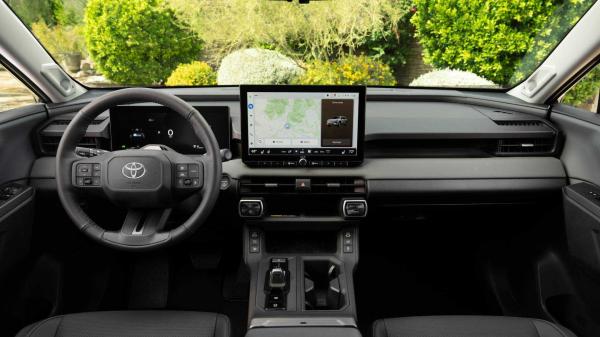
Interior of a 2026 Toyota RAV4 Hybrid LimitedToyota
Gauge cluster of a 2026 Toyota RAV4 Hybrid LimitedToyota
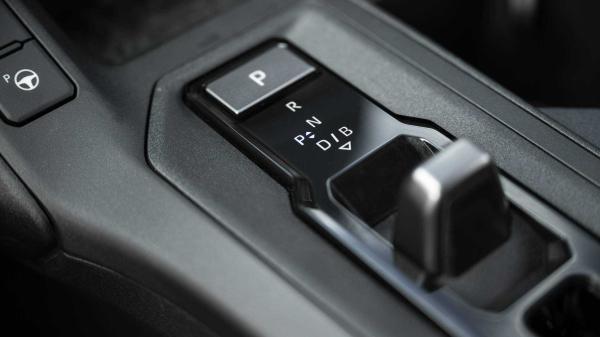
Electronic shifter of a 2026 Toyota RAV4 Hybrid LimitedToyota
A common drawback in early hybrid designs was the compromise of passenger and luggage capacity to make room for high-voltage battery packs. Toyota engineers addressed this issue by packaging the hybrid battery beneath the rear passenger seats rather than inside the main trunk floor. As a result, the RAV4 offers an uncompromised 37.8 cubic feet of cargo space behind the second row, expanding to a generous 70.4 cubic feet when the 60/40-split rear seats are stowed away.
Inside the cabin, occupants enjoy a clean, ergonomic interior featuring durable materials, high seating positions, and excellent outward visibility. Modern technological integrations include a high-resolution touchscreen infotainment system with wireless Apple CarPlay and Android Auto compatibility, available digital rear-view mirrors, and the comprehensive Toyota Safety Sense suite. This package delivers standard adaptive cruise control, lane-trace assist, and automated emergency braking, transforming long road trips into stress-free journeys.
Ownership Costs And Legendary Reliability
Static rear close up shot of 2026 Toyota RAV4 Hybrid AWD badgeToyota
Beyond performance and fuel efficiency, the financial aspect of vehicle ownership remains a crucial consideration for buyers. The RAV4 stands out not only for reducing fuel expenditures at the pump, but also for delivering exceptional long-term financial stability. Through smart mechanical design, durable electrical components, and strong market demand, Toyota has minimized the total cost of ownership over the vehicle’s complete operational lifecycle.
Brake Pads That Last Twice As Long — And A Battery Warranty Most Cars Can’t Match
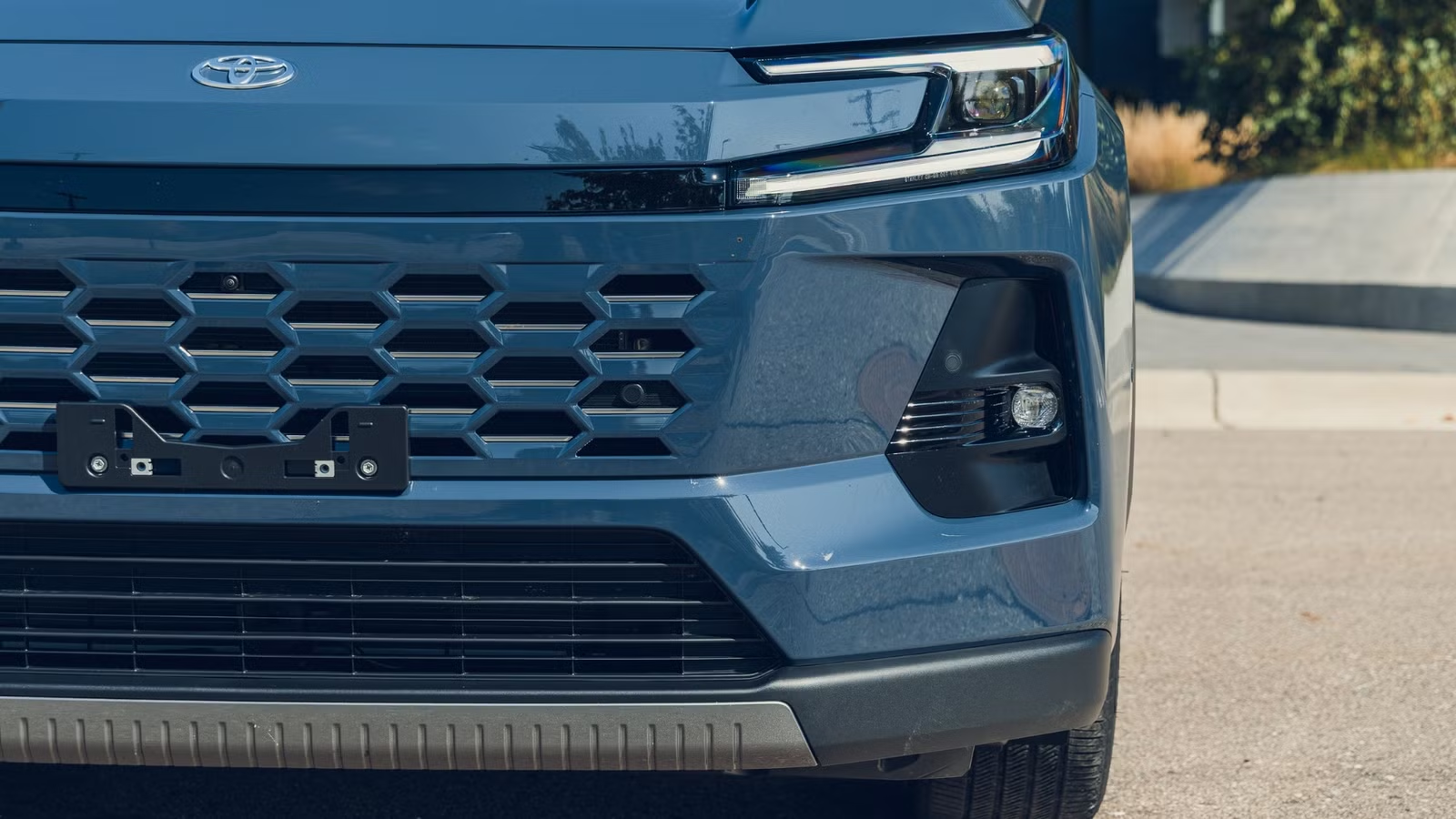
Front 3/4 view of a 2026 Toyota RAV4 Limited parkedIsaac Atienza | TopSpeed
Contrary to the myth that complex hybrid systems require costlier maintenance, the RAV4 is often cheaper to maintain over time than standard internal combustion vehicles. By leveraging electric motors for braking via regenerative deceleration, wear on conventional physical brake pads and rotors is drastically reduced, frequently doubling or tripling their operational lifespan. Additionally, the system lacks traditional high-wear mechanical components such as starter motors, alternators, and drive belts, reducing potential points of mechanical failure.
Toyota’s extensive history with hybrid technology has yielded exceptional component longevity. The hybrid battery pack and control modules are backed by a comprehensive 10-year/150,000-mile factory warranty, offering peace of mind to long-term owners. The engine operates under lower mechanical stress due to electric motor assistance, reducing thermal wear and internal stress over hundreds of thousands of operating miles.
Used RAV4 Hybrids Sell At A Premium — And That Gap Is Growing
Dynamic profile shot of 2026 Toyota RAV4 Hybrid AWD driving in the cityToyota
When it comes time to transition to a new vehicle, RAV4 owners benefit from some of the highest residual values in the automotive industry. Thanks to Toyota’s reputation for bulletproof reliability, paired with growing consumer demand for fuel-efficient crossovers, the RAV4 Hybrid retains its value exceptionally well compared to rival non-hybrid and pure electric alternatives.
This strong residual value significantly lowers the overall cost of ownership, making lease returns and trade-ins financially advantageous. In used car markets, pre-owned RAV4 Hybrids consistently command premium prices, selling quickly due to high consumer trust in Toyota’s hybrid hardware. This combination of minimal depreciation, low fuel bills, and reduced maintenance costs makes the RAV4 one of the smartest automotive investments available today.
Rear 3/4 view of a 2026 Toyota RAV4 LimitedIsaac Atienza | TopSpeed
The Toyota RAV4 proves that drivers no longer need to choose among real-world utility, long-distance freedom, and exceptional fuel economy. By combining a refined, thermally efficient powertrain with standard all-wheel drive, spacious interior packaging, and robust durability, it sets the standard for what a modern family crossover should be. For motorists seeking a versatile vehicle that delivers true 600+ mile cruising range while keeping fuel stops to an absolute minimum, Toyota’s benchmark hybrid crossover remains virtually unrivaled in today’s market.
Base Trim Engine
2.5L Inline 4 Hybrid
Base Trim Transmission
CVT
Base Trim Drivetrain
Front-Wheel Drive
Base Trim Horsepower
183 HP @6000 RPM
Base Trim Torque
163 lb.-ft. @ 3600 RPM
Make
Toyota
Model
RAV4
Segment
Compact SUV
Sources: Toyota, Edmunds, J.D. Power, MotorTrend, Car and Driver














No Comments