
Suzukis With Old-School Reliability In A Modern World
Modern motorcycles are increasingly complicated, with ride modes, touchscreen displays, electronic suspension, and complicated engine management systems becoming commonplace. With these sophisticated systems comes the need for sophisticated mechanical knowledge, and not every backyard mechanic is as tech-savvy or even interested in understanding these systems. We get it. There really is no getting away from the increasing electronics.

Reliability, however, comes with engineering. Suzuki, like other Japanese manufacturers, has built its reputation around reliability. So much so that a lot of its models still hold on to the old-school way of doing things. We’re talking about 10 such examples, ranging from simple dual-sports to high-performance sport bikes.
Suzuki DR-Z400S
Price: $ 7,199
Introduced in 2000, the DR-Z400S became one of Suzuki’s most recognizable dual-sport motorcycles. The appeal came from hardcore off-road capability but with road manners. For more than two decades, this formula has remained largely unchanged. The 398cc liquid-cooled parallel-twin still does duty on the DR-Z400S with the same carbureted fuel system. While this is super old-school and requires attention depending on altitude, storage, and maintenance, it is far easier to work on than a new fuel-injected system.

Suzuki DR650S
Price: $7,299

Suzuki has the DR650S for the ultra-reliable large-capacity dual-sport segment. With its roots going back to the 1990s, the current DR650 uses a 644cc air- and oil-cooled single cylinder, five-speed gearbox, and a carbureted fuel system. The engine isn’t particularly sophisticated, which makes the DR650S one of the easier bikes to work on. Suspension is conventional, and the lack of advanced electronics keeps the bike easy to understand and repair. On the other hand, the bulletproof reputation it has garnered over the decades suggests that this bike can go on global circumnavigation trips with minimal maintenance anyway.
Suzuki SV650
Price: $8,149

The SV650 has been a staple of Suzuki’s lineup since 1999, and its longevity is largely down to one particularly good engine. The 645cc 90-degree V-twin has powered several generations of this motorcycle and has developed a reputation for smooth performance, accessible power, and dependable operation. Now, the current model does get the benefits of fuel injection, ABS, and Suzuki’s Low RPM Assist system, but the company has made sure that the engineering that made the SV650 a beloved motorcycle hasn’t been discarded entirely.
Suzuki Boulevard C50
Price: $9,299

The Boulevard C50 is Suzuki’s cruiser offering based on the old Intruder series. What the Boulevard does right is that it keeps the traditional styling and relaxed riding character relevant, largely thanks to the 45-degree V-twin that beats at its heart. Of course, fuel injection has been added to modernize the engine, but its soul remains the same. One of the defining characteristics of the C50 is the shaft final drive. Thanks to this, owners don’t need to worry about chain lubrication and servicing every few thousand miles.
Suzuki V-Strom 650XT
Price: $9,799

The Suzuki V-Strom 650 has been around since 2004, becoming one of Suzuki’s most successful adventure-touring motorcycles. Its reputation rests heavily on the 645cc V-twin engine that it shares with the SV650, although Suzuki adapted it to deliver power more calmly. The same systems have been added to the V-Strom 650XT, such as Suzuki traction control, ABS, and Low RPM Assist, but like the SV650, this engine has a reputation for durability.
Suzuki GSX-S1000
Price: $10,798

The GSX-S1000 is one of those motorcycles that have been considerably modernized, but its roots lie in the company’s K5-generation GSX-R1000. That engine helped establish Suzuki’s reputation for producing powerful yet durable sport bike powerplants, and its street-focused adaptation gives the GSX-S1000 a useful combination of performance and everyday usability. The current model is powered by a 999cc liquid-cooled four-cylinder with ride-by-wire throttle, fuel injection, and a host of other electronics. This makes it considerably more sophisticated than the older GSX-R models, but the mechanical foundations remain familiar.
Suzuki GSX-R600
Price: $12,499

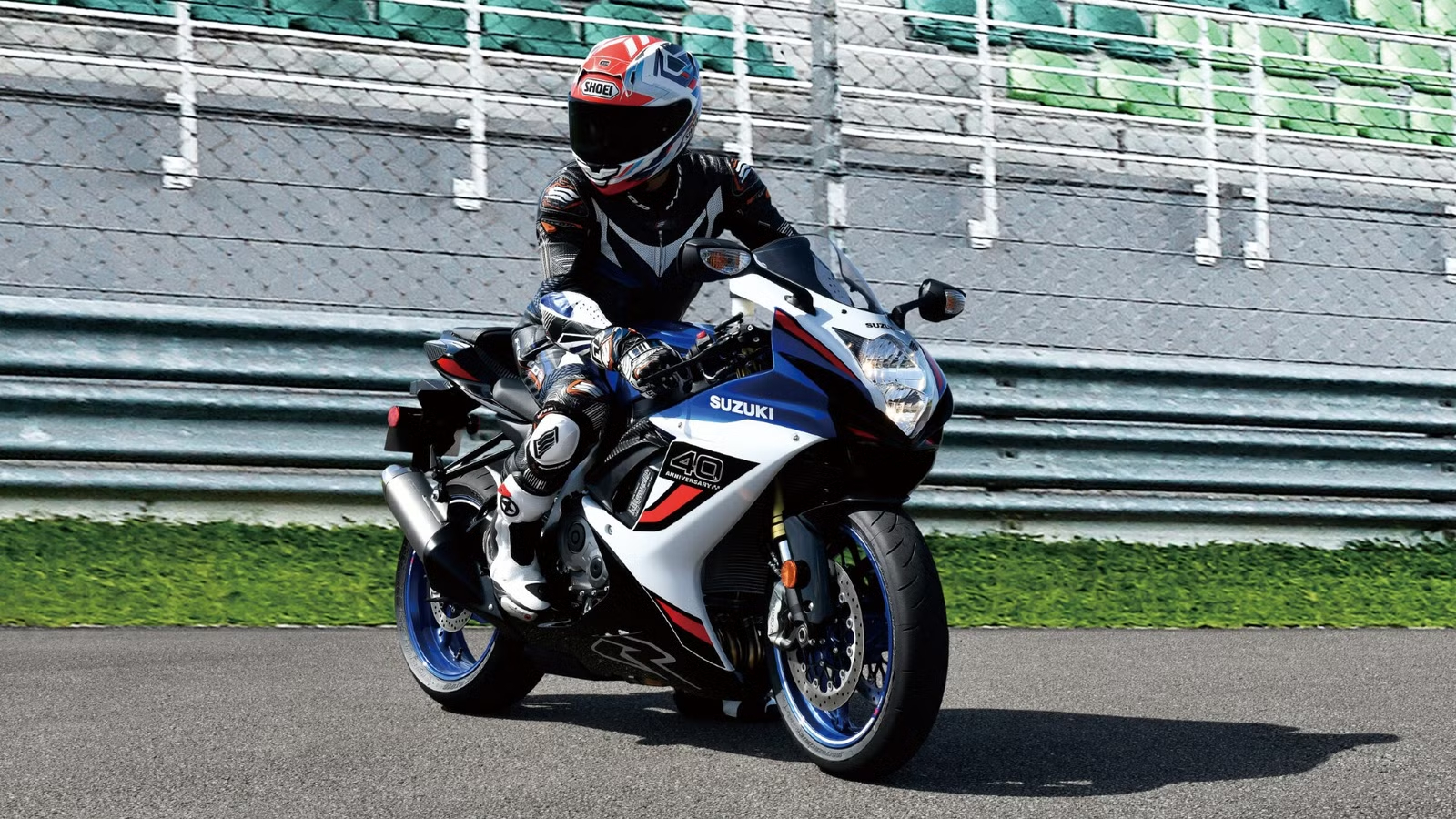
The Suzuki GSX-R600 brought the company’s racing experience into the fiercely competitive 600cc supersport category. The bike has been part of the Suzuki family since 1997, and the high-revving inline-four was built around a lightweight chassis designed to deliver precise handling. The current version uses a 599cc engine and a fairly sophisticated suspension package, with Brembo providing stopping power. Now, this is a high-performance sport bike, so unlike the others in this list, the R600 requires more frequent maintenance. However, the long-running architecture and established parts available make it a pretty straightforward bike to own.
Suzuki GSX-R750
Price: $13,549

Introduced in 1985, the GSX-R750 got an engine that offered considerably more performance than the conventional middleweight motorcycles. The current generation uses a 750cc liquid-cooled inline-four that offers strong high-rpm performance that’s combined with a balanced low- and midrange output. This makes it a slightly different machine than the R600 thanks to the stronger mid-range torque, letting you pass vehicles on the highway with ease. Like the R600, the R750 also requires regular maintenance, but the conventional mechanical engineering makes it particularly appealing for riders who like to tinker with their own motorcycles.
Suzuki V-Strom 1050
Price: $15,699

The V-Strom 1050 is a more sophisticated interpretation of Suzuki’s dependable ADV philosophy. Its history comes from the V-Strom 1000 launched in 2002, and the model gradually evolved into a more comfortable, capable, and technologically advanced motorcycle. Powering the V-Strom 1050 is a 1,037cc 90-degree V-twin engine that has been upgraded and refined since its 996cc days at launch. Unlike the 650 on this list, the V-Strom 1050 gets a host of electronics, including ride-by-wire throttle, SIRS, and, depending on the model, cruise control, traction control, ABS, and a bidirectional quickshifter.
Suzuki Hayabusa
Price: $19,699

Few other motorcycles have achieved the kind of cultural recognition that the Hayabusa has garnered. Introduced back in 1998, the flagship sport bike became famous for its extraordinary speed. While the original model helped establish the hyperbike category, the Hayabusa is not in its third generation using a 1,340cc liquid-cooled inline-four. The performance is now supported by a host of electronics, but the underlying architecture has remained consistent over the decades of development. It is very common to see a Hayabusa ride over 100,000 miles without needing an engine rebuild despite the 187 horses in its heart.
Source: Suzuki

Related posts


Latest Post



No Comments