
The Forgotten Turbo Kawasaki That Beat Honda, Suzuki And Yamaha At Their Own Game
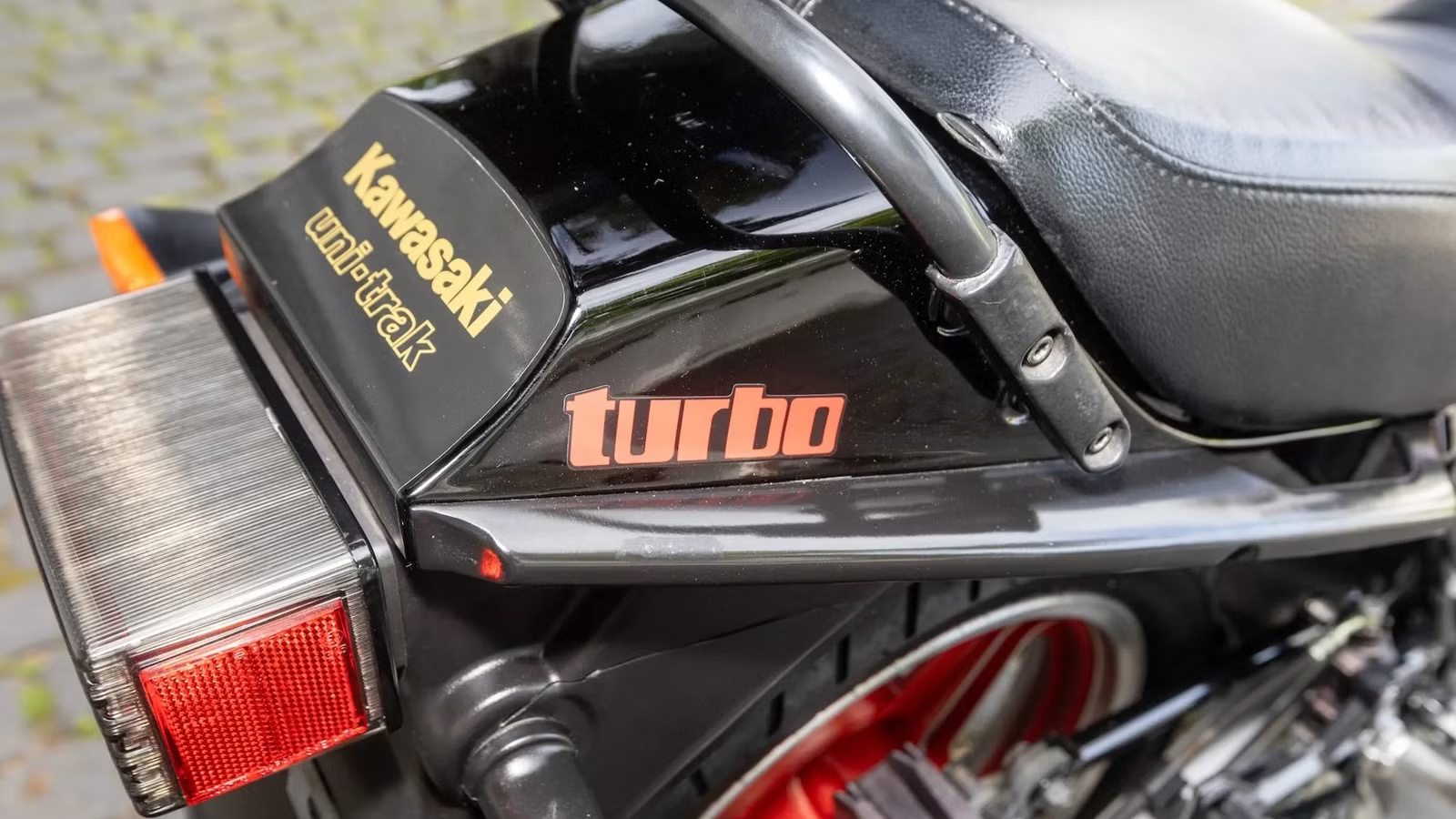
While aftermarket turbo kits had been around since the 70s, the first run of production motorcycles making use of forced induction only came out in the early 80s. It was a technology that had proven highly effective in the automotive world, yet, while it showed great potential, hadn’t quite captured the imagination of motorcyclists. A tariff on all export motorcycles above 700cc introduced in 1983 should have opened the door for Japanese turbo bikes, but it didn’t quite pan out that way.

Buying a used motorcycle always has an element of risk attached, so please do your research, and proceed with caution.
The Rise And Fall Of The Turbo-Bike
The Kawasaki Z1-R Turbo was not an official Kawasaki model, but it was offered through Kawasaki dealerships back in the late 70s. It took power from around the 80 horsepower mark to well over 120 horsepower in a frame that could only really handle 50! Suffice to say it was a terrifying thing to ride, but it did show that there was both potential for the technology to be applied to motorcycles, and more importantly for the Japanese manufacturers, demand for such motorcycles.

A few short years later, Honda were the first to officially enter the market with the CX500 Turbo. It was a little underpowered, and wasn’t actually that much lighter than contemporary superbikes. The subsequent CX650 Turbo was an improvement, but Honda took one look at the sales numbers and terminated the project. The same was true for both the Yamaha XJ650 (Seca) Turbo and Suzuki’s XN85. Kawasaki was the last to arrive to this particular party, and offered what is arguably the best turbo-bike ever made, albeit only for a mere two model years.
The Kawasaki GPz750 Was The Ultimate Production Turbocharged Motorcycle
Price Range: $7,000 – $9,000

When looking at the GPz750 Turbo’s contemporary competitors, we will readily admit that this particular bar was never set all that high. But, by using a proper 750cc inline-four as their base, Kawasaki were able to offer a bike that delivered on the early promise of 1100cc superbike performance from a motorcycle with a displacement of around 700cc.
Initially, other brands pursued this to circumvent the 1983 tariff, but with Kawasaki it was a little different. The GPz750 Turbo was built in the US, and was tax-exempt. This was simply built to be the best of its kind, and for two short years, by virtually any measure, it was the best turbo bike available.
Today, these bikes remain relatively accessible, no matter how rare they might be. Paying a little more for a good example is prudent, as is the case for pretty much any high-performance motorcycle bought used. Least of which is a 40-plus year-old bike that makes use of forced induction!
The GPz750 Turbo Offered Superbike Performance
Power: 112 Horsepower

While 112 horsepower may not seem like much by modern standards, back in 1984 it was right on par with most of the 1100cc bikes. More importantly, it had more power than any of the other turbo options on the market, which follows, seeing as though Kawasaki were adding a turbo to a bike that already made over 80 horsepower.
Along with the Hitachi HT10-B turbo placed on the header pipe, the model also received fuel injection, something of a rarity for motorcycles of this vintage, but logical in a turbocharged application. The compression ratio was reduced from 9.5:1 to 7.8:1, with boost limited to just 11.2 PSI. More boost will inevitably yield big power gains, but would also rather obviously hurt reliability (well, what little there is to begin with).
The GPz750 One Of The Quickest Bikes Of The 80s
Quarter Mile Time: 10.7 Seconds
Upon its global release, the GPz750 Turbo set a pretty remarkable quarter mile time of just 10.7 seconds. While there was some speculation that the bikes at this event may have been in a different state of tune to the bikes eventually sold to the public (a common practice back in the 80s), mid-11s were achievable under most conditions. So, it stands to reason, under the right conditions (like a decent tailwind), and with a light (also skilled) enough rider, that this time was legitimate.
Which gives the claim of the bike being the quickest on the market some credence, but the same rider (Jay Gleason) you see in the video above setting that 10.7 second record was able to do a 10.6 second run on the Ninja GPz900. It would be the bike everyone would remember. It also kicked off the speed wars that dominated the 80s and 90s. While quick, the GPz750 Turbo was no match for the Ninja, which wasn’t just the fastest Kawasaki, but the fastest motorcycle in the world. As it flew off dealer floors, the Turbo bikes all gathered dust. To add insult to injury, they were also difficult to insure, making the overall cost of ownership all but eradicate any value proposition they had to offer in the first place.
Turbo-lag also proved to be less desirable on a motorcycle, with bikes often coming “on-boost” at the worst, most traction compromised moment. This made them a handful to ride fast, and like any small-displacement vehicle with a turbo (at least from this era), the less said about reliability, the better.
Sources: Bring a Trailer, Cycle World Magazine (March 1984)

Related posts
Latest Post



No Comments