
The Forgotten Chevy Big Block That Makes The 450-HP LS6 Look Tame
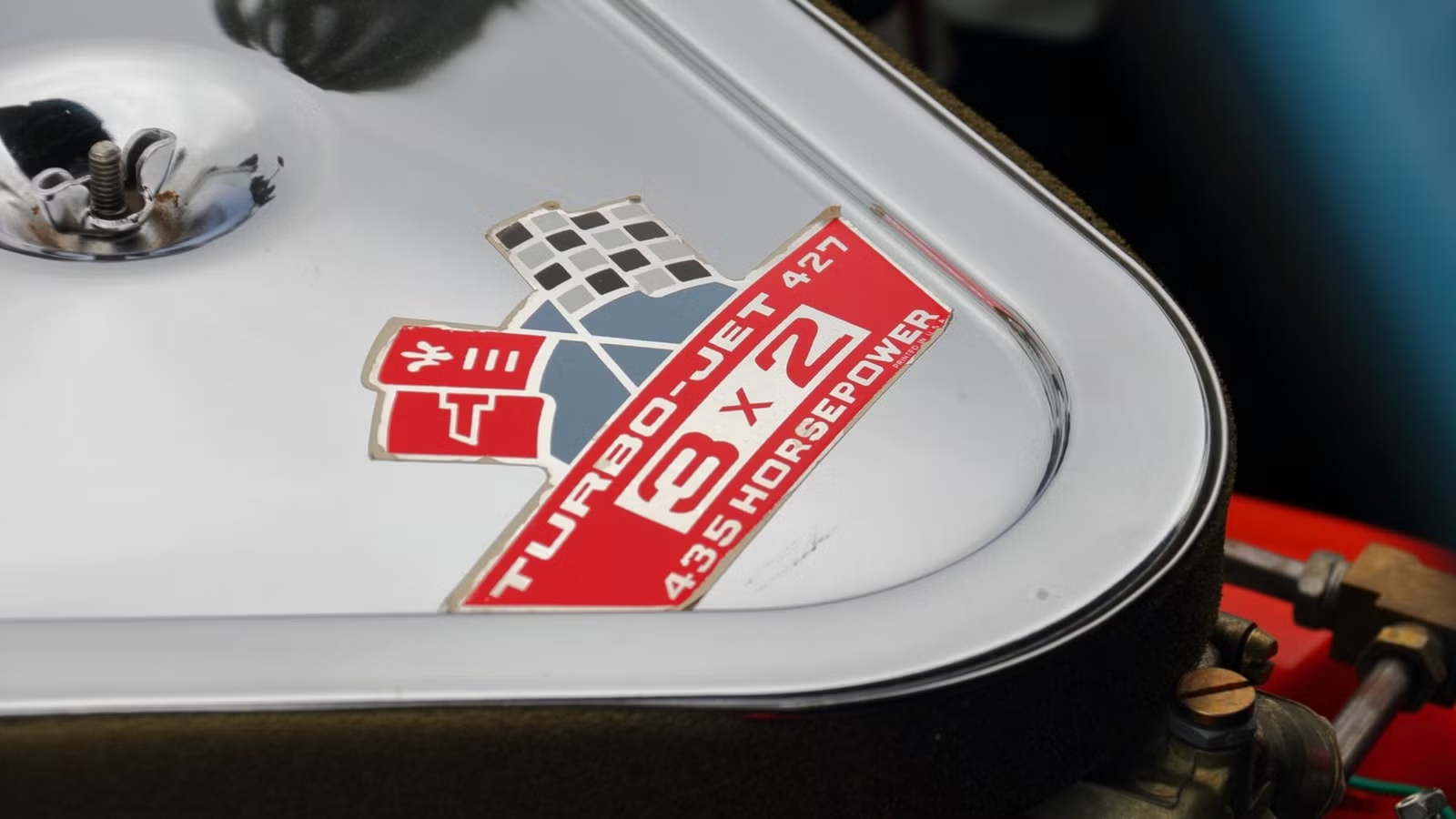
When GM finally lifted its pointless ban on engines over 400 cubic inches for intermediates in 1970, Chevy unleashed the 450 454 LS6 for the Chevelle SS, which has become the most legendary Golden Age muscle car engine. Just because something is remembered as the greatest, however, doesn’t make it so and there’s an even mightier big-block from Chevy’s history that doesn’t get the same recognition. It seems kind of weird that the 427 plays second fiddle to the 454 LS6 in the minds of enthusiasts, seeing as it was the baddest V8 GM had going in the classic era, but there are a couple of reasons why. First, this engine was never available in a muscle car and second, it was extremely rare, so not a lot of people were ever aware of its existence.

Chevy’s 427 V8 was originally designed as a race engine and found its first application under the aluminum hood of the 1963 Impala Z11 factory drag car. Officially rated at 430 horsepower, this wonder-engine with a triple two-barrel carburetor set up, was almost certainly way more powerful. With the 427, the full-size Impala was pulling 11-second quarter-miles, and that’s something that requires a lot of extra ponies. Sure, the Z11 went on a strict diet of lightweight components and interior deletes, but it was still a big car, so if it was running in the 11s, and possibly even the 10s, it had to have had more than 430 horsepower. There is the possibility that owners or race teams souped up these engines up, but it was a track-ready ride straight from the factory, so we tend to believe its 427 was radically underrated.

GM saw the insane performance of the Impala Z11 and got nervous with thoughts of liability in selling such a beast to the general public. While we don’t have any concrete proof of this, it’s likely that the Z11 prompted GM to put a cap on 400 cubic inches of displacement for all of its divisions in intermediate-sized cars in 1963. This was the biggest tactical blunder in automotive history, as in 1964, the Pontiac GTO launched the muscle car craze and all GM rides were handcuffed by the big engine ban. Dodge and Plymouth were raging with big displacement V8s like the 426 Hemi and 440 Six Pack, while Chevy’s most furious engine was the 396 with an upper limit of 375 horsepower. Meanwhile, there was 427 in Chevy’s arsenal that could have beat the Mopar muscle cars, but the Chevelle was blocked off from it.
As is the case throughout its history, the Chevy Corvette was exempt from all rules and regulations, as GM recognized it as their Halo Car, and as such, was eligible for some big-block mayhem. In 1966, the C2 Corvette got a 427 engine option with the 390 horsepower L36 and the 425-horsepower L72 variant, both of which were jamming 460 pound-feet of torque. A ’66 ‘Vette 427 L72 could blast off from 0-60 in 5.4 seconds, obliterate a quarter-mile in 13.4 seconds, and had a top speed of 140 MPH. This basically matched the performance of the 426 Street Hemi, which also debuted in Dodge and Plymouth models in 1966, and would have been a game-changer if it had been available to the Chevelle. Instead, under the GM big engine ban, the Chevelle SS 396 was a 14-second car that lost to Mopar every single time.

In 1967, the last year of the C2 generation, the Corvette got an even better version of the 427 with a 430 hp L88 and an L71 with an extra five ponies. With some extra compression and high-performance parts, both of these engines out-powered and outclassed anything on the road. With the extra juice under the hood, a ’67 ‘Vette 427 L71 was down to 4.7 seconds in 0-60 time and 13.1 in the quarter-mile, which wouldn’t be matched by Mopar until the 1970 Plymouth Hemi ‘Cuda and Dodge Challenger Hemi R/T, both of which were 13.1-second rides. Again, this engine could have won the muscle car horsepower wars for the Chevelle, but sadly, GM stuck to their unloaded guns and kept the big engine ban in place.

The rocker arms race of the Golden Age got so dire for Chevy that dealerships started building muscle cars with the power they deserved from the factory. Yenko Chevrolet in Pennsylvania began swapping out the 396s in Camaros for Corvette 427s, and then in 1969, discovered the Central Office Production Order (COPO) system. This was basically a program to order non-factory equipment on vehicles that was supposed to be for fleet orders and law enforcement applications, but dealers figured out that they could get 427-equipped vehicles delivered to their lots. Most COPO cars were Camaros, but there were also some Chevelles and even compact Novas, making for some of the baddest rides of the year. Depending on the vehicle, a 427 COPO car could run in the 11s, which was obviously much faster than any factory Mopar, but these overpowered Chevys were actually kind of dangerous in the hands of amateurs, so it was a mixed blessing.

Finally, in 1970, GM lifted its utterly pointless big engine ban and all the divisions went big-block crazy with Chevy unchaining the 454 V8 for the Chevelle SS. The base version produced a modest 360 horsepower, but the LS6 version blasted out 450 horsepower and 500 tread-shredding pound-feet of torque. This was supposed to be the Hemi-killer, but as HotCars recently pointed out, it wasn’t. With 25 more ponies and 10 more pound-feet than the 426 Hemi V8, the 454 LS6 should have been faster than any Mopar, but with a 13.4-second ET, it was slower than the Dodge Challenger Hemi R/T and Plymouth Hemi ‘Cuda, both of which, as we already mentioned ran a 13.1-second quarter-mile. Oh, and let’s not forget about the Corvette 427, which could also hit it in 13.1 seconds as well.

There’s nothing wrong with a 454 LS6, and in fact we adore that classic big block, but the 427 Tri-Power shouldn’t be relegated to the B-team because it really was the superior engine. It’s not the 427s fault that GM wouldn’t let it participate in the Golden Age of American Muscle games. At least Yenko Chevrolet and other ambitious dealers showed us what could have been if the 427 was a Chevelle or Camaro engine option, but it still doesn’t excuse GM from stifling its inherent greatness and street potential. The title of this piece may have had some thinking we were going to hate on the 454 LS6, but we simply can’t malign something so amazing. Instead, this is a condemnation of a pointless GM policy that robbed Chevy muscle cars of their potential.
Sources: Chevrolet

Related posts


Latest Post


No Comments