
The Only Factory-Manual 556-HP Wagon Left in America Is Vanishing
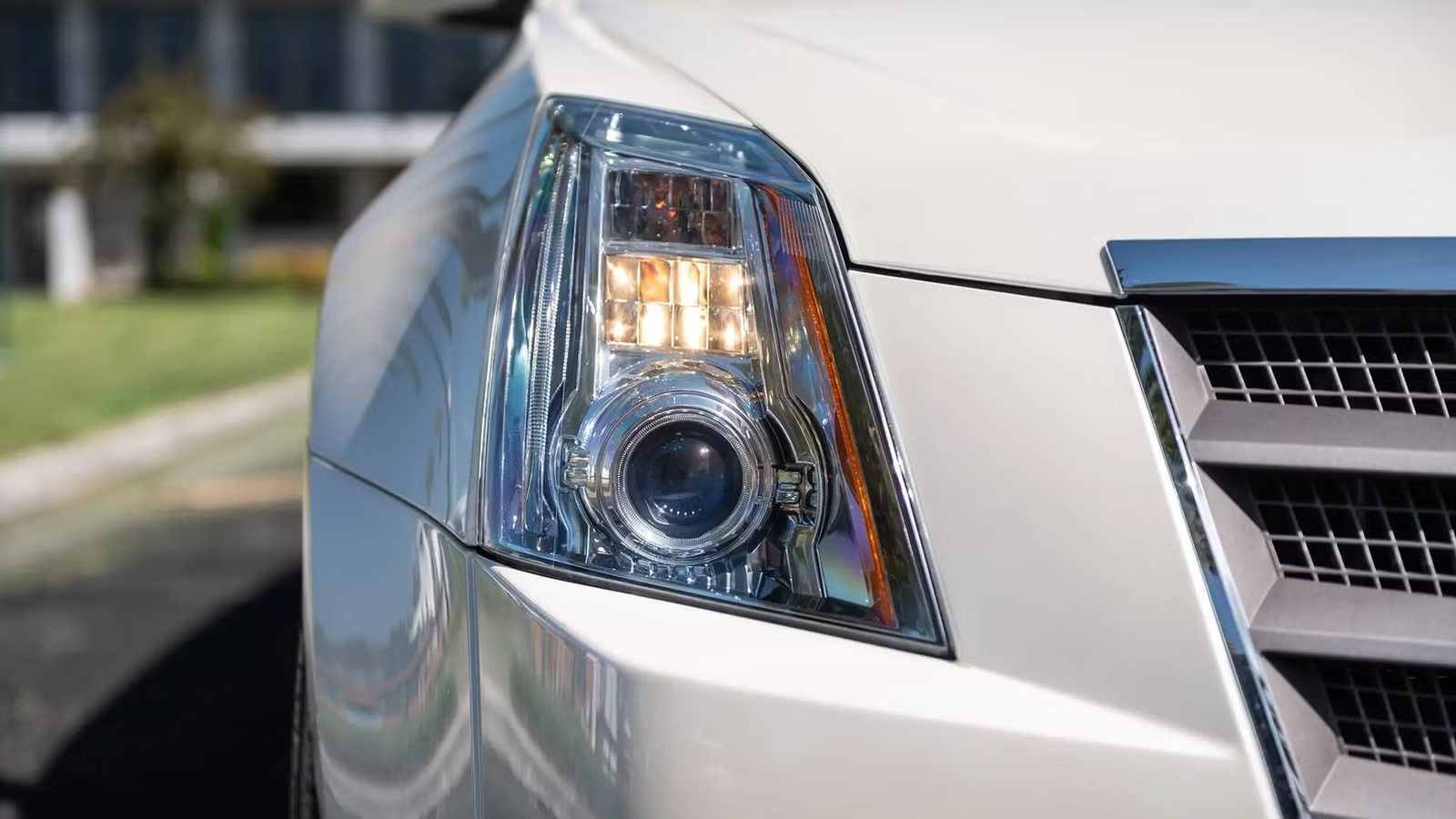
For years, performance was defined not only by numbers but also by feel, and the three-pedal stick-shift combination has always been at its center. But in today’s era of chasing automotive perfection on paper, manufacturers have traded the stick shift for lightning-fast automatics. They get the job done, but at what cost? Enthusiasts have answered, and they are looking to manual perfection from years gone by. More than a decade ago, one Detroit manufacturer gave its supercharged Wagon a unique option that even its European competition couldn’t match.
The Shift From Mechanical Connection To Lap-Time Perfection

As the performance race escalated among manufacturers, the single-minded obsession became reaching the fastest 0-60 and chasing Nürburgring lap records. To save every millisecond, manufacturers slowly phased out the traditional three-pedal setup in favor of automatic and dual-clutch transmissions. With tightening global emissions standards and demand for seamless everyday drivability, manufacturers eventually had to redirect budgets toward automatic transmissions and complex drive-by-wire and heavy all-wheel-drive systems. That said, although the traditional stick shift was slower, it still gave the driver more feel than modern transmissions could replicate.
While these computer-controlled transmissions offered blistering shifts and faster times on paper, they fundamentally changed the driving experience. The performance family hauler transformed from a sporty, fun, yet practical alternative into a hyper-clinical race machine with rear seats and huge cargo space. But in doing so, they alienated traditionalists and created a void for the authentic need for manual engagement in a large family wagon.
Detroit’s Three Pedal Answer To German Automatics


While European heavyweights like the Audi RS6 Avant, Mercedes-AMG E63, and BMW M5 Touring set the global standard for high-output wagons, they all left out one key option: none offered a manual transmission. At a time when an American domestic automaker was overhauling its lineup, an unhinged enthusiast option slipped past corporate suits in Detroit and created one of the most unique segments in modern car history.
Cadillac, on the other hand, wanted to spice up its offerings, and they did it by putting a muscle-car powertrain into a rear-wheel-drive station wagon body. Rather than merely matching its European counterparts with a standard automatic, Cadillac offered a raw six-speed Tremec TR-6060 manual, the same heavy-duty transmission family used in track missiles such as the Shelby GT500 and Dodge Viper. To maintain structural rigidity across the extended long-roof chassis,
Cadillac reinforced the wagon’s rear architecture with dedicated underbody cross-bracing. Cadillac tuned the rear suspension with specialized 90mm spring rates and a solid 24mm stabilizer bar to resist body flex and deliver precise cornering under high g-forces. With the manual option, Cadillac offered something European rivals lacked, creating a short-lived anomaly that set it apart and made it a truly unique proposition in the high-performance wagon landscape of its era.
The 2011 Cadillac CTS-V Wagon: The Manual American Wonder

The Cadillac CTS-V Wagon had a 6.2-liter supercharged LSA V8 under its hood, producing 556 horsepower and 551 lb-ft of torque, and it put that power down through the rear wheels with a 6-speed manual transmission, a high-performance twin-disc clutch, and a dual-mass flywheel. Thermal management relied on an integrated air-to-liquid intercooler fed by an Eaton 1.9-liter Twin Vortices Series (TVS) supercharger generating 9.0 psi of boost.
To handle high g-forces and heavy track usage, the powertrain incorporated a specialized six-quart oil pan with integrated baffling and a heavy-duty asymmetric half-shaft system to minimize axle hop during hard manual launches.The CTS-V has a 113.4-inch wheelbase and a curb weight of about 4,353 to 4,398 pounds. Cadillac equipped the chassis with standard Magnetic Ride Control dampers and high-performance Brembo brakes: 15.0-inch front rotors with six-piston calipers and 14.7-inch rear rotors with four-piston calipers.
The CTS-V wagon did 0-60 mph in 4.2 seconds, ran the quarter-mile in roughly 12.5 seconds at 114–115 mph, and stopped from 60–0 mph in 105–107 feet. The CTS-V Wagon’s performance also offered genuine daily utility, with 25 cubic feet of cargo space behind the second row and 58 cubic feet with the rear seats folded flat.
Living With A 556-HP Daily Driver

Enthusiasts and auction sites often romanticize the manual CTS-V Wagon as a unicorn of its era, but daily ownership brought operational realities and made its mechanical flaws obvious. Sending 551 lb-ft of torque exclusively to the rear axle meant the Wagon chewed through the high-performance rubber. During long-term evaluation by period magazines, the Wagon required $2,107 in a single year to replace its Michelin Pilot Sport PS2 tires and get the wheel alignment done.
Meanwhile, the supercharged LSA V8 was a fuel-hungry engine averaging 14.8–15.5 mpg in real-world driving; pair that with an undersized 18-gallon fuel tank, and you got frequent fuel stops on longer drives in what was supposed to be a cross-country family hauler. The optional Recaro seats offered great support for spirited driving with thick bolstering, but that same tightness would cause discomfort on longer journeys. The cabin featured plastic dash trim. And mechanically, the driveline suffered from severe rear-differential chatter and clunking. Supercharger isolators rattled, and the electronic Magnetic Ride Control dampers inevitably wore out over the years.
Why A Manual CTS-V Wagon Is A Blue-Chip Investment.

Despite its expensive maintenance and a few mechanical quirks, the CTS-V wagon’s rarity has cemented its status as a blue-chip automotive investment. Automotive sources still dispute the exact production number. Various sources place total production between 1,767 and 2,139. Within those numbers, factory six-speed manual variants are even rarer: just 514 manual wagons were produced, while some magazines estimate the total number of manuals at 700 units. This extreme scarcity directly dictates the market values.
While automatic CTS-V Wagons average roughly $50,000, factory manual examples command a massive premium. Three-pedal wagons routinely average over $65,000 with pristine, low-mileage examples pushing well into six-figure territory. The Cadillac CTS-V Wagon remains an unrepeatable chapter in American automotive history, delivering a manual, supercharged experience in a wagon body that may never be repeated.
Source: Bring a Trailer, Wiki, Hemmings, Hagerty.

Related posts


Latest Post



No Comments