
The Forgotten Naturally Aspirated Cobra Ford Produced Before The Terminator
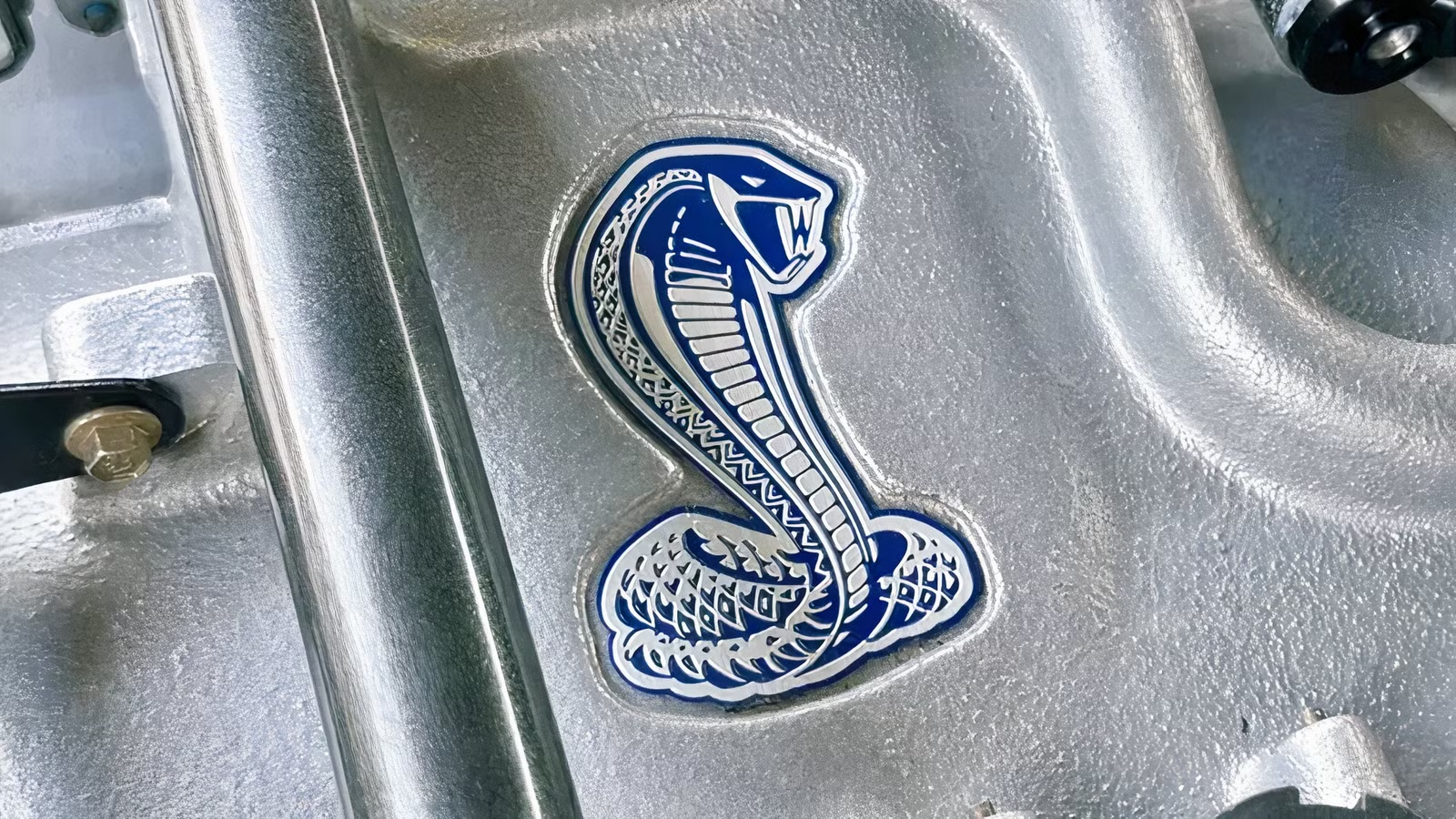
The Terminator Cobra became one of the most famous Ford Mustangs ever built, helped by a supercharger and a reputation that still follows it around North America. It wouldn’t be a stretch, then, to admit that the Cobra that came immediately before it had a considerably harder job.

For a start, it had to make the Mustang quicker, improve the chassis, and then recover from one of Ford SVT’s more embarrassing horsepower controversies.
The Mustang Was Winning Buyers And Losing The Performance Argument
Come the late ’90s, the Ford Mustang had little trouble finding buyers in America. It was outselling the Chevrolet Camaro by a wide margin, giving Ford plenty to celebrate every time somebody opened the sales spreadsheet. The problem arrived whenever Mustang and Camaro owners stopped talking about sales and started comparing acceleration.

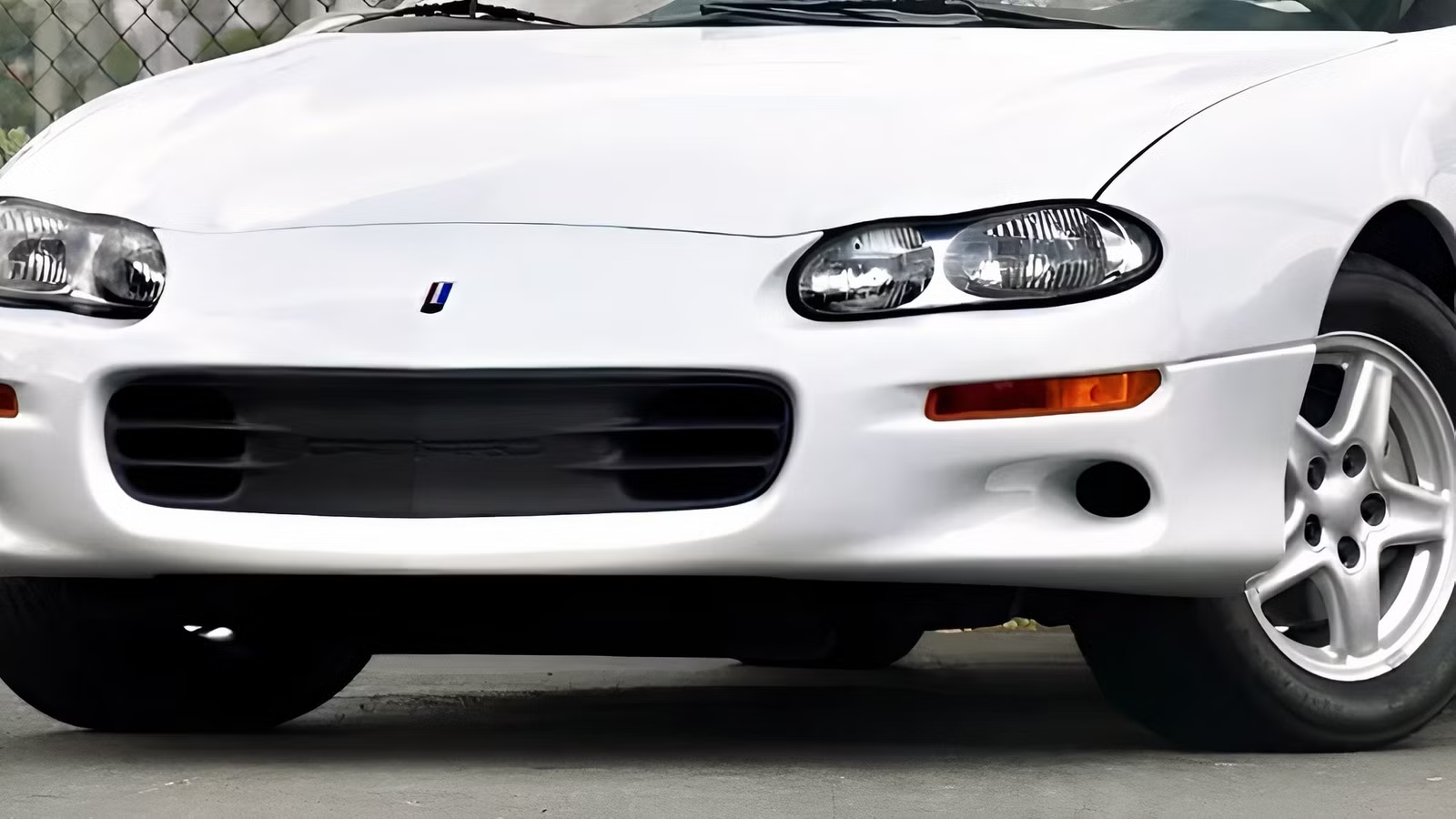
Chevrolet’s Camaro Z28 and Camaro SS had become serious performance benchmarks. The 1998 Camaro Z28SS produced 320 hp from its 5.7-liter V8, along with a substantial 345 lb-ft of torque. Ford’s smaller 4.6-liter DOHC V8 couldn’t match that torque figure, even if SVT could get its horsepower number into the same neighborhood.
The Clear Goal

That was a key bit because the Mustang Cobra was supposed to represent the sharp end of Ford Mustang performance. A Cobra badge carried expectations, particularly in the USA, where the Mustang had spent decades being judged against Chevy’s pony car. Ford could sell more Mustangs and still lose the argument at the drag strip.
Ford’s answer for 1999 looked serious. Its flagship Mustang gained 15 hp for a claimed 320 hp, putting the headline number level with the Camaro. More importantly, Ford replaced the traditional solid rear axle with independent rear suspension. The goal was clear: make the Mustang faster while giving it the kind of chassis sophistication people normally expected from something wearing a much more expensive badge.
Ford Promised 320 Horses And Then Had To Go Find Them

Then the stopwatch spoiled the launch party. Despite having a better power-to-weight ratio than the car it replaced, Ford’s new 320-hp performance Mustang needed 5.5 seconds to reach 60 mph. The quarter-mile took 14.1 seconds at 101 mph, while top speed was 149 mph. Those weren’t terrible numbers for 1999, but they didn’t look like the step forward its advertised horsepower suggested.
The chassis, though, was far more convincing. The independent rear suspension made the Mustang feel more settled over broken pavement and helped it behave more neutrally near the limit. Skidpad grip improved to 0.88 g, and Ford had clearly moved the handling conversation forward, even while the engine performance left testers wondering where those extra horses had wandered off to.
Customer Satisfaction

At the same time, owners started wondering what was up, too. Some cars were put on chassis dynos and appeared to be down by as much as 20 hp from what their advertised output should have delivered. That turned a disappointing test result into a much bigger problem. Horsepower claims matter in any performance car, but they matter even more when the badge on the fender exists largely because buyers expect the engineering department to take those claims seriously.
Eventually, however, Ford did take it seriously. Fixes were developed for cars already in customers’ hands, while production changes addressed the causes of the shortfall. The timing created another unusual wrinkle: there wasn’t enough time to prepare a regular 2000 version, so Ford skipped that model year altogether. When the car returned for 2001, the company had something rather more important than fresh paint to prove.
The 1999 And 2001 SVT Cobra Were Ford’s Naturally Aspirated Missing Link

The cars at the center of all this were the 1999 and 2001 Ford Mustang SVT Cobra, the naturally aspirated Cobras that arrived immediately before the supercharged Terminator became the version everybody remembers. Both used a 4.6-liter DOHC 32-valve V8 rated at 320 hp at 6,000 rpm and 317 lb-ft at 4,750 rpm. The block and cylinder heads were aluminum, which helped make this a very different V8 recipe from Chevy’s bigger-displacement approach.
That naturally aspirated engine shaped the Cobra’s personality. Its strongest shove lived higher in the rev range, with the V8 coming alive from around 3,000 rpm and building toward its 6,000-rpm horsepower peak. A five-speed manual sent power to the rear wheels through a 3.27:1 final-drive ratio. Anyone expecting the later Terminator’s supercharged wallop would’ve needed to recalibrate. This Cobra wanted revs and a driver willing to go find them.
By 2001, the SVT Cobra’s engine was hand-assembled at Ford’s Romeo, Michigan, facility by a two-person team, with the builders’ signatures appearing on a plate attached to the engine. The V8 also used a forged-steel crankshaft and a 9.85:1 compression ratio. In an era before huge digital displays began telling drivers which personality their car had selected for the afternoon, the appeal was refreshingly mechanical.
The independent rear suspension deserves equal billing. In 1999, Ford reduced unsprung weight by 125 pounds and widened the rear track by 1.2 inches compared with the previous setup. Weight distribution improved from 57/43 to 55/45. That gave the Ford Mustang SVT Cobra something beyond another horsepower bump. It was becoming a more rounded American performance car, and that was important for what SVT would attempt next.
By 2001, The Cobra Finally Had The Numbers To Back Up The Badge

The 2001 Ford Mustang SVT Cobra finally delivered the performance Ford had promised two years earlier. It hit 60 mph in 4.8 seconds and covered the quarter-mile in 13.5 seconds at 105 mph. Those numbers put it directly alongside the Camaro Z28SS, which had managed 60 mph in 4.9 seconds and the same 13.5-second quarter-mile. Mustang fans in the USA finally had some useful ammunition.
Ford’s 320-hp claim also survived the sort of scrutiny that the 1999 car had invited. Two 2001 Cobras were tested on a chassis dyno, and each produced 272 hp at the rear wheels. Allowing for roughly 15 percent driveline loss, that supported the advertised crankshaft output. After the earlier controversy, a boringly correct horsepower figure was probably the most exciting number SVT could’ve produced.
Up To The Job

And the chassis continued to earn its keep. The 2001 Cobra stopped from 70 mph in 179 feet and generated 0.86 g on the skidpad, while the independent rear suspension helped it stay composed over rough pavement. It was still a Mustang of its era inside, and taller drivers could find the driving position awkward, but the important stuff had caught up with the badge.
Then The Terminator Arrived And Took All The Glory

The naturally aspirated Cobra’s biggest problem turned out to be what Ford built next. The supercharged Terminator Cobra became the Mustang enthusiasts talked about for years afterward, and its reputation pushed the 1999 and 2001 SVT Cobra into the background almost immediately. That’s a tough fate for a car that had already done much of the difficult engineering work.
Look past the Terminator’s shadow and the earlier Ford Mustang SVT Cobra starts making considerably more sense. The 1999 model introduced independent rear suspension and exposed a horsepower problem Ford couldn’t ignore. The 2001 car came back with the promised 320 hp genuinely accounted for and performance capable of running with Chevrolet’s Camaro SS.
Trial And Error

That makes the 1999 and 2001 Cobra an especially cool chapter in Ford Mustang history for enthusiasts. It offers a naturally aspirated 4.6-liter DOHC V8 at a time when later SVT Cobras are defined largely by supercharged performance. Its power delivery begs for more revs, while the IRS gave the Mustang a level of composure its old reputation didn’t always suggest.
The Terminator deserves the fame, don’t get us wrong, but the forgotten naturally aspirated Cobra before it deserves more credit for helping Ford get there. SVT had to learn the uncomfortable way that a great badge couldn’t cover a missing horsepower problem, then came back with a 2001 Mustang Cobra that could finally defend its numbers. In this case, the car before the legend told a pretty interesting story.
Sources: encycarpedia.com, CarBuzz, Car and Driver.

Related posts

Latest Post


No Comments