
Pontiac Hid A 455 V8 Option Inside A School-Run Family Wagon
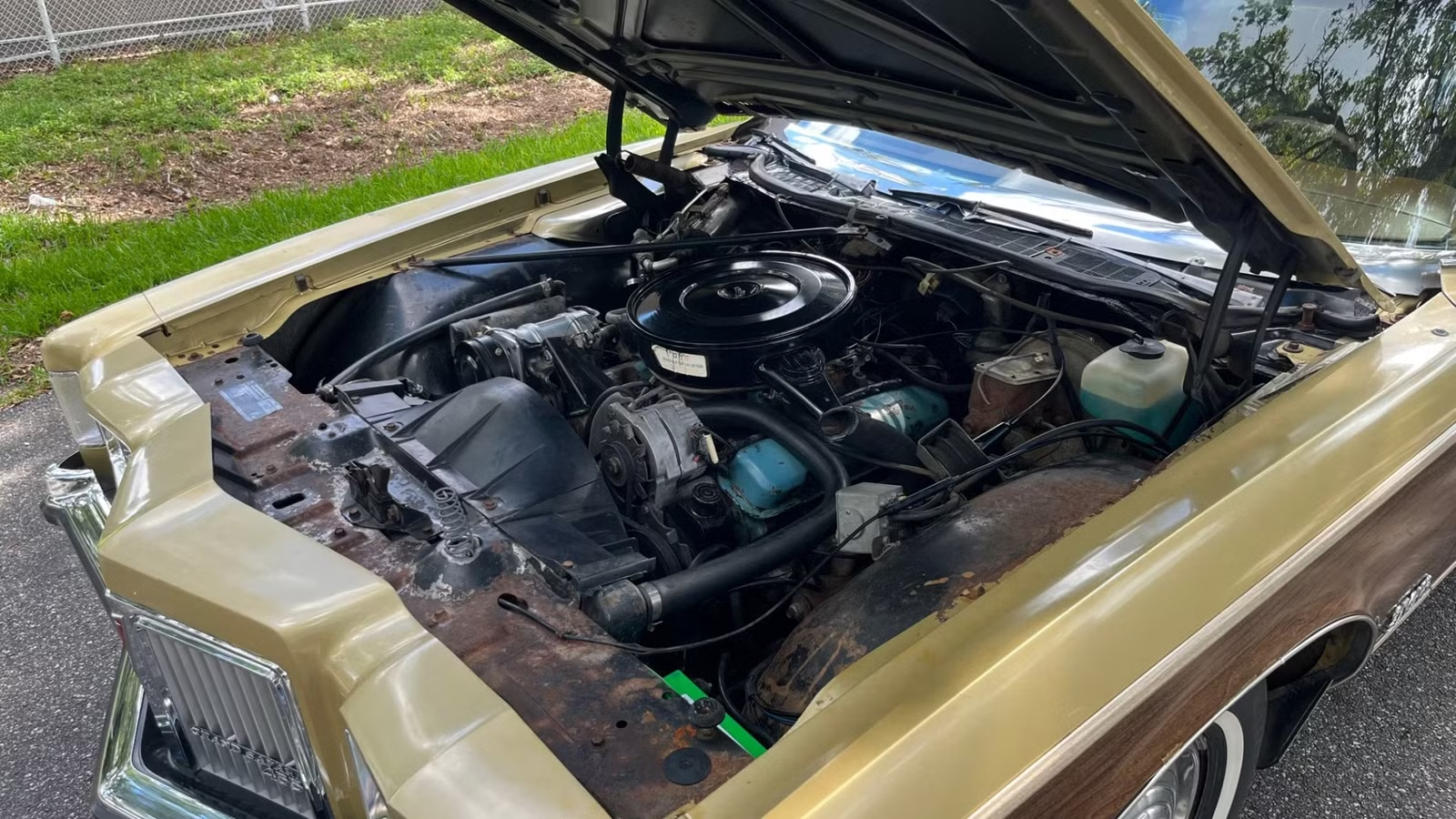
Walk from bumper to tailgate: more than 19 feet of Pontiac wagon, weighing roughly 5,000 pounds before the kids even climb aboard. Picture a four-barrel 455 V8 hauling them and their bags uphill, then pushing all that sheet metal up a highway on-ramp.

For fans of fast family wagons, that’s promising hardware for a parent running late for school. The permission slips still won’t sign themselves. But Pontiac’s 1971 performance pitch needs period evidence before this family hauler earns its sleeper credentials.
The Optional 455 Gave Pontiac’s Family Wagons More Muscle
Fill the cargo area with suitcases and settle the family into their seats. The engine now has all those people and their holiday luggage to get moving. Pontiac’s wagon brochure treated performance as part of that job, urging, “Make it perform.” Buyers could put substantial V8 muscle beneath ordinary family-car bodywork, although that pitch alone couldn’t tell them how quickly a loaded wagon would accelerate.

For 1971, the cheaper full-size Safari offered a four-barrel 400 V8 rated at 300 gross hp. The four-barrel 455 raised that to 325 gross hp, adding 55 cubic inches and 25 advertised horsepower. That extra displacement makes an appealing prospect beneath the hood of a wagon packed for a trip. It doesn’t establish acceleration times or prove the wagon had a 455-powered T-37’s performance hardware or matched its speed.
On the test stand, Pontiac’s engine ran without its fan, air cleaner or exhaust system to produce its gross-horsepower figure. In its installed configuration, the tables list 200 net hp for the four-barrel 400 and 230 net hp for the four-barrel 455. The 455’s 95-hp gap reflects different test conditions for the same engine.
But Does That Big V8 Make The Wagon A Proven Sleeper?

A 455 V8 sounds promising, but it still has to move nearly two-and-a-half tons of wagon. Passengers and luggage add more weight. More power can help move that load without making the car a drag racer. Before calling it quicker than a rival, we need an acceleration test of this wagon, with its engine and equipment identified.
A 7.2-second run from a standstill to 60 mph remains unverified: our research found no matching road test from the period to support it. A test would identify the model year, engine, gearbox and gearing at the rear wheels, and explain how the run was measured. A Pontiac sedan’s result, a different engine or a computer estimate can’t prove how fast this wagon accelerated.
Don’t assume the parts from a Pontiac Super Duty 455 were fitted to this wagon. The 1971 factory table lists a Turbo Hydra-matic automatic gearbox and a standard 3.08:1 axle ratio with the four-barrel 455. That means the shaft driving the rear wheels turns about 3.08 times for every wheel turn when driving straight. Claims about dual exhaust (two exhaust paths) or disputed horsepower and torque (the engine’s turning force) need evidence specific to that model year.
The Grand Safari Adds An Unexpected Family-Wagon Twist
Meet the Pontiac Grand Safari, a family wagon that gave you 455 cubic inches of V8 before you ticked a single option box. For 1971, the standard two-barrel engine carried 280 gross hp and 190 net hp; the four-barrel upgrade delivered 325 gross hp and 230 net hp. The 400 comparison belongs to the cheaper Safari, not this year’s Grand Safari.
Fisher Body’s 1971 chart identifies it as a Bonneville-series B-body wagon. Its 127-inch wheelbase matched some of GM’s larger C-body sedans. Pontiac offered two- and three-seat versions, with the third row facing forward, while folding the rear seats opened up a maximum 102.3 cubic feet of cargo space. That long roof could shelter the family on one trip and bulky furniture on the next.
The Tailgate Disappeared Instead Of Swinging Out

The Glide-Away clamshell tailgate, fitted from 1971 through 1976, performed a vanishing act at the rear. Its glass slid upward into the roof while the lower gate disappeared beneath the cargo floor. The space behind the bumper stayed clear for loading, with no swinging door or lowered gate blocking access. Pontiac had given this giant family wagon a back door it could swallow.
The glass was power-operated, and buyers could order power operation for the lower gate. A manually operated lower section still used the same disappearing design. The brochure listed a rear opening 50.2 inches wide at floor level, ready for bags or bulky cargo. When inspecting one today, run both pieces through their full travel; a trick this good deserves a proper demonstration.
Beyond The School Run, Pontiac’s Wagon Legacy Has A Twist

Pontiac’s 1955–1957 Safaris had already found their way onto drag strips, giving the brand’s family wagons a racing past long before this giant arrived. Historian John Gunnell explains the attraction: weight over the driven rear wheels could help racers find grip when launching. The same bodywork that carried the household could offer something useful at the starting line. But modified racers’ results don’t establish how fast a stock Grand Safari could run.
Pontiac cut that enormous package down to size for 1977. Factory tables show the redesigned wagon shrank from 1976’s 231.3 inches to 214.7 inches, a reduction of 16.6 inches. It also shed roughly 1,000 pounds, depending on seating and equipment, and traded its disappearing gate for a three-way tailgate. That meant less length to fit into a parking space, although the earlier car’s sheer excess remains part of its appeal to enthusiasts today.
Later cars such as the Buick Roadmaster kept the V8 wagon idea alive, while the 455 Grand Safari offers today’s enthusiast a factory foundation for an unusual family-car project. Check its engine configuration and separate original equipment from later modifications before deciding whether to preserve its factory setup or make your own changes. Picture the family aboard and a weekend trip ahead. Over 19 feet of family duty, with 455 cubic inches of temptation under the hood.
Sources: Pontiac, John Gunnell / RPM Canada.

Related posts




Latest Post


No Comments